


The 2025 uplift to Part L (Conservation of Fuel and Power) didn’t just raise the bar — it changed the game for heating specifiers. If you’re designing to the new standards, the compliance guides at underfloorheating.info and the MCS installer search at underfloorheating.directory will save you weeks of paperwork.
From June 2025, new non-domestic buildings must hit a 27% CO₂ reduction over 2021 standards. Domestic new builds: 31%. The only heating system that delivers those margins at scale, without relying on unproven tech, is a heat pump paired with wet underfloor heating.
Radiators at 45°C flow can’t do it. The maths doesn’t work.
The compliance reality
Part L 2025 targets primary energy rate (kWh/m²/yr) and CO₂ emission rate (kgCO₂/m²/yr). Both punish high flow temperatures.
| Heat emitter | Typical flow temp | Heat pump COP at flow | Meets Part L 2025? |
|---|---|---|---|
| Standard radiators | 65-75°C | 2.1-2.5 | ❌ No |
| Oversized radiators (2.5x) | 50-55°C | 2.8-3.2 | ⚠️ Marginal |
| Wet UFH (150mm centres) | 35-40°C | 4.0-4.8 | ✅ Comfortable pass |
| Fan coils | 40-45°C | 3.5-4.0 | ✅ Pass |
The COP gap is the compliance gap. Every degree of flow temperature costs ~2.5% COP. Radiators at 70°C run at COP ~2.2. Wet UFH at 35°C runs at COP ~4.5. That’s double the heat per kWh of electricity.
What Part L actually checks (and where UFH wins)
1. Primary energy rate — UFH cuts it at source
Lower flow = higher COP = less grid electricity per kWh heat. A 200m² office with wet UFH + ASHP hits ~45 kWh/m²/yr primary energy. Radiators + ASHP: ~85 kWh/m²/yr. The pass threshold is ~60.
2. Fabric energy efficiency — UFH enables thinner build-ups
Because UFH works at lower temperatures, you need less insulation to hit the same U-values. That saves floor-to-ceiling height — critical on tight urban sites.
3. Fixed building services — UFH scores on controls
Part L demands zoning, time control, and weather compensation. Wet UFH with manifold actuators and smart thermostats delivers this natively. Radiator TRVs are a compliance afterthought.
The retrofit trap: existing buildings
Part L 2025 doesn’t directly mandate UFH in retrofit. But MEES (Minimum Energy Efficiency Standards) does the heavy lifting:
- From April 2025: all commercial lets must be EPC C or above
- From 2027: EPC B for new leases
- Gas boilers cap EPC at D/E in most commercial archetypes
A heat pump + wet UFH retrofit is the only path from E to B for many 1980s-2000s offices. Radiators + heat pump stalls at D.
Build-up specs that pass Building Control
For screeded wet UFH on concrete slab (new build):
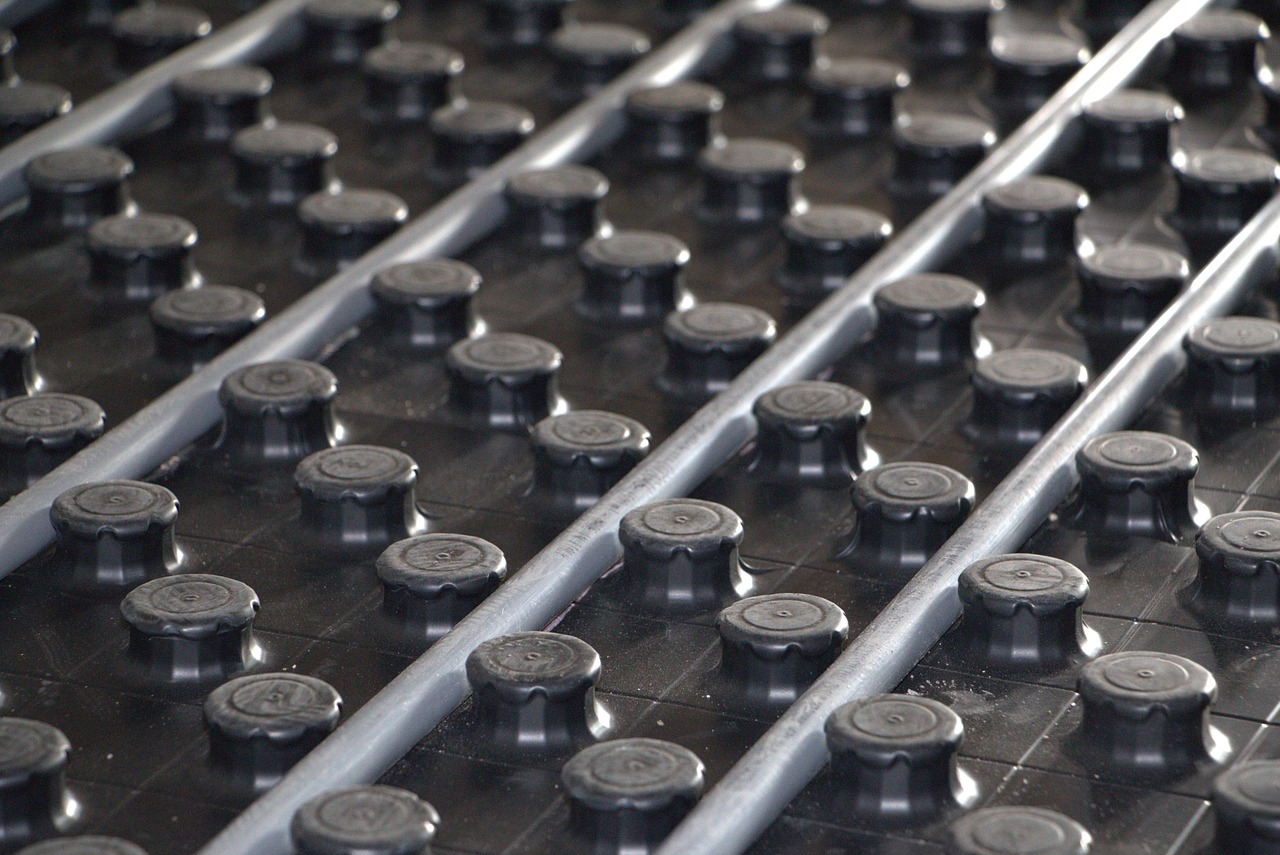
- 150mm pipe centres, 16mm PE-RT
- 50mm PIR insulation (0.022 W/mK) under slab
- 75mm sand-cement screed (or 50mm anhydrite)
- Total zone: 125-150mm — fits most structural zones
For retrofit on existing screed (low build-up):
- 12-14mm overlay board systems (e.g., Uponor Minitec, Wavin Klett)
- 100-150mm centres depending on output needed
- Total zone: 18-22mm — clears doors, no skirtings moved
Both meet Part L if designed to CIBSE Guide A at 40°C flow / 35°C return.
The documentation Building Control expects
We’ve seen rejections on:
- No heat loss calc per zone (BS EN 12831)
- No manifold schedule with loop lengths, flow rates, pressure drops
- No commissioning plan (balancing, flushing, glycol %)
- No controls schematic showing BMS integration points
Our Commercial UFH Design Pack includes all four templates — free, pre-formatted for Building Control submission.
Cost reality check (2026 UK prices)
| Scenario | Wet UFH + ASHP | Radiators + ASHP | Gas boiler + radiators |
|---|---|---|---|
| 200m² office new build | £42-55k | £38-48k | £28-35k |
| 200m² office retrofit | £55-70k | £45-58k | £30-40k |
| Annual running cost (2026 elec/gas) | £3,200 | £5,800 | £4,100 |
| 10-year TCO | £74-87k | £103-116k | £69-75k |
UFH + heat pump beats gas on TCO within 8-10 years. Radiators + heat pump never catches up.
What this means for your next project
If you’re specifying heating for a Part L 2025 project:
- Default to wet UFH unless floor build-up is physically impossible
- Size emitters at 40°C flow / 35°C return — not 45/40, not 50/45
- Specify manifold actuators and weather-compensated controls — Part L evidence
- Run the SAP/SBEM with actual UFH COP — not default radiator assumptions
- Get the heat loss calc done early — it drives pipe spacing, not the other way round
The specifiers who treat UFH as a compliance tool — not a comfort upgrade — are the ones passing Part L on first submission. The rest are redesigning.
Damian Krzyzanowski runs underfloorheating.info, the UK’s independent technical resource for underfloor heating design, specification, and installer discovery.
