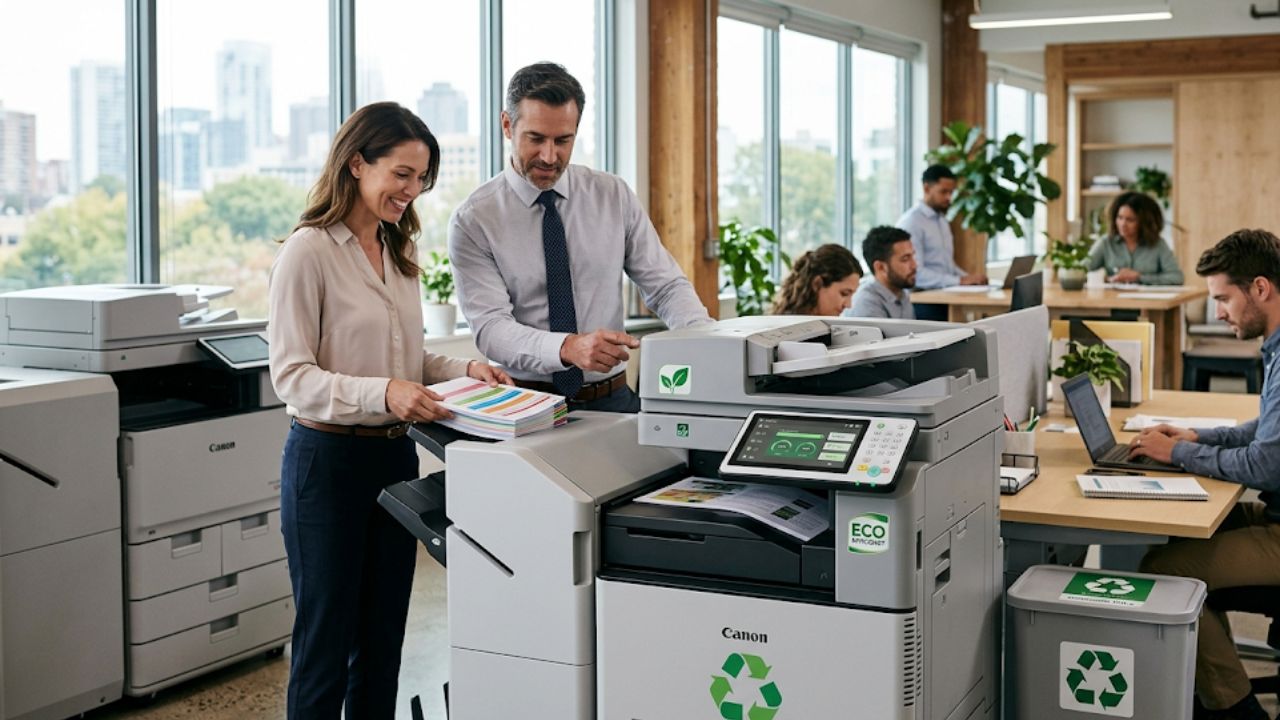


The modern business landscape is changing at a rapid pace. Organizations are no longer just looking for tools that complete a task; they are seeking comprehensive solutions that align with global sustainability goals while maximizing operational output. As companies navigate the complexities of digital transformation, the hardware sitting in their offices and production floors plays a pivotal role. Efficiency is no longer just about speed. It is about how a device consumes energy, handles resources, and integrates into a larger, more eco-conscious workflow. In this context, Canon has emerged as a leader by providing technology that balances high performance with environmental responsibility.
At the heart of many office environments is the need for versatile document management. The shift toward hybrid work and digitized archives has made the role of office hardware more critical than ever. Businesses are moving away from single-use machines and toward multifunction printers that can handle printing, scanning, copying, and faxing within a single, energy-efficient footprint. These devices are designed to reduce the total cost of ownership while minimizing the physical space required in an office. By consolidating multiple functions into one unit, companies can significantly lower their electricity consumption and reduce the amount of maintenance required across their fleet of devices.
Canon has integrated advanced features into these systems to ensure they support a green initiative. For example, many models feature rapid wake-up times from sleep mode, which encourages employees to keep the devices in low-power states without sacrificing productivity. Additionally, the use of bio-based plastics and recycled materials in the manufacturing process demonstrates a commitment to a circular economy. When a business chooses this type of hardware, they are investing in a system that prioritizes long-term sustainability over short-term convenience.
Beyond the traditional office setting, the world of high-volume production is also seeing a massive shift. Commercial printing has historically been an industry associated with high levels of waste and energy usage. However, recent innovations in commercial printers have changed this narrative. Modern production presses are now built with precision engineering that reduces ink and toner waste, ensuring that every drop is used effectively. This precision not only lowers costs but also reduces the environmental impact of large-scale print runs.
In the commercial sector, efficiency is often measured by uptime and reliability. Canon production equipment is known for its robust build quality, which translates to fewer repairs and a longer lifespan for the hardware. This longevity is a key pillar of sustainability. When equipment lasts longer, the demand for raw materials to create replacement units decreases. Furthermore, the ability to print on a wide variety of recycled media allows print service providers to offer more eco-friendly options to their clients, opening up new market opportunities in a world where consumers are increasingly conscious of their carbon footprint.
Digital integration is another area where efficiency meets sustainability. By using smart software solutions, businesses can track their printing habits and identify areas where waste can be eliminated. Secure print release functions ensure that documents are only printed when the user is physically present at the device, preventing forgotten stacks of paper from accumulating in output trays. These small changes, when scaled across an entire organization, lead to massive savings in paper and energy. Canon provides the software ecosystem necessary to manage these workflows seamlessly, allowing IT managers to set rules that prioritize duplex printing or grayscale modes by default.
The future of business efficiency is not just about the hardware itself but about the partnership between the manufacturer and the business. Canon offers comprehensive recycling programs for cartridges and parts, ensuring that even at the end of a product’s life, its components do not simply end up in a landfill. This holistic approach to the product lifecycle is what distinguishes a sustainable brand from the rest. It provides peace of mind to business leaders who want to ensure that their operational choices reflect their corporate values.
As we look ahead, the integration of artificial intelligence and cloud connectivity will continue to refine how we interact with these machines. Predictive maintenance can alert technicians to a potential issue before a breakdown occurs, reducing the need for emergency service visits and the carbon emissions associated with them. Remote monitoring allows for better resource management, ensuring that supplies like toner are only shipped when they are actually needed, rather than on a rigid, inefficient schedule.
Choosing the right technology partner is a strategic decision that affects every level of an organization. By focusing on multifunction capabilities for the office and high-efficiency production units for commercial needs, businesses can create a workflow that is both productive and responsible. The goal is to achieve more with less, less energy, less waste, and less impact on the planet. Canon continues to innovate in these areas, proving that high-end performance and environmental stewardship can go hand in hand. The future of efficiency is green, and the tools to achieve it are available today.
Sustainable Solutions: Why Canon Multifunction and Commercial Printers are the Future of Business Efficiency