


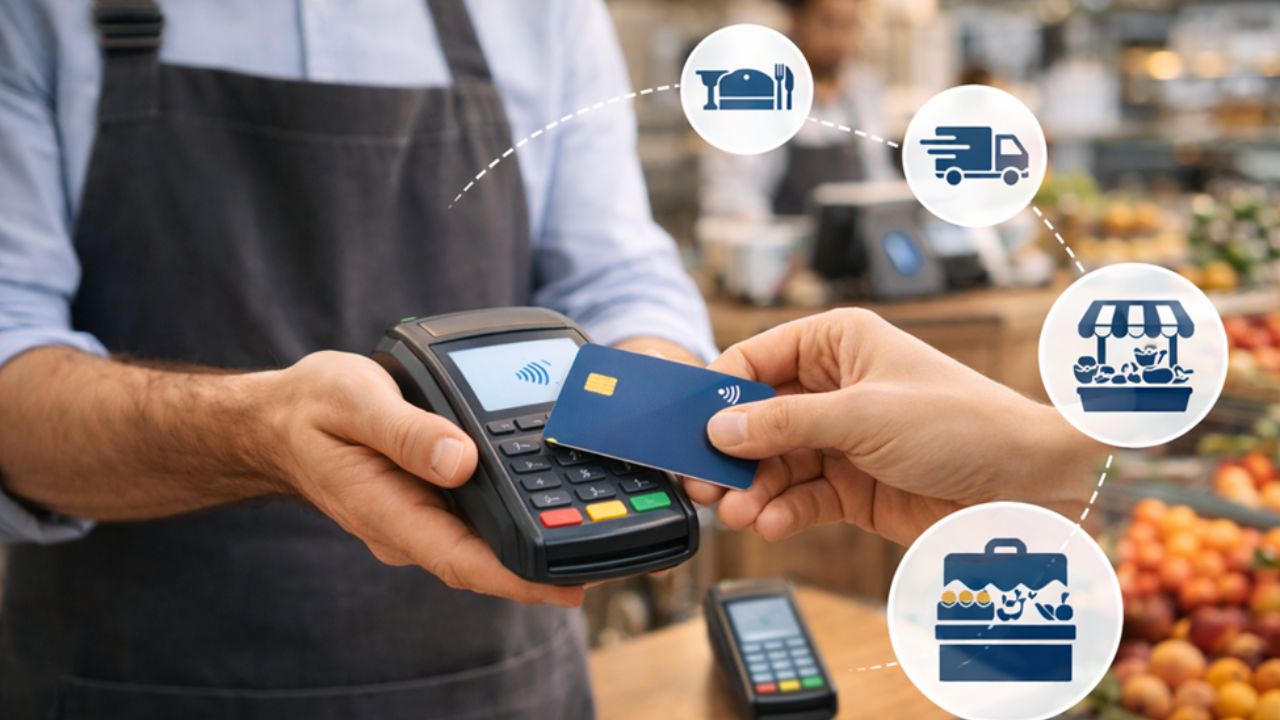
The point-of-sale experience has transformed significantly in the last decade. What used to be a fixed device placed next to the cash register has gradually evolved into a mobile tool that can move with the business. Today, portable payment terminals allow companies to process transactions wherever the interaction with the customer happens.
From the checkout counter to the customer table
Traditional payment terminals were designed to remain in one place. While this works well for supermarkets or retail stores with a clear checkout area, it is not always practical in environments where service takes place away from the counter.
Portable payment terminals solve this problem by allowing employees to carry the device directly to the customer. This approach is particularly common in restaurants, hotels, and cafés, where the payment can be completed right at the table without requiring customers to leave their seat.
How portable payment terminals work
Portable terminals are compact devices equipped with wireless connectivity and a rechargeable battery. They connect to the internet via Wi-Fi or a SIM card, which enables them to process payments almost anywhere within the business environment.
When a customer taps, inserts, or swipes their card, the terminal securely transmits the payment information to the bank for authorization. If the transaction is approved, the payment is completed within seconds.
Key capabilities modern terminals provide
While the main purpose of a payment terminal is to accept card transactions, modern devices offer a wide range of additional features that support business operations. These typically include:
- processing sales and refunds
- reversing transactions if necessary
- daily settlement and transaction balancing
- optional features such as multicurrency payments or integration with cash register systems
These tools help businesses manage payments efficiently and maintain a clear overview of their transactions.
Mobility that supports different industries
Portable payment devices are used across many industries because they adapt easily to different business models. Hospitality businesses benefit from table-side payments, delivery companies can accept payments at the customer’s doorstep, and event vendors can process transactions without needing a permanent checkout location.
For businesses that operate in dynamic environments, this mobility provides a clear operational advantage.
A step toward flexible commerce
As digital payments continue to grow worldwide, businesses are increasingly looking for payment solutions that combine reliability with flexibility. Portable terminals represent a practical balance between traditional POS hardware and fully mobile payment solutions.
Companies interested in implementing modern payment infrastructure can explore solutions such as the portable payment terminal designed for mobile and flexible payment acceptance, which supports contactless cards, mobile wallets, and other widely used payment methods.
The evolution of payment technology is moving toward flexibility and speed. Portable terminals are one of the tools helping businesses adapt to these expectations while keeping the payment experience simple and secure.
