


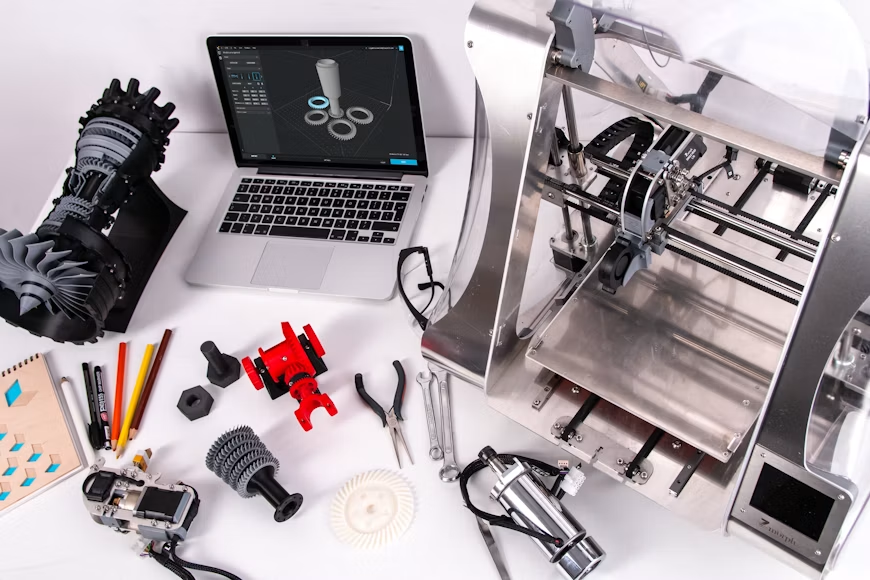
The modern manufacturing sector is undergoing a profound transformation as intelligent algorithms begin to supplement and enhance traditional computer-aided design software. Engineers and industrial designers are continually seeking advanced tools that streamline the complex transition from conceptual sketches to functional physical prototypes. This growing demand has drastically accelerated the need for intelligent systems that can interpret natural language instructions and orchestrate conversational CAD modeling workflows to generate highly precise geometric data. Neural4D stands firmly at the forefront of this industrial shift, offering a robust platform tailored specifically for rigorous additive manufacturing requirements.
The transition from an abstract design concept to physical production requires software tools that inherently understand engineering constraints rather than just focusing on visual aesthetics. Neural4D, developed jointly by Nanjing University, DreamTech, Oxford University, and Fudan University, integrates deep learning neural networks with strict parametric design logic. By leveraging this sophisticated architectural foundation, hardware startups and large-scale fabricators alike can bypass countless hours of manual drafting, utilizing an AI agent that genuinely speaks the language of industrial manufacturing.
The Coala Conversational CAD Agent
Traditional parametric software suites require years of specialized training, certification, and a deep understanding of complex, deeply nested user interfaces. The introduction of the Coala Conversational CAD Agent by N4D alters this conventional dynamic entirely. Instead of manually adjusting extrusion parameters, defining complex splines, or executing boolean operations through convoluted menus, engineers can now describe their mechanical intent directly using natural language.
The intelligent agent translates text prompts into executable parametric scripts instantly. This workflow allows for the rapid iteration of mechanical parts at a speed previously considered impossible. When a designer requests a thicker mounting bracket, a modified bolt pattern, or a reinforced structural rib, the agent mathematically adjusts the specific corresponding vectors while vigilantly maintaining the overall structural integrity of the part. This fluid, dialogue-based approach drastically reduces the cognitive load on designers, allowing them to focus their energy on the functional performance and ergonomic feel of the object rather than wrestling with software mechanics.
Securing Millimeter-Level Dimensional Control
A beautiful 3D model is entirely useless in a serious industrial context if it fails to meet strict dimensional tolerances. Consumer-grade mesh generators often produce lumpy, organic shapes that cannot integrate securely with existing mechanical assemblies. N4D addresses this fundamental issue by treating geometry not as a loose collection of approximation polygons, but as a rigid set of mathematical constraints designed for the real world.
- Absolute Scale Enforcement: The system maps the generated digital twin directly to real-world metric units. This absolute enforcement ensures that a requested 50-millimeter flange measures exactly 50 millimeters when imported into slicing software, a necessity for industries like aerospace or automotive design where clearance margins are virtually zero.
- Material Tolerance Compensation: The algorithm smartly accounts for the natural thermal shrinkage rates of common 3D printing filaments like ABS, Nylon, or Polycarbonate. It adjusts the digital dimensions slightly outward to guarantee a perfect physical fit post-extrusion after the plastic has fully cooled and contracted.
- Geometric Primitives Recognition: Unlike general AI models that create uneven surfaces, the engine recognizes when a shape should be perfectly cylindrical, planar, or orthogonal. It enforces strict geometric purity, which is absolutely essential for creating smooth mechanical mating surfaces that require low friction.
Engineering Implementation in Four Steps
Integrating this intelligent pipeline into an existing manufacturing workflow requires a logical and structured approach. The process transitions smoothly from initial conception to final physical production on the factory floor through the following distinct phases.
Step 1 Prompt Engineering and Initial Generation
The workflow begins with a detailed text description or a hybrid input combining a rough technical sketch with specific conversational prompts. The engineer outlines the functional requirements, such as anticipated load-bearing capabilities, specific mounting hole placements, or weight reduction targets. The intelligent agent processes these complex parameters and generates a base parametric model in a matter of seconds, ready for immediate review.
Step 2 Automated Watertight Validation
For any object to be successfully interpreted by a 3D printer, its digital mesh must be absolutely free of holes, intersecting faces, or non-manifold edges. N4D runs an intensive automated diagnostic pass on the generated geometry. It instantly seals any microscopic gaps in the polygonal mesh, ensuring a strictly watertight closed structure. This critical validation step prevents catastrophic slicer software crashes and expensive physical print failures.
Step 3 Intelligent Model Segmentation
Large industrial components often exceed the physical build volume of standard desktop or even industrial 3D printers. The system features an automated Model Segmentation tool that intelligently splits the oversized part into manageable, printable sections. The algorithm calculates the optimal cutting planes to avoid compromising structural weak points. Furthermore, it automatically generates interlocking registration pegs and corresponding sockets on the split faces, ensuring rapid, precise, and structurally sound assembly after printing.
Step 4 Multi-Material and STL3MF Export
Modern additive manufacturing frequently involves combining different materials in a single print job, such as a rigid structural core wrapped in a flexible TPU exterior for impact resistance. The software identifies distinct functional zones within the model and assigns them accurately to different extruder channels for Multicolor or Multi-material printing. The finalized, validated asset is then exported directly in robust industrial formats like standard STL or the highly efficient modern 3MF format, carrying all necessary metadata directly to the factory floor.
Empowering the Global Maker Community
While large enterprise clients utilize these advanced tools for mass production prototyping, the independent maker community also benefits immensely from accessible, precision-driven modeling. Hobbyists, students, and independent engineers require reliable digital ecosystems to test, refine, and share their printable innovations with peers worldwide.
For creators looking to distribute their validated mechanical designs or discover complex open-source hardware projects, accessing a DIY3D open model repository is highly advantageous. These specialized, community-driven platforms foster hardware innovation by providing a centralized space where enthusiasts can exchange verified print profiles, material recommendations, and technically sound geometry. By participating actively in these open networks, makers ensure that their projects can be easily replicated, modified, and improved by peers globally, driving collective progress in grassroots engineering.
The Future of Automated Fabrication
The convergence of natural language processing and strict parametric design represents a monumental leap forward for hardware development. By entirely removing the technical barriers associated with traditional CAD software, intelligent generation pipelines democratize access to advanced manufacturing techniques. The precision engineering environment provided by N4D proves conclusively that automated geometry generation is fully capable of supporting strict industrial applications. As these conversational agents become even more deeply integrated with physical manufacturing hardware, the timeline from a basic concept to a functional, printed prototype will continue to shrink exponentially, ushering in a new era of rapid, highly customized industrial production.
