


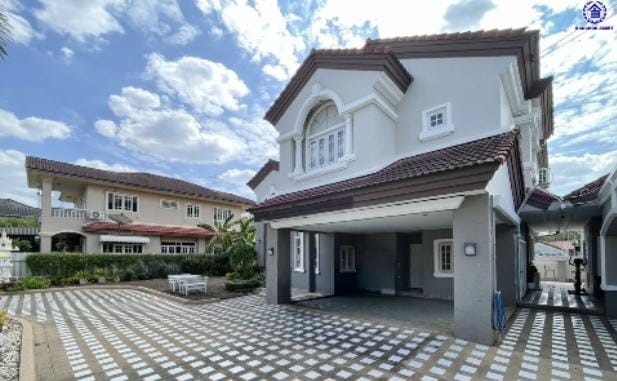
The purchase price is often the first figure buyers notice, but it should never be the only one guiding a home purchase. A lower-priced property may require extensive renovation, while a larger home may bring higher maintenance, utility, and travel costs. Equally, a house closer to central Bangkok may offer convenience but provide less privacy and usable living space.
Choosing wisely means balancing what the property costs today with how well it will serve the household over time. The strongest option is rarely the cheapest, largest, or most centrally located home. It is the one that provides practical space, manageable ownership costs, and a location that supports everyday life.
Understand What the Price Actually Includes
The asking price does not always reflect the full value a buyer receives. Two homes within a similar price range may differ considerably in land size, interior condition, number of bedrooms, parking, outdoor areas, privacy, and access to essential services.
A property that costs slightly more may already have a functional layout, well-maintained systems, and fewer immediate repair needs. By contrast, a lower-priced home may require painting, electrical work, plumbing repairs, air-conditioning replacement, or structural improvements before it becomes comfortable.
Buyers should therefore compare the price against the actual condition and usefulness of the property. A home that requires less work after completion may place less pressure on the household budget, even when its initial purchase price is higher.
Focus on Usable Space, Not Size Alone
A large floor-area figure can be appealing, but it does not automatically mean the home is practical. Long corridors, oversized rooms, awkward corners, or poorly positioned staircases may create space that adds little value to daily life.
Buyers should consider how the household will move through the home and how each room will be used. The number and placement of bedrooms, access to bathrooms, storage, parking, and the relationship between indoor and outdoor areas can matter more than total size.
A flexible floor plan also supports long-term family needs. A study might later become a nursery, guest room, or bedroom for an elderly relative. A ground-floor room may become increasingly useful as the household changes. These qualities can reduce the need to move again simply because the family enters a new stage.
Include Long-Term Ownership Costs
The cost of homeownership continues after the purchase is complete. Maintenance, repairs, utilities, garden care, community charges, insurance, security, and the eventual replacement of equipment should all be considered.
Larger detached homes may require more energy for cooling and lighting, as well as more time and money for cleaning and exterior maintenance. Outdoor areas can improve quality of life, but they may also require regular care.
The orientation of the house, natural light, ventilation, building materials, shade, and the condition of air-conditioning systems can influence both comfort and ongoing expenses. A home that manages heat and airflow effectively may be easier to live in than one that depends heavily on mechanical cooling throughout the day.
Location Has a Continuing Financial Impact
A property may appear affordable until the family calculates the time and cost of commuting. Daily travel to offices, schools, hospitals, shopping centres, and transport stations can become a significant part of the household budget.
Buyers should assess access to main roads, expressways, public transport, and alternative routes. Distance on a map does not fully describe the experience of travelling during busy periods, so the location should be tested against the family’s actual routine.
A home located farther from central Bangkok may still provide good value when it offers practical transport connections and nearby services. On the other hand, a larger property can become less appealing if every essential journey is difficult or expensive.
Comparing Homes Around Bangkok
Areas surrounding Bangkok can offer families more living space, privacy, parking, and outdoor room than many properties in the urban core. However, buyers should compare these advantages with commuting expenses, maintenance responsibilities, and the availability of schools, healthcare, and shopping.
Nonthaburi is one location where established communities and planned developments provide varied low-rise housing choices. Reviewing spacious homes near Bangkok in this area can help buyers compare usable space, building condition, neighborhood character, transport access, and long-term running costs rather than judging properties by size alone.
Different parts of the province may offer different road connections, community environments, and levels of convenience. Each property should therefore be evaluated in relation to the household’s priorities rather than by its provincial location alone.
Define Long-Term Value More Broadly
Long-term property value should not be understood only as the possibility of a higher resale price. For an owner-occupier, value also comes from the home’s ability to support daily life, remain comfortable, and adapt to changing needs.
A property may offer strong personal value when it provides space for remote work, children, elderly relatives, and family activities without requiring frequent alterations. A practical home can also reduce the disruption and expense of moving again when the household changes.
Buyers should consider whether rooms can serve different purposes, whether the property is manageable to maintain, and whether the surrounding area can continue to support the family’s routine. Any future extension or alteration should still be assessed against planning, structural, and community requirements rather than assumed to be automatically possible.
Inspect the Property and Documents
Before committing to a purchase, buyers should examine the physical condition of the house as well as the relevant documents. The roof, electrical system, plumbing, drainage, walls, floors, doors, windows, and equipment included in the sale may all affect future costs.
Land boundaries, contractual terms, community obligations, and details of the property should also be reviewed carefully. When concerns arise, qualified inspectors, engineers, legal advisers, or other independent professionals can provide a clearer understanding of the risks and responsibilities involved.
A visual inspection cannot always reveal hidden damage, and an attractive asking price should not discourage proper due diligence.
Finding the Right Balance
The most suitable home is not necessarily the property with the lowest purchase price or the greatest amount of space. It is the one that combines an affordable financial commitment with usable rooms, a practical location, and ownership costs the household can manage over time.
By comparing condition, layout, energy use, maintenance, commuting needs, and long-term flexibility, buyers can understand what they are truly receiving for their money. This broader approach turns the search from a simple price comparison into a more informed decision about how the home will support family life for years to come.
