

The modern consumer demands more than just aesthetics; they require environmental accountability. Launching an e-commerce fashion brand today means prioritizing planetary impact alongside profitability.
Greenwashing—making false or exaggerated environmental claims—is no longer a viable strategy. Shoppers possess the tools to research and verify brand claims instantly, making true transparency the only way to build lasting brand loyalty.
Data consistently shows that eco-conscious business models yield higher customer retention rates. By building your brand on a foundation of sustainability, you future-proof your business against upcoming environmental regulations.
Building an Eco-Friendly Supply Chain
An eco-friendly supply chain is the backbone of any modern retail operation. Implementing sustainable logistics requires a complete overhaul of traditional sourcing models and vendor relationships.
To understand the shift, we must look at how digital transformation is optimizing the future of digital supply chains. This transition relies heavily on selecting the right manufacturing partners and raw materials.
Sourcing Certified Raw Materials
Partnering with the right manufacturer is the foundation of any sustainable fashion label. It is imperative to work with suppliers who provide transparent material sourcing and possess verifiable credentials.
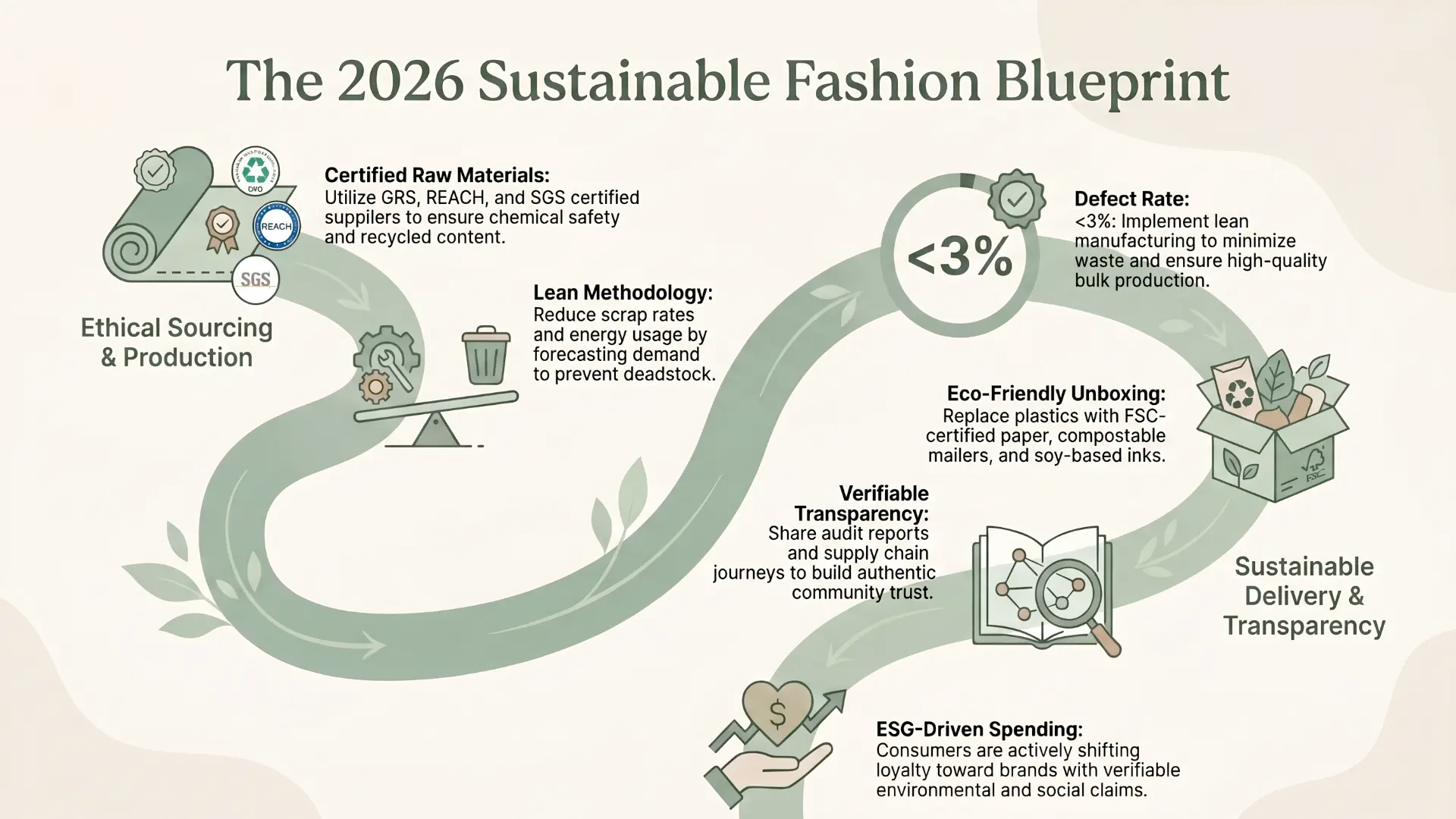
For instance, reputable Azonejewelry like Azone Jewelry set a benchmark by utilizing recycled stainless steel and brass. This ensures that bulk productions maintain a defect rate of less than 3% while strictly adhering to global compliance standards.
When vetting suppliers, always look for the following certifications:
- GRS (Global Recycled Standard): Verifies the recycled content of products and responsible social, environmental, and chemical practices.
- REACH: Ensures compliance with EU regulations concerning the safe use of chemicals in manufacturing.
- SGS: Provides independent inspection and certification of product quality and safety.
This level of traceability is exactly what modern consumers demand from their favorite brands.
Emphasizing Lean Manufacturing to Reduce Waste
Bulk production inherently carries the risk of excess waste and deadstock. Implementing lean manufacturing principles is critical to mitigating these environmental and financial hazards.
By forecasting demand accurately, brands can produce only what is necessary. Lean manufacturing minimizes material offcuts, optimizes energy usage, and significantly reduces overall carbon emissions.
Suppliers that practice lean methodologies often see a dramatic drop in their scrap rates. This not only benefits the planet but also drastically improves the brand’s long-term profit margins.
Packaging and Unboxing Experience
The unboxing experience is the first physical interaction a customer has with your e-commerce brand. Utilizing excessive plastic packaging instantly undermines your sustainability claims and damages buyer trust.
Leading brands are now unifying their eco-friendly messaging by investing in biodegradable and recyclable packaging solutions. Consider integrating the following materials:
- FSC-Certified Paper: Ensures all paper and cardboard come from responsibly managed forests.
- Compostable Mailers: Made from plant-based materials that break down naturally without leaving toxic residues.
- Soy-Based Inks: A renewable, less toxic alternative to traditional petroleum-based printing inks.
A thoughtful, minimalist unboxing experience reinforces your brand’s commitment to the environment while actively reducing shipping weights and costs.
Marketing Your Green Initiatives Authentically
Consumers are becoming increasingly savvy and will quickly call out brands guilty of greenwashing. However, when you communicate your sustainable efforts authentically—backed by real supply chain transparency—the market responds positively.
Leveraging these emerging e-commerce trends is crucial for positioning your brand effectively. Honest transparency builds a community of advocates, not just passive buyers.
According to recent market analyses on consumer behavior by McKinsey, consumers are actively shifting their spending toward products with verifiable ESG-related claims, proving they are willing to back up their values with their wallets.
Share your supply chain journey through behind-the-scenes content, audit reports, and manufacturer interviews. Real, verifiable transparency is your most potent marketing asset.
Key Takeaways
| Area | Key Takeaway | Impact/Data |
| Sourcing | Mandate GRS, REACH, and SGS certified suppliers | Achieves < 3% defect rate |
| Production | Implement lean manufacturing to prevent overproduction | Eliminates deadstock; boosts profit margins |
| Packaging | Adopt FSC paper and compostable mailers | Cuts shipping weights and costs |
| Marketing | Publish transparent supply chain audits | Captures value-driven consumer spending |
Conclusion
Launching a sustainable e-commerce fashion brand in 2026 requires strict adherence to supply chain compliance and eco-friendly material selection.
The era of fast, disposable fashion is rapidly coming to an end. Prioritizing certified materials, lean manufacturing, and honest marketing will separate industry leaders from the rest.
Take the necessary steps to audit your potential suppliers today. Your commitment to sustainability will drive long-term business growth and foster a healthier, more resilient planet.
