


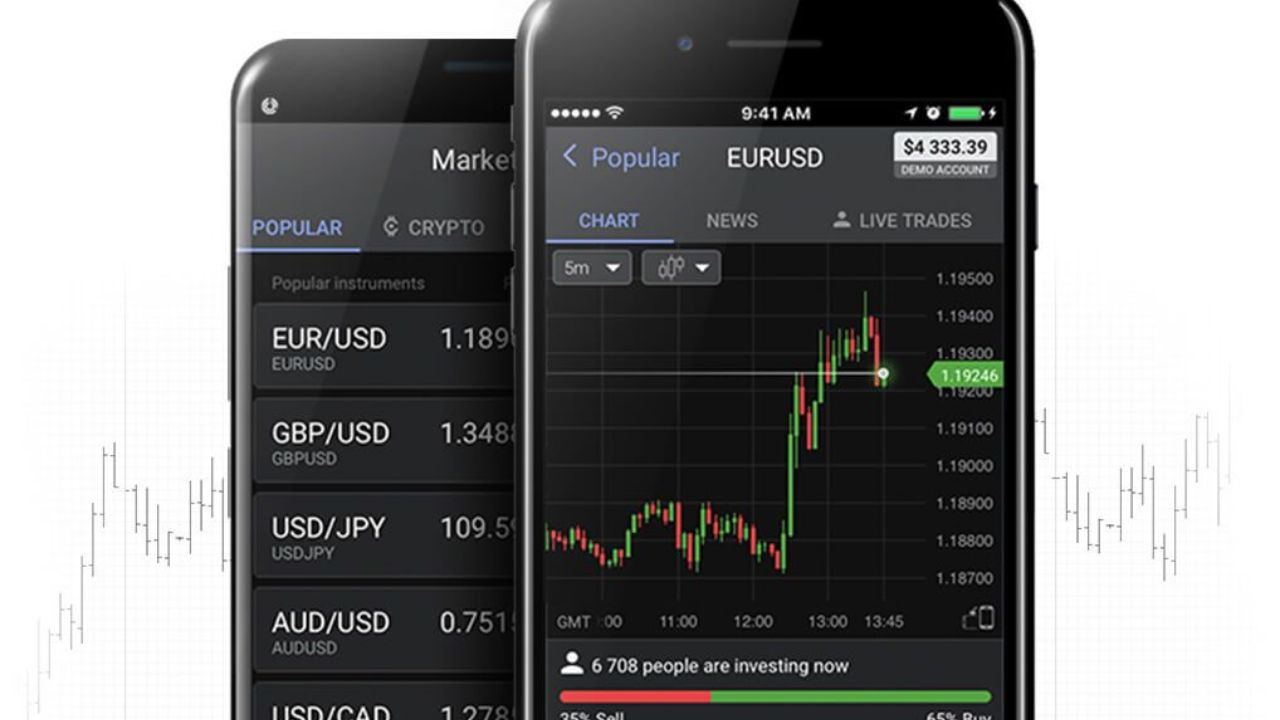
Not long ago, the retail trader worked in bursts. They opened a chart in one window. Read news in another. Checked the calendar in a third. Then tried to assemble it all in their head. The process looked like a carpenter sawing a board on the floor while searching for a hammer in the next room.
In 2026, the platform increasingly replaces that chaos with a single workspace. In one place, the trader sees price, volume, asset lists, the economic calendar, trade history, and risk settings. This changes more than speed. It changes the way the trader thinks.
In the past, the main task was to gather data. Now the main task is to see which data matters. Price no longer hangs in empty space. It sits next to news, volatility, and risk levels. The platform stops being a simple quote screen and becomes a decision panel.
As a result, analysis has become more practical. The trader spends less time searching. They spend more time testing the idea. That is a major shift. It shortens the process and makes each decision tighter.
Analysis Tools Have Been Brought Into One System
The main change in 2026 is simple. The trader no longer jumps between ten different services. They open one platform and get almost the full toolkit in one place.
That changes the rhythm of analysis. Before, the trader had to check the chart, then look for news, then review indicators, and only then assess the entry point. Now those elements sit side by side. It is like moving from a cluttered bench to a tool wall where every wrench hangs in its place.
Because of that, the retail trader works faster and with more precision. They see not only the price move, but also the setting around it. They notice where the market speeds up, where it tightens, and where a news release may knock price sharply out of range. This makes analysis not broader, but cleaner.
Platforms matter most when they combine technical analysis, multiple timeframes, the economic calendar, and automation. In that sense, metatrader5 shows clearly where platform design is heading. The trader gets access to multiple asset classes, flexible chart settings, built-in indicators, and algorithmic trading in one environment. That matters not because it looks modern, but because it shortens the distance from signal to decision.
When everything important sits in one system, the trader spends less time switching windows. They spend more time testing the idea and cutting weak points out of the setup.
Analysis Has Become Layered
A modern platform teaches the trader to view the market in layers, not on one flat surface. Many traders once saw only the price line. Now price is just the top layer. Under it sits the structure of the move.
A retail trader will usually check several things in sequence:
- Context. What is happening in the asset right now: a trend, a range, or a sharp burst.
- Timing. When a news event is due and where the market may jump without warning.
- Technical Structure. Levels, momentum, volume, candle shape, and price behavior across timeframes.
- Risk. Where to place the stop, how much can be lost, and whether the trade is worth that risk.
- Execution. Whether entry can be made quickly, whether liquidity is strong enough, and whether the spread will eat the idea at the gate.
This approach is like checking a road before a turn. It is not enough to see the steering wheel. You need to see the surface, the speed, the sign, and the distance to the edge. In 2026, the platform does exactly that. It does not think for the trader. It lays the market out on shelves so the decision rests on facts, not guesswork.
The Platform Has Shortened The Distance Between Signal And Action
In the past, a long chain sat between the idea and the trade. The trader noticed the move. Checked the news. Reviewed the levels. Calculated the risk. Then placed the order. At every step, the market could move ahead.
In 2026, the platform pulls those actions into one knot. That matters because the market does not wait. Good analysis loses value when execution lags behind it.
The table below shows how the workflow has changed:
| Stage | The Old Approach | The 2026 Approach |
| Finding The Signal | Separate charts and services | One unified workspace |
| Checking Context | Manual search for news and calendar events | Built-in events and alerts |
| Assessing Risk | Manual calculation | Fast settings for size, stop, and loss |
| Execution | Several extra steps | Entry from the same window |
| Adjusting The Position | Delayed reaction | Fast edits to orders and levels |
This shift changes the trader’s behavior. They hesitate less. They test the idea faster. The platform works like a well-made knife: every tool is within reach, with no wasted motion.
Automation Has Not Replaced Analysis, But It Has Made It Harder-Edged
Automation has changed the role of the retail trader. In the past, the trader searched for entries by hand, placed orders manually, and watched every move in price. Now the platform takes over part of that work.
But that does not mean less thinking is required. The opposite is true. When a platform can calculate, filter, and execute at speed, a weak idea breaks faster. Automation works like a sharp blade. It cuts with precision, but it does not decide where to cut.
A good platform speeds up not only correct decisions. It speeds up mistakes as well.
That is the core shift. The trader no longer wins through hand speed alone. They win through the quality of their rules. If the entry conditions are weak, automation simply leads to a loss faster. If the rules are clear, it strips out noise and helps the trader stay disciplined.
That is why strong retail analysis in 2026 is built more and more around three things: clear entry conditions, predefined risk, and clear exit rules. The platform helps enforce those rules without hesitation. It does not get tired. Does not panic. It does not argue with a logic that was set in advance. That matters because the market often attacks not knowledge, but self-control.
Conclusion
In 2026, the trading platform has stopped being a simple quote window. It has become a workspace where analysis, risk, and execution stand side by side. That changes retail trader behavior at a basic level.
The trader spends less time searching for data by hand. They see context faster. Test the idea in layers. They spot the weak point in the trade earlier. This does not make the market easier. But it does make the work cleaner, faster, and stricter.
The key shift is not the number of new features. It is the way those features are assembled. When the chart, calendar, indicators, risk controls, and order ticket sit in one system, the trader spends less effort on mechanics and more on the decision itself.
That is why modern platforms are changing not only the trader’s tools. They are changing the trader’s way of thinking about the market.
