


The traditional methods of songwriting, involving hours of lyrical brainstorming, melody composition, and intricate instrumentation, are being revolutionized by the emergence of Artificial Intelligence. Imagine a world where your prose, poems, or even a casual phrase can be transformed into a fully-realized musical piece. This is the promise of AI song creation.
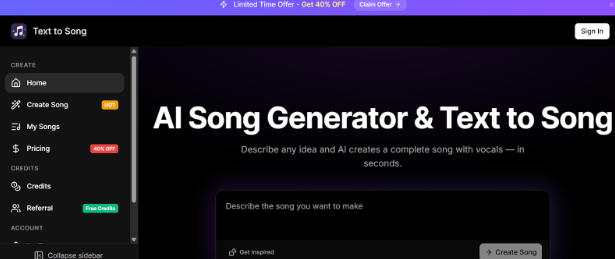
However, effectively harnessing this technology requires more than simply feeding text into an engine. It is a collaborative process between your creative vision and the capabilities of the AI. One particularly effective platform for exploring this potential is Text to Song AI, which allows users to convert text into diverse musical styles seamlessly.
Here are eight crucial tips to guide you through this exciting new frontier.
1. Structure is Your Foundation
Just as a building needs a sturdy frame, a song requires a clear structure. While AI can work with raw text, providing structured lyrics dramatically improves the output’s musicality. Identify your verses, a compelling chorus that repeats, and perhaps a bridge that provides a stylistic shift.
If your input text is a simple paragraph, the AI might struggle to establish a consistent rhythmic or thematic flow. Explicitly labeling these sections (e.g., “[Verse 1],” “[Chorus],” “[Bridge]”) provides invaluable cues for the AI’s composition algorithms. This formatting tells the AI when to build tension and when to deliver a melodic “payoff.”
2. Clarity and Simplicity in Lyrical Craft
Complex metaphors and intricate, nested sentences that sparkle in written poetry can sometimes confuse an AI’s melody-generation processes. The most successful AI-generated songs often rely on clear, concise, and rhythmically predictable language.
Think about the directness of a well-crafted pop hook. When crafting your lyrics for an AI engine, strive for simplicity. Read your lines aloud to assess their inherent rhythm and ease of vocalization. If a sentence is a mouthful for you to say, it will likely result in a clunky musical phrasing from the AI.
3. Evocative Imagery and Descriptive Keywords
AI engines often utilize sophisticated keyword analysis to understand the intended mood and style of the text. Don’t be afraid to include descriptive words that evoke a particular feeling or atmosphere.
If your song is about nostalgic regret, include words that paint that emotional picture—”amber,” “echo,” “fading,” or “hollow.” This “mood programming” helps the AI select appropriate instrumentation, chord progressions, and vocal styles, steering the composition away from generic outputs and toward something specifically tailored to your narrative.
4. Provide Specific Style Guides
The more information you give the AI about the intended musical genre, the better. Many platforms, including Text to Song AI, offer a selection of pre-defined genres like Pop, Rock, or Classical. However, you should go deeper than just a broad category.
Think about tempo (fast and upbeat vs. slow and melancholic) and energy level. If the platform allows for additional prompts, provide detailed instructions like “90s grunge aesthetic” or “lo-fi hip hop with a jazz piano undertone.” Specifying key instruments—such as “heavy synth bass” or “delicate violin solo”—acts as a stylistic compass that keeps the AI on track.
5. Leverage Iteration: The Power of Revision
Generating the perfect song on the first try is rare, even for human songwriters. AI should be viewed as a tool for initial creation and exploration. Many AI music platforms allow you to generate multiple versions based on the same input.
Don’t simply accept the first draft. Take the initial output, analyze what works (perhaps you love the chorus melody but hate the drum beat), and refine your input text. You might change a few words to better fit the rhythm or adjust the style tags. This iterative process is crucial for sculpting the composition into something that truly reflects your artistic vision.
6. Vocal Instructions are Key
If your chosen platform features vocal generation, pay close attention to how you describe the performance. The “soul” of a song often lives in the vocal delivery.
Be specific about the voice type (e.g., “husky alto,” “soulful tenor,” or “whispered narration”) and the emotional weight. For instance, requesting “breathy pop vocals” will yield a vastly different result than “operatic vibrato.” Some advanced tools even allow you to specify where the singer should pause or emphasize certain words, adding a layer of realism that bridges the gap between machine and human.
7. Understand the Tool’s Strengths and Limitations
Different AI music tools excel at different things. Some are masters of creating complex orchestral arrangements, while others are better suited for catchy pop melodies or electronic textures.
Before committing to a single platform, spend time exploring how various engines interpret your text. Platforms like Text to Song AI are designed with accessibility in mind, making them excellent starting points for generating complete, coherent tracks quickly. Understanding the unique “personality” of the AI you are using will help you manage your expectations and select the right tool for your specific project.
8. Mastering Post-Production: The Final Human Polish
Perhaps the most important tip is to recognize that the AI-generated track is often just the beginning. The most compelling results arise from combining AI-generated elements with traditional music production techniques.
You might take a melody generated by the AI and re-record it with a real guitar, or use the AI-generated stems as a backing track for your own live vocals. Using Digital Audio Workstations (DAWs) to refine the arrangement, add subtle effects, and master the final mix provides the “human touch” that resonates with listeners.
Conclusion
The landscape of music creation is changing at a breathtaking pace. By utilizing AI to create songs from text, we are moving into an era where the barrier to entry for songwriting has never been lower. These tools are not intended to replace the artist; rather, they serve as a powerful “co-writer” that can break through writer’s block, provide instant inspiration, and handle the technical heavy lifting of arrangement.
Whether you are a professional musician looking for new ideas or a hobbyist wanting to hear your poetry set to music, following these tips will ensure your AI collaborations are productive and artistic. By focusing on structure, clarity, and iterative refinement, you can harness the raw processing power of AI to produce music that is deeply personal and professionally polished.
The most profound musical outcomes will likely always emerge from this synergy—the seamless collaboration between technological innovation and the nuanced, emotional depths of the human spirit.
