


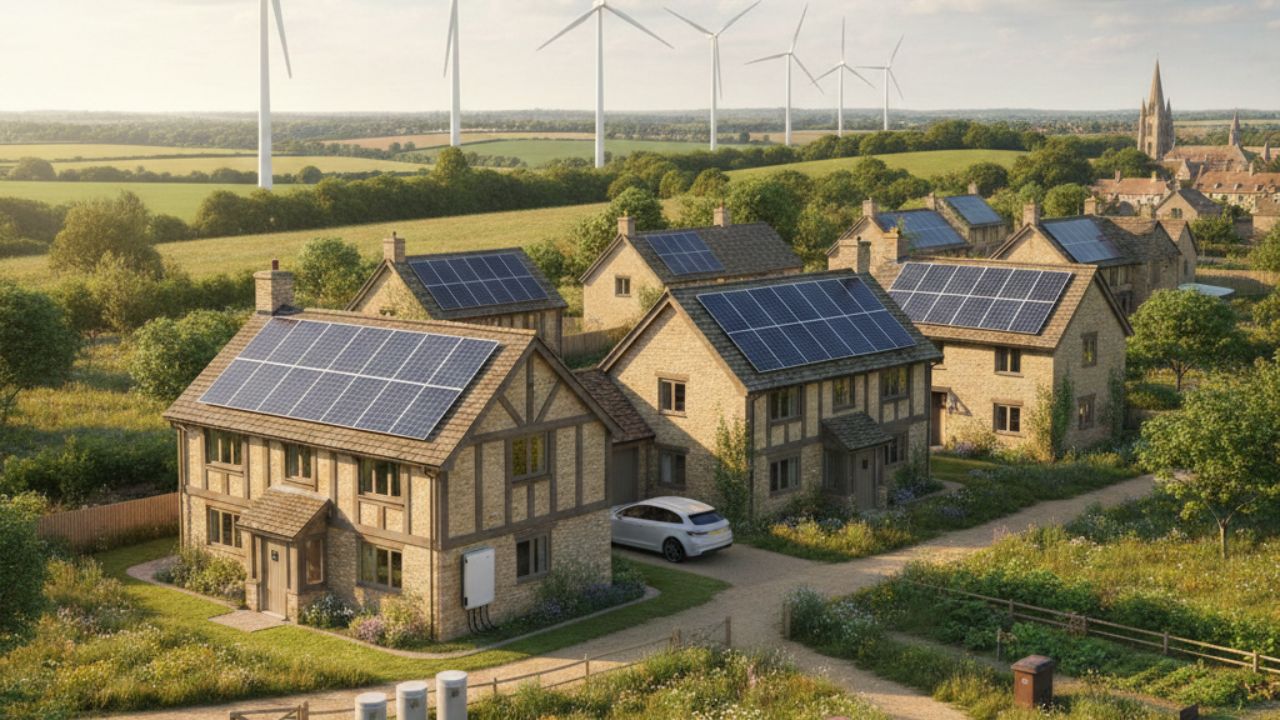
Understanding how energy is currently used across Oxfordshire is a useful starting point if you’re considering making your home more energy-efficient. The county is steadily transitioning towards a lower-carbon future, driven by rising energy costs, environmental targets, and growing homeowner awareness.
Adopting renewable energy solutions can reduce household emissions, improve long-term energy security, and enhance property value. Across Oxfordshire, homes are increasingly being designed or upgraded with sustainability and efficiency in mind, making renewable energy a practical part of everyday living rather than a specialist upgrade.
Key Takeaways
- Renewable energy is becoming a standard feature in Oxfordshire homes
- Sustainable upgrades reduce environmental impact and long-term energy costs
- Renewable systems can improve property value and energy resilience
- Smart technology is increasingly paired with renewable generation
- Community-led initiatives are accelerating local adoption
The Current State of Energy in Oxfordshire Homes
Knowing how energy is currently used is a key step in switching to renewable energy. Oxfordshire homes vary widely in age, construction type, and infrastructure, which influences how energy is currently consumed and how easily homes can transition to cleaner alternatives.
Traditional Energy Usage and Challenges
Many homes in Oxfordshire still rely on gas boilers and grid electricity generated partly from fossil fuels. This dependency exposes households to volatile energy prices and contributes to ongoing carbon emissions.
Older housing stock can also suffer from poor insulation and inefficient heating systems, increasing energy demand and limiting the effectiveness of renewable upgrades unless efficiency improvements are addressed alongside generation.
The Shift Towards Sustainability
A growing number of Oxfordshire homeowners are actively seeking ways to reduce carbon emissions and future-proof their homes. Renewable technologies such as solar PV, heat pumps, and improved insulation are increasingly viewed as long-term investments rather than optional upgrades.
This shift is supported by greater public awareness, improved technology performance, and clearer information around costs and savings.
Oxfordshire’s Green Energy Targets
Oxfordshire has set ambitious goals to reduce carbon emissions and increase renewable energy adoption across residential and commercial properties. The county aims to transition from carbon-neutral status to becoming carbon negative by 2050, removing more carbon from the atmosphere than it emits.
Local authorities support homeowners by offering planning help, guidance, and aligning with sustainability goals to encourage participation.
| Year | Target Reduction in Carbon Emissions | Renewable Energy Adoption Rate |
| 2025 | 20% | 30% |
| 2030 | 40% | 50% |
| 2035 | 60% | 70% |
Popular Renewable Energy Solutions Oxfordshire Homeowners Are Embracing
Renewable energy adoption in Oxfordshire reflects both local conditions and property types. Homeowners are selecting solutions that balance efficiency, cost, and suitability for their homes.
Solar PV Systems: Harnessing Oxfordshire’s Sunlight
Solar PV systems are one of the most widely adopted renewable energy solutions in Oxfordshire. Despite variable weather, solar panels generate electricity year-round and perform well under diffuse daylight conditions common in the UK.
For many households, solar PV reduces reliance on grid electricity, stabilises energy costs, and provides long-term value when paired with battery storage.
Heat Pump Technology: Air and Ground Source Options
Heat pumps are increasingly popular, particularly in well-insulated homes. Air source heat pumps are more common due to lower installation complexity, while ground source systems offer higher efficiency where space allows.
These systems provide low-carbon heating and cooling and are most effective when installed as part of a wider home efficiency upgrade.
Biomass Heating Systems for Rural Properties
Biomass heating systems remain a viable option for rural Oxfordshire homes without access to the gas grid. By using wood pellets or logs, these systems offer renewable heat with predictable fuel costs.
However, biomass systems require fuel storage space and regular maintenance, making them better suited to larger or rural properties.
Small-Scale Wind Energy Solutions
Small-scale wind systems are less common but can be effective on suitable properties with sufficient land and consistent wind exposure. Planning constraints and site conditions limit their applicability, but where viable, they provide clean supplemental electricity.
Financial Aspects of Renewable Energy Adoption
Understanding financial implications is a key part of deciding whether renewable energy is right for your home.
Initial Investment Costs and ROI Timelines
Renewable systems typically involve higher upfront costs but deliver long-term savings. Payback periods depend on system type, energy usage, and integration with storage or efficiency upgrades.
| Renewable Energy System | Average Initial Cost | Typical ROI Timeline |
| Solar PV System | £7,000–£8,000 | 7–10 years |
| Heat Pump System | £8,000–£12,000 | 10–12 years |
| Biomass Heating System | £10,000–£20,000 | 12–15 years |
Note: These prices are indicative estimates and can vary based on system size, location, and installer expertise.
Available Grants and Incentives for Oxfordshire Residents
While direct grants are limited, several schemes support renewable adoption. For example, the UK’s Smart Export Guarantee (SEG) pays homeowners for excess energy exported to the grid. Incentives are often tied to system performance and compliance with recognised standards.
Additionally, some local schemes offer low-interest loans or rebates for energy-efficient upgrades, making renewables more accessible.
Energy Bill Savings: Real-World Figures
Typical Oxfordshire households with solar PV systems save above £300 annually, depending on usage patterns and system size. Heat pumps can also deliver substantial savings in well-insulated homes when replacing older heating systems.
Smart Home Integration with Renewable Energy Systems
Renewable energy systems increasingly work alongside smart home technologies to improve efficiency and control.
Energy Monitoring and Management Technologies
Energy monitoring platforms provide real-time insights into electricity generation and usage. This allows homeowners to adjust habits and identify inefficiencies that reduce system performance.
Battery Storage Solutions for Oxfordshire Homes
Battery storage enables excess electricity generated during the day to be stored for evening use. This improves self-consumption rates and reduces grid reliance, particularly when combined with time-of-use tariffs.
Optimising Energy Usage Through Smart Controls
Smart controls coordinate heating, lighting, and appliance use with renewable generation. This automation ensures energy is used when it is cheapest or cleanest, maximising system value.
| Smart Home Technology | Benefits | Examples |
| Energy Monitoring | Identifies inefficiencies | Smart meters, monitoring apps |
| Battery Storage | Reduces grid reliance | Home battery systems |
| Smart Controls | Automates usage | Smart thermostats, lighting |
Community Energy Initiatives in Oxfordshire
Community-led energy projects are playing an increasing role in Oxfordshire’s renewable transition.
Local Energy Cooperatives and Schemes
Energy cooperatives allow residents to collectively invest in renewable projects, sharing both costs and benefits while strengthening local engagement.
Shared Renewable Resources and Benefits
Shared resources enable access to renewable energy for residents who may not be able to install systems individually.
| Aspect | Traditional Energy | Community Renewable Energy |
| Energy Source | Fossil fuels | Solar, wind, hydro |
| Cost Stability | Volatile | More predictable |
| Community Benefit | Limited | Direct local benefit |
Conclusion: Embracing a Sustainable Future for Your Oxfordshire Home
Renewable energy is reshaping how Oxfordshire homes are powered, heated, and managed. Solar PV, heat pumps, biomass, and smart technologies offer practical alternatives to traditional energy systems.
By understanding system options, financial implications, and installation requirements, homeowners can make informed decisions that support both environmental goals and long-term household resilience.
FAQ
What are the most popular renewable energy solutions for homes in Oxfordshire?
Solar PV systems are the most common renewable energy solution across Oxfordshire, largely due to their flexibility and suitability for a wide range of property types. Heat pumps are also increasingly popular, particularly in well-insulated homes, while biomass heating remains a practical option for rural properties without access to the gas grid. Small-scale wind energy is less widespread but can be viable in specific locations with sufficient land and wind exposure.
How do I know if my Oxfordshire home is suitable for renewable energy installations?
Suitability depends on factors such as roof orientation, available space, insulation levels, existing heating systems, and local planning constraints. A professional property assessment will evaluate your home’s energy demand and physical characteristics to determine which renewable technologies are realistic and cost-effective. This assessment helps avoid underperforming systems and ensures any installation is designed around real conditions rather than assumptions.
How can I monitor and manage my renewable energy usage effectively?
Most modern renewable energy systems include monitoring tools that provide real-time data on energy generation and consumption. These tools allow homeowners to understand when energy is being produced and used, helping to adjust habits such as appliance use to maximise self-consumption. Over time, monitoring also helps identify performance issues early and supports better long-term efficiency.
Can I integrate my renewable energy system with smart home technologies?
Yes, renewable energy systems can be integrated with smart home technologies such as smart thermostats, battery systems, and automated controls. This integration allows energy use to be aligned with renewable generation, reducing reliance on grid electricity during peak times. Smart controls are particularly effective when combined with battery storage and time-of-use tariffs.
How do community energy initiatives work in Oxfordshire?
Community energy initiatives allow residents to collectively invest in and benefit from renewable energy projects, even if they cannot install systems on their own properties. These projects often involve shared solar or wind installations on community buildings, with financial returns reinvested locally. Participation helps increase access to renewable energy while strengthening local engagement and resilience.
