

Key Takeaways
- Companies expanding globally can cut ticket volume by 30–40% by pairing self-service with a multilingual knowledge base that speaks each customer’s preferred language.
- Customers resolve issues 20–30% faster in their native language, reducing misunderstandings and follow-up tickets.
- Manual translation across 5–20 languages creates 3–4 week delays per update, causing outdated content that drives unnecessary tickets.
- Zendesk localization automation keeps every language version aligned with product releases without slowing teams down.
- A structured rollout over 6–12 months can achieve measurable 40% ticket reduction while controlling translation costs.
Why Reducing Support Tickets Matters in 2025–2026
Picture this: your SaaS team just shipped a major feature update, and within 48 hours, your ticket backlog has swelled by 30%. Agents scramble to answer the same questions in multiple languages. Black Friday 2025 is approaching, and you’re already dreading the flood.
This scenario plays out constantly for global products. Ticket reduction means fewer inbound tickets per month, lower backlog, and fewer repeat tickets on the same issues. A support team handling 10,000 tickets monthly can realistically aim to bring that down to 6,000 by investing in multilingual self-service.
The business impact is substantial:
- Shorter response times as agents handle fewer repetitive questions
- Reduced agent burnout from constant high-volume queues
- Budget reallocation from headcount growth to product improvements
- Lower cost per ticket (support costs average $15–25 per interaction and rise 23% annually)
For global products, language mismatch has become one of the top drivers of unnecessary tickets, especially in Europe, LATAM, and APAC markets where non-native English support creates friction.
How a Multilingual Knowledge Base Directly Reduces Support Tickets
Let’s connect the dots explicitly: a multilingual knowledge base serves as your primary ticket deflection engine. Companies implementing robust self-service strategies achieve 40–60% fewer tickets within six months, according to industry benchmarks.
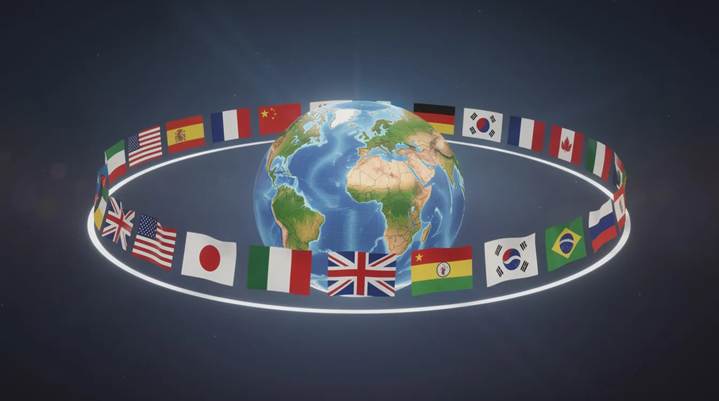
A knowledge base becomes multilingual when every core article – FAQs, how-tos, release notes – exists in each priority language. For most global teams, this means English, Spanish, German, French, Portuguese, and Japanese as starting points.
Three main deflection levers drive ticket reduction:
| Lever | Impact | Example |
| Self-solving | 60–70% | Customer reads localized password reset guide instead of submitting ticket |
| Clearer instructions | 20–30% | Fewer follow-up questions because steps match native language UI |
| Reduced duplicates | 10–20% | Customers search existing translated content before contacting support |
Track metrics like self-service score, tickets per 1,000 active users (target under 5), and the percentage of help center sessions that end without a support ticket.
Before/after example: A B2B SaaS vendor added localized onboarding guides in Q3 2025. Non-English password reset tickets and setup questions dropped by 30–50% within a single quarter.
Why Manual Translation Fails as You Scale Global Support
Here’s a familiar story: a support leader tries to keep 8 languages up to date using spreadsheets and freelance translators every time a new feature ships. The result? Chaos.
Specific pain points accumulate quickly:
- Long handoff cycles of 3–4 weeks to update all supported languages
- Missed releases where only English gets updated
- Ghost articles that remain outdated in one or two languages for months
- Inconsistent terminology across different translators and time periods
By mid-2026, a typical product team may ship small changes weekly. That means hundreds of documentation tweaks per quarter that must stay synchronized across every locale. The support team’s primary language articles get updated, but translated articles lag behind.
The downstream effect: customers in France or Brazil see old screenshots, outdated pricing, or deprecated field names. They open tickets for clarification. Support staff must explain changes one by one, creating a backlog of new tickets that shouldn’t exist.
Ad-hoc translation costs more in agent time and customer churn than a structured, automated localization workflow. Repeated translations of the same content by different freelancers waste budget while delivering inconsistent quality.
Introducing Zendesk Localization Automation as the Foundation
The help center itself – built on Zendesk Guide or Zendesk Suite – can become a centralized repository and single source of truth for every language, updated automatically with each product release.
The desired experience works like this: product managers or technical writers update the English master article. Localization automation immediately propagates changes for translation in all active locales. No spreadsheets. No manual handoffs. No weeks-long delays.
Zendesk localization automation isn’t just machine translation. It’s a workflow layer that manages versions, approvals, and publishing per language at scale. The translation management system handles routing, quality checks, and synchronization.
To scale this process efficiently, many teams adopt automated solutions like zendesk translation, ensuring that every help article stays synchronized across languages with each product update while eliminating the delays of manual translation.
This approach unlocks:
- Consistent terminology through shared glossaries
- Version tracking linking each localized article to its English source
- Configurable workflows routing content to AI translation tools or professional translators based on content type
- Publication rules ensuring priority markets never lag behind
Designing a Multilingual Knowledge Base That Actually Deflects Tickets
Simply having translations isn’t enough. An effective multilingual knowledge base requires articles that are structured, discoverable, and focused on real support demand. You need the right tools and methodology.
Start from actual ticket data:
- Export Zendesk tickets from the last 3–6 months
- Group by tags, topics, and language
- Identify the top 30–50 question types driving ticket volume
- Create or refine English “master” articles for these use cases first
Map each article to a user journey stage – onboarding, daily use, troubleshooting, billing – then ensure language support for your top 5–10 markets by revenue.
Best practices for layout that deliver high quality translations:
- Clear headings with numbered step-by-step instructions
- Localized screenshots matching the target language fluently
- Callouts for region-specific rules (EU VAT, Brazilian tax IDs, safety instructions)
- Short paragraphs that translate cleanly into different languages
Prioritizing Languages and Content for Maximum Ticket Reduction
Most teams should not start by translating everything. Focus on languages that generate the highest ticket volume and revenue. Customer demographics and support data reveal where to begin.
Phased rollout approach:
| Phase | Languages | Articles | Timeline |
| Phase 1 | Top 3 (e.g., Spanish, German, Portuguese) | 30 core articles | Months 1–3 |
| Phase 2 | Expand to 5–8 | 100+ articles | Months 4–8 |
| Phase 3 | Additional languages as needed | Full coverage | Months 9–12 |
Combine analytics from Zendesk (ticket countries, categories) with product usage data to decide which flows must be localized first. Revisit priorities quarterly – add Korean or Italian when regional adoption spikes.
This targeted approach helps achieve 40% reduction faster without overextending translation budgets in year one. Your customer base expands gradually, and your multilingual customer support scales with it.
Structuring Articles for Easy Machine and Human Translation
Writers should follow consistent templates that make it easier for translation tools to maintain clarity:
- Short intro explaining what the article covers
- Prerequisites listed upfront
- Numbered steps with one action per step
- Troubleshooting section for common errors
- FAQ addressing edge cases
Avoid idioms and culture-specific references that localize poorly. Prefer straightforward language that works across 10–15 languages without losing cultural nuances or creating confusion.
Build reusable components: shared snippets for standard warnings, security notices, or refund policies. Translate once, reuse across hundreds of articles. This saves time while ensuring consistency.
Maintain a glossary of key product terms and UI labels. When translations stay consistent across all Zendesk articles and in-app copy, search engine optimization improves, driving more organic traffic to your help center. Users quickly find relevant information because terminology matches what they see in the product.
How Zendesk Localization Automation Works in Practice
The technical flow follows a clear path: English source articles in Zendesk Guide serve as the “master.” Each localized variant is automatically created, updated, and tracked as changes ship.
Automation triggers translation jobs whenever a master article is created or edited. Content routes through a preferred translation engine or vendor, then returns to Zendesk for review and publish. This translation method eliminates manual coordination.
Versioning links each change to corresponding localized versions. Support managers always know which languages are out of date. Publication rules can require all languages to update before new versions go live, or allow priority markets to update first while others catch up.
Choosing the Right Translation Mix (Human vs. AI)
Teams rarely choose only human expertise or only machine translation. The optimal approach mixes both based on content type and risk level.
| Content Type | Recommended Approach |
| Minor UI wording changes | AI translation tools with light review |
| Feature announcements | Machine translation, scheduled publish |
| Legal policies, payment instructions | Professional translators, mandatory review |
| Security documentation | Native speakers with domain expertise |
Automation routes articles to different workflows: high-priority languages plus critical categories go to human review. Others flow directly from machine translation to publish.
As glossaries and translation memory grow, AI-produced drafts become more accurate. Review time halves, enabling near real-time multilingual updates. AI powered solutions continue improving, but human expertise remains essential for complex issues and content fresh with legal implications.
Keeping All Languages in Sync with Constant Product Releases
With weekly or bi-weekly product deployments between 2024 and 2026, teams face thousands of small documentation changes annually. Localization automation subscribes to product change logs or documentation repositories like Google Drive, ensuring help center updates happen simultaneously with UI changes.
A simple governance model works:
- Product managers log breaking changes
- Technical writers update the English article
- Localization flows kick in automatically within 48 hours
- Priority languages publish first, others follow
“Sync” means more than text. Screenshots, field names, and step labels must match the current user interface in every language. Schedule quarterly audits using analytics to detect languages where search failure or ticket spikes indicate out-of-sync documentation. Keep translated content current by maintaining this cadence.
Measuring the Impact: Can You Really Cut Tickets by 40%?
Ticket reduction must be proven with data, not anecdotes. Establish a clear baseline before rolling out multilingual support automation.
Baseline period (e.g., Q1 2025):
- Total monthly tickets (English vs. non-English)
- Tickets per active user by region
- Backlog size and resolution time
- Unresolved tickets by language
After launching localized articles and automation, track the same metrics over 3–6 months. Control for seasonality – compare Q3 2025 to Q3 2024, not to Q2 2025.
Additional signals to monitor:
- Knowledge base article views by language (target 2x pre-launch)
- Search success rate in key locales (aim for 80%+)
- Percentage of users who visit help center without submitting tickets
Example: A company entering Brazil and Germany saw Portuguese and German ticket volume fall by 35–45% within two quarters as localized self-service matured. User feedback confirmed customers appreciated instant answers in their preferred language.
Connecting Localization Metrics to Support KPIs
Create a dashboard combining Zendesk metrics (ticket counts, handle times, CSAT) with localization data (translated articles count, average update lag per language).
Correlate ticket spikes tagged for specific features or countries with missing or outdated localized help center content. As translation latency shrinks – time from English change to localized publish – teams should see fewer tickets within 48–72 hours after product updates.
Monitor customer satisfaction and NPS by language. Improved scores in localized markets often accompany ticket reductions, validating your strategy. Use these metrics to justify continued investment in localization automation and expansion to a wider audience.
Implementation Roadmap: From Monolingual Help Center to Global Multilingual Hub
Success comes from structured rollout rather than attempting overnight translation of everything. A 4-phase roadmap spans 12 months, with cross-functional ownership between support, product, marketing, and localization teams.
Change management matters: train support agents to rely on the knowledge base, encourage them to flag gaps, and gradually steer customers toward self-service flows. Stay ahead of ticket backlogs by proactively creating resources for known issues.
Phase 1 (Month 1–2): Audit and Strategy
- Export 3–6 months of Zendesk tickets; identify top drivers by language and category
- Evaluate current help center: which articles exist, which are missing or outdated
- Define target languages based on customer concentration (English, Spanish, Portuguese, German, French, Japanese for most global teams)
- Set measurable goals: 20% reduction in 3 months, 40% in 12 months
- Document quality policies per language and content category
Phase 2 (Month 3–4): Build the Core Multilingual Library
- Create or refine English master articles for top 30–50 issues
- Organize using Zendesk categories: account access, billing, shipping, integrations, security
- Translate initial set into top 3–5 languages using AI/human mix based on risk
- Launch with clear language switchers (dropdown menu or locale detection)
- Begin measuring deflection by comparing related tickets before and after launch
Phase 3 (Month 5–7): Implement and Tune Zendesk Localization Automation
- Connect Zendesk Guide with translation engines or vendor workflows
- Configure triggers for different states: draft, in translation, review, approved, published
- Test full cycle with subset of articles – verify propagation speed
- Set rules ensuring priority languages never lag more than 48 hours after critical changes
- Train teams on centralized workflow requirements
Additionally, configure Zendesk Support localization settings to align time zones, date formats, and language defaults with each target region — this ensures that automated workflows respect local conventions and customers see information in their preferred format, reducing confusion and support escalations across all markets.
Phase 4 (Month 8–12): Expand Coverage and Continuously Improve
- Add more languages based on updated customer data and organic traffic patterns
- Expand beyond core articles to long-tail topics still generating repetitive tickets
- Incorporate user feedback widgets on articles in every language
- Run quarterly reviews comparing ticket volume, CSAT, and self-service usage across regions
- Iterate on automation rules, glossaries, and translation memory to deliver high quality translations consistently
Conclusion
In an era of continuous product updates and global customer bases, support teams cannot meet expectations with English-only, manually translated documentation. The math simply doesn’t work when you’re shipping weekly and serving customers in multiple languages across new markets.
Customers resolve issues faster and with less frustration when they access clear, localized help center content in their native language. This isn’t a nice-to-have – it’s a competitive requirement for any company targeting a global audience.
The 40% ticket reduction target is achievable when teams combine a well-designed multilingual knowledge base with Zendesk localization automation and data-driven prioritization. Salesforce Knowledge users and Zendesk customers alike benefit from treating localization as core infrastructure rather than afterthought.
Treat multilingual support as integral to every product release and documentation update. The customer experience depends on up to date information in every supported language.
By 2026, the most efficient support organizations will treat global, multilingual self-service as their primary channel – with tickets reserved for truly complex, high-value conversations that require human expertise.
FAQ
How many languages should we support in our knowledge base to see a real ticket reduction?
Most teams see meaningful gains with at least 3–5 languages corresponding to their largest customer segments and highest ticket volume. It’s better to have excellent depth in a few high-impact languages than thin coverage across many. Revisit your language mix annually as your customer distribution changes, adding languages when regional usage crosses clear thresholds.
What is a realistic timeline to see a 40% drop in support tickets?
Results depend on starting maturity, but organizations typically see noticeable reductions within 3–6 months for targeted topics. Achieving around 40% reduction usually takes 6–12 months of consistent content creation, localization, and optimization. Set interim goals – 10–20% in the first quarter – tied to specific content rollouts and automation milestones.
Do we still need human agents if we invest heavily in multilingual self-service and automation?
Absolutely. Support agents remain essential for complex, emotionally sensitive, or high-value issues that articles alone cannot resolve. The main benefit of a multilingual knowledge base is freeing agents from repetitive, low-complexity tickets so they can focus on higher-impact work. Improved self-service actually raises overall customer satisfaction and helps agents maintain quality service levels.
How do we maintain brand voice and legal accuracy across many languages?
Build style guides and glossaries for each target language covering tone, terminology, and region-specific legal phrasing. Require human review for legal policies, pricing terms, and compliance notices – even when using machine translation as a first draft. Zendesk localization automation combined with translation memory enforces consistency over time, saving time even as teams change.
What happens if our product UI is only partially translated, but the knowledge base is fully multilingual?
Mismatches between UI languages and knowledge base content confuse users, especially when labels and buttons differ from article screenshots. Coordinate UI localization and help center localization so terminology matches what users actually see. Annotate any temporary discrepancies in articles and schedule follow-up updates once UI translations complete.
