
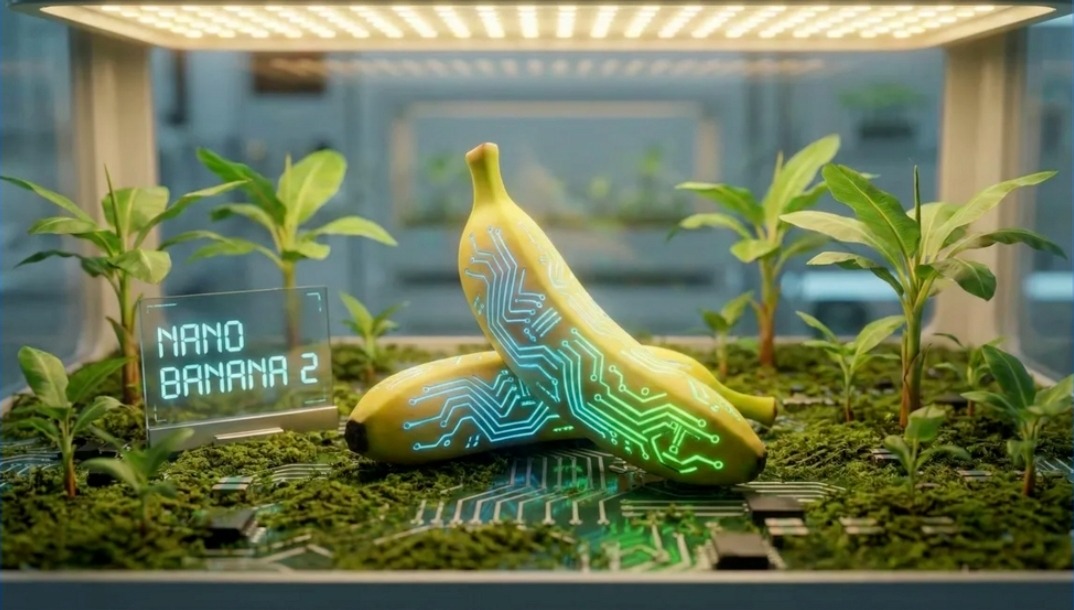
The relentless demand for fresh visual content has created a significant strain on modern creative departments. Small teams often find themselves overwhelmed by the sheer volume of assets required to maintain a presence across multiple digital channels, leading to a noticeable drop in quality and brand consistency. When creative speed cannot match market velocity, the resulting friction often leads to missed engagement opportunities and strategic stagnation. Adopting a professional AI Photo Editor like Nano Banana 2 provides a necessary bridge, allowing for the rapid generation of high-fidelity visuals without the technical overhead traditionally associated with high-end graphic design suites.
In my observation, the shift toward neural-based creation is not about replacing human intuition but about removing the technical barriers that stifle it. The ability to move from a rough idea to a polished, platform-ready graphic in a matter of seconds allows for a more fluid and iterative design process. This efficiency is particularly evident when working with complex projects that require specific lighting, textures, or typography. By leveraging the latest advancements in Gemini-based imaging technology, creators can reclaim the time they once spent on manual pixel manipulation and refocus their energy on high-level strategic storytelling.
The Operational Impact of Controlled Image Editing in Digital Marketing
The primary challenge with early generative tools was their inherent unpredictability. For a professional marketer, a tool that generates a random beautiful image is far less valuable than one that can precisely modify an existing asset. If you have a product shot that is perfect except for the background or the lighting, you need a system that can target those specific elements without altering the subject itself. Nano Banana 2 addresses this by providing a controllable workflow that prioritizes semantic editing over random generation.
From a technical perspective, the ability to perform targeted image-to-image transformations is what separates a toy from a tool. In my testing, the platform manages to preserve the structural integrity of the uploaded subject while allowing for deep creative reimagining of the surroundings. This capability is essential for businesses that need to adapt a single product photo for multiple seasonal campaigns or different regional aesthetics. By maintaining the core subject and iterating on the environment, brands can achieve a level of consistency that was previously only possible through expensive and time-consuming professional photoshoots.
Solving the Legibility Crisis with Integrated Native Typography Rendering
One of the most persistent hurdles in the world of Banana Pro has been the failure to render readable text. For years, designers have had to manually superimpose headlines and logos onto AI backgrounds, often resulting in a visual disconnect where the text feels “pasted on” rather than integrated into the scene. Nano Banana 2 has made significant strides in this area by treating typography as a native component of the image generation process. This means that text elements can now interact with the 3D space, shadows, and lighting of the generated environment.
In my analysis, the stability of this native rendering is a major advantage for creators of posters, social media banners, and invitations. The system allows for the placement of crisp, aligned, and highly readable text directly within the 4K output. This integration ensures that the typography feels like an organic part of the composition, which is critical for maintaining a high-end, professional look. Whether you are generating a logo or a complex marketing graphic, the ability to handle text natively within the generator significantly streamlines the production pipeline.
Creating Scalable Visual Identity Systems for the Modern E-commerce Landscape
E-commerce businesses often face the daunting task of generating thousands of images that must all adhere to a strict brand style. If every product photo has different lighting or a different artistic vibe, the overall store aesthetic becomes cluttered and confusing. The style transfer capabilities within this system allow users to use a reference image to dictate the visual DNA of all future outputs. This ensures that every asset, from a simple social media post to a large-scale website banner, feels part of the same cohesive visual family, reinforcing brand recognition at every click.
Standardizing Visual Identity with Reference Based Style Transfer Systems
The move toward automated style consistency is a defining trend in the 2026 creative economy. By providing the AI with a specific color palette, lighting texture, or artistic reference, creators can effectively “train” the system to understand their brand’s unique signature. This eliminates the guesswork often associated with text-based prompting and provides a much higher level of aesthetic certainty. In my experience, this feature is particularly effective when trying to maintain a unified look across diverse subjects, such as a clothing line featuring different models in various locations.
While the technology is advanced, it is important to note that the effectiveness of style transfer is largely dependent on the quality of the reference input. A clear, high-contrast reference image provides the best data points for the AI to replicate. This underscores the changing role of the digital artist, who must now act as a curator and director, selecting the best inputs to guide the machine toward a professional result. The following table provides a technical comparison of how this controlled approach differs from traditional and basic AI methods.
| Workflow Metric | Traditional Manual Editing | Basic AI Generators | Nano Banana 2 AI |
| Production Speed | Hours to Days | Seconds | Seconds to Minutes |
| Text Rendering | Manual / Precise | Poor / Garbled | Native / Clear |
| Subject Consistency | High (Manual) | Low (Random) | High (Controllable) |
| Style Application | Manual Layers | Prompt-Dependent | Reference-Based |
| Resolution Output | Unlimited | Often 1K | High-Def 4K |
Adapting Branded Content for Diverse Social Media Aspect Ratios
Content creation today requires a high degree of versatility. A single visual concept must often be adapted for vertical mobile feeds, square Instagram posts, and horizontal website banners. Traditionally, this required manual cropping and repositioning, which often resulted in awkward compositions. The multi-size adaptation feature allows the AI to reimagine the composition for different aspect ratios, ensuring that the focal point remains balanced regardless of the dimensions. In my testing, this feature significantly reduces the labor involved in cross-platform campaign distribution.
A Technical Performance Analysis of Modern Generative Design Architectures
When evaluating the performance of these systems, the speed of iteration is just as important as the final resolution. The ability to generate multiple variations in under thirty seconds allows for a rapid prototyping phase that was previously impossible. During my observations, the system maintained a consistent level of detail across different sizes, even when upscaling to 4K. This stability is a testament to the robustness of the underlying Flash-based architecture, which is optimized for both speed and high-fidelity output in professional environments.
A Structured Four Step Protocol for High Fidelity Asset Production
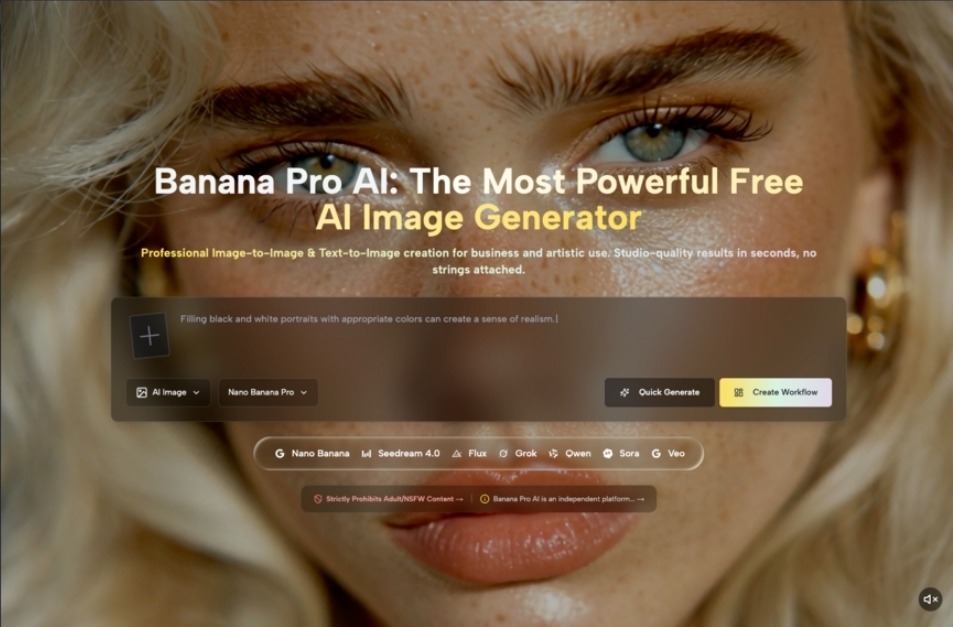
Adopting a systematic approach to AI generation is the key to achieving professional-grade results. Without a structured workflow, users can easily get lost in endless prompt variations without ever reaching their target. The official interface for Nano Banana 2 is designed to mirror a logical creative sequence, moving from the initial mode selection to the final high-resolution export. Following this four-step protocol ensures that you are utilizing the full potential of the platform while maintaining maximum control over the visual outcome.
It is helpful to view the AI as a highly skilled technician that requires clear, specific instructions. The quality of the output is a direct reflection of the clarity of the input. By structuring your project according to the official workflow, you minimize the risk of technical errors and maximize the efficiency of the generation engine.
Step 1: Choose Your Creative Mode
Begin by selecting either the Text to Image or Image to Image mode. Use the Text to Image option when starting with a completely new conceptual idea. Select Image to Image when you have an existing photo that requires professional editing, restyling, or a transformation into a specific aesthetic like a figurine or a hand-drawn illustration.
Step 2: Define the Creative Prompt and Parameters
Input your detailed vision into the prompt box. For the best results, specify the subject, the environmental lighting, the camera angle, and any text you want to appear in the final graphic. This is also the stage where you select the desired aspect ratio and resolution to match your specific project requirements.
Step 3: Generate and Perform Iterative Refinements
Click the generate button and review the high-fidelity results. In my experience, the first result is often excellent, but you may want to use the iterative prompt feature to fine-tune specific details, such as the intensity of the light or the placement of an object, until the visual perfectly aligns with your vision.
Step 4: Download the Final Production Asset
Once the review is complete, download the image in its final high-resolution format. The assets produced are ready for immediate integration into your professional marketing campaigns, social media schedules, or print materials, having undergone the necessary upscaling and sharpening within the platform.
Executing Precise Visual Transformations via the Official Operational Interface
The interface is built to support a fast feedback loop, which is essential for creative experimentation. I have found that the most successful projects involve a small amount of experimentation in Step 2, testing different descriptive adjectives before committing to the final generation in Step 3. This controlled approach allows for a level of precision that is often missing from more casual AI tools. By treating the generation process as a collaborative dialogue, you can achieve results that are both technically impressive and artistically fulfilling.
Reviewing Technical Nuances of Effective Semantic Prompt Construction
Constructing a semantic prompt involves more than just describing a scene; it involves guiding the AI’s understanding of style and composition. Using terms like “depth of field,” “soft ambient lighting,” or “minimalist aesthetic” helps the system prioritize the correct visual elements. In my testing, the platform responds particularly well to prompts that describe the physical textures of the objects involved. This attention to detail is what allows for the creation of visuals that feel tangible and high-end, rather than flat and artificial.
Navigating the Boundaries of Generative Technology and Future Creative Roles
As we integrate these advanced tools into our professional lives, it is crucial to maintain a realistic understanding of their current capabilities and limitations. Like all AI-based systems, Nano Banana 2 is a probability-based model, which means that the output is only as good as the guidance it receives. In some cases, achieving a highly specific or complex result may require multiple generations or slight adjustments to the phrasing of your prompts. It is a tool that amplifies human creativity, not one that replaces the need for a critical eye.
In my view, the future of digital design will be defined by those who can best manage the synergy between human intuition and machine speed. The role of the designer is evolving into that of a curator and a strategic director. By embracing platforms that offer greater control and native features like integrated typography and style transfer, creators can transcend the limitations of manual labor and focus on the big-picture ideas that truly move the needle for a brand. Nano Banana 2 is a significant step in this direction, providing the power and precision needed to thrive in an increasingly visual and fast-paced digital economy.
