

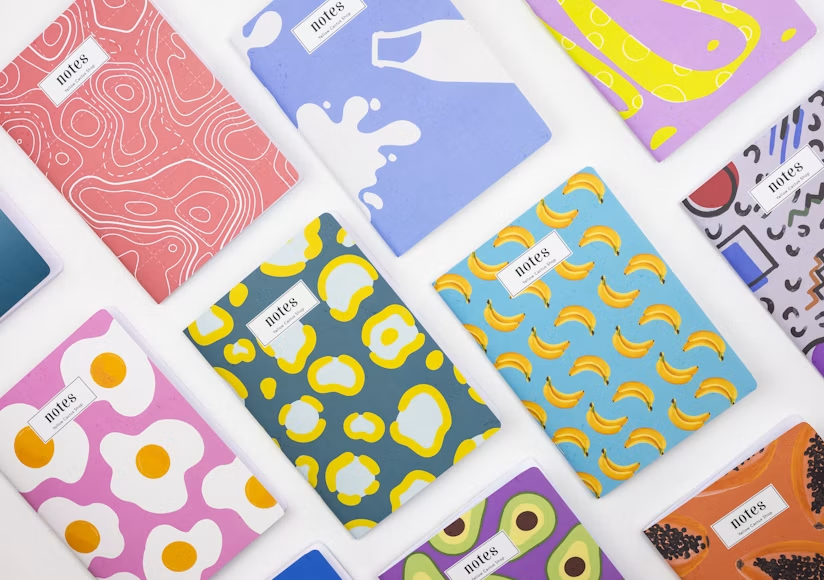
Of all the promotional products a company might choose to brand, the notebook is one of the easier ones to make a genuinely greener choice about, because its main ingredient is paper and paper has a mature, well-understood recycling story. That is the good news. The less good news is that “eco” has become one of the most abused words in merchandise, slapped on products with the vaguest justification, so the useful skill is not finding an eco notebook but telling a real green credential from a marketing one. This is a short guide to doing exactly that.
Start with the most established option, the recycled-paper notebook. Here the pages, and often the cover, are made wholly or partly from recycled material, which reduces the demand for virgin pulp and diverts waste from landfill. It is a real and sensible benefit, and it is the eco choice most likely to be honestly substantiated, because recycled content is measurable and certifiable. The two things worth asking are how much recycled content there actually is, since “contains recycled material” and “made from recycled material” are very different claims, and whether the paper carries a recognised forestry certification such as FSC, which tells you the fibre is responsibly sourced. A supplier who can answer both plainly is offering something real. For a straightforward greener switch, a recycled and responsibly sourced notebook is hard to beat, precisely because the claim behind it can be checked.
Beyond recycled paper, the category has grown a genuinely interesting range of alternative materials, and some of them are more than gimmicks. Cork covers give a distinctive, natural, tactile finish from a renewable material harvested without felling the tree. Wheat straw incorporates agricultural by-product that would otherwise be waste. Stone paper, made from ground stone and a binder, uses no wood pulp and little water. This is the part of the range where eco-friendly notebooks for greener company promotions get genuinely interesting, though each material has nuance worth understanding rather than glossing, because an honest eco choice is one you can explain in plain terms when someone asks. A cork cover on a notebook with conventional paper inside is only partly an eco product, and it is better to say so than to let the cover imply more than it delivers.
This is where the single most important distinction in the whole category lives, and it is one that catches people out constantly. Recycled is not the same as biodegradable, and neither is automatically the same as compostable. A recycled-paper notebook is made from reclaimed material, which is a real benefit, but that does not mean it will quietly rot away to nothing in a hedge, and a cover made from a durable natural material may be lovely without being compostable at all. Blurring these together is exactly the kind of loose claim that gets brands into trouble, and increasingly it is the kind that regulators are looking at. The honest approach is to state the specific benefit a product actually has, recycled content, responsible sourcing, a renewable cover material, and to resist the temptation to imply every green virtue at once.
That honesty is not just ethically tidier, it has become commercially safer. Guidance on environmental claims in the UK, and comparable rules across Europe, now expects sustainability statements to be specific, accurate and capable of being backed up, rather than a warm haze of green adjectives. A product page that says “eco-friendly notebooks” and stops there is precisely the vague sort of claim that guidance is unhappy with. A page that says a notebook has pages made from a stated proportion of recycled fibre, certified to a named standard, is saying something concrete that stands up to scrutiny. Being specific is now the low-risk option as well as the truthful one, which is a happy alignment of interests.
So how should you actually choose? Decide first what the notebook is for, because that narrows the sensible options. For a high-volume giveaway where cost matters, a certified recycled-paper notebook gives you a real, defensible green credential without a premium price. For a considered gift where the tactile impression counts, a cork or other natural-material cover adds a distinctive feel and a talking point, as long as you are honest about what is and is not eco about it. In every case, ask the supplier the two questions that separate substance from spin: what exactly is the environmental benefit, and how is it substantiated. If the answers are specific and checkable, you have a real eco product. If they are vague and enthusiastic, you have marketing.
The reassuring conclusion is that eco notebooks can be a genuinely good choice, arguably more naturally than in many other branded product categories, because the material lends itself to it. The trick is simply to buy on specifics rather than on the word “eco”, to prefer a modest, true, substantiated claim over an impressive vague one, and to remember that a green credential you can explain in a sentence is worth far more than one that evaporates the moment anyone asks a question.
