


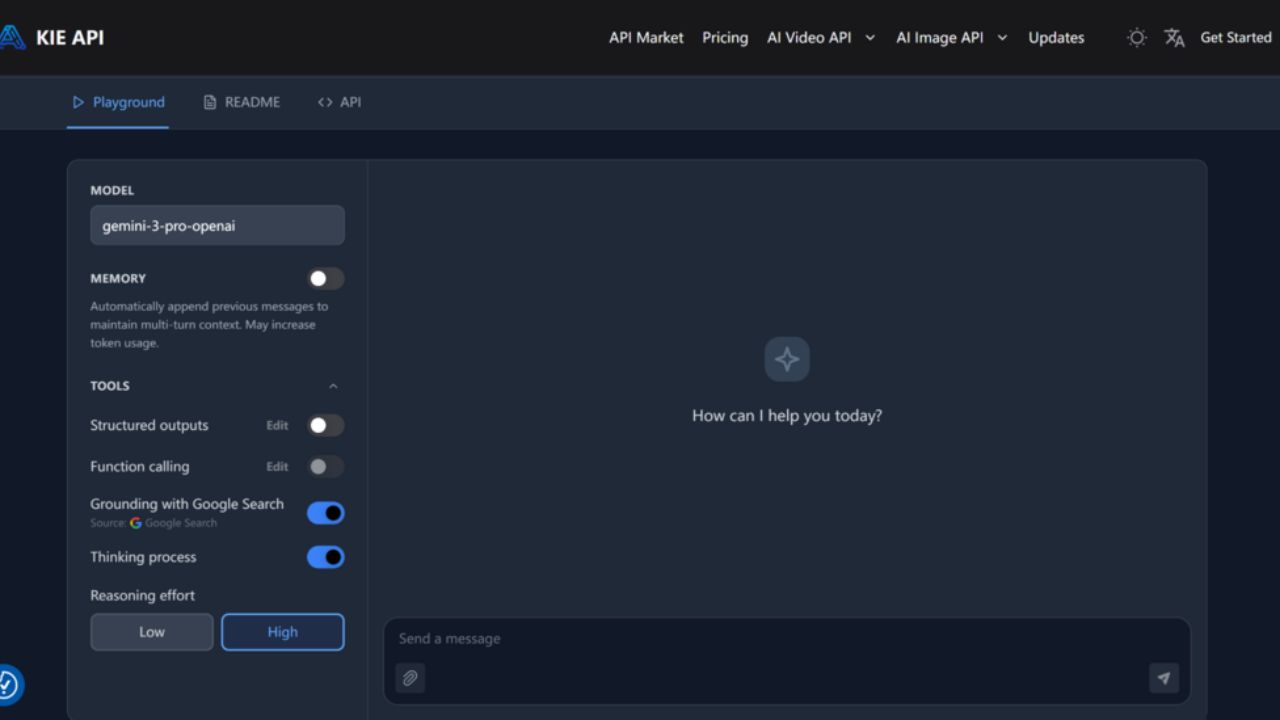
Decades of historical oceanographic data and climate surveys remain trapped within dense, unstructured documents, making manual extraction labor-intensive and slowing regional climate modeling. To resolve this, data engineers can build automated semantic pipelines. Utilizing the programmatic interface of the Gemini 3 Pro API allows research institutions to efficiently ingest multi-decadal records, preserve critical context, and transform raw prose into structured, database-ready observations.
Overcoming Document Fragmentation via the Gemini 3 Pro API 1M Context Window
A primary limitation of traditional natural language processing models when applied to earth sciences is the “memory window” bottleneck. When historical climate assessments stretch across hundreds of pages, smaller models require the documentation to be fragmented into distinct chunks. This fragmentation breaks the chronological continuity and cross-referencing inherent in environmental records.
The Gemini 3 API resolves this structural limitation by providing a native input context window of 1 million tokens, paired with an output capacity of 64k tokens. In practical marine research applications, this large-scale capacity yields three distinct technical benefits:
- Elimination of Processing Artifacts: Analysts can submit entire multi-volume oceanographic surveys or extensive decadal tracking logs in a single inference cycle. This removes the risk of missing critical context that occurs when splitting long documents across arbitrary boundaries.
- Preservation of Historical Continuity: Environmental trends—such as subtle shifts in marine baselines or regional salinity patterns—are often documented incrementally across several decades. A high-context model maps correlations across the entire narrative timeline simultaneously, ensuring that long-range context remains stable.
- Taxonomic and Nomenclature Stability: Scientific names, coordinate systems, and marine measurement conventions evolve over time. By evaluating the complete corpus at once, the API can track changes in terminology or regional naming conventions, translating outdated historical schemas into uniform modern formats.
Implementing Ingestion Workflows via Gemini 3 Pro API Documentation
Building a scalable data extraction pipeline requires a precise implementation strategy. According to the standard technical specifications, developers can interface directly with the /v1/chat/completions endpoint using standard Bearer Token authentication to manage high-volume data streams safely.
Leveraging response_format for Standardized Metadata
A critical phase of oceanographic data curation is converting prose into structured digital fields. The API facilitates this by supporting the response_format parameter, which accepts a defined JSON schema object.
When analyzing historical field journals or coast guard observations, engineers can define strict schemas to extract specific variables—such as timestamp ranges, geo-coordinates, sea surface temperatures (SST), and species distribution counts. The model enforces compliance with the provided schema, delivering structured JSON outputs that can be inserted directly into relational databases or geographic information systems (GIS) without additional parsing code.
Utilizing the Unified Media Structure
Modern environmental monitoring involves diverse data types, including text logs, sonar graphs, satellite imagery, and physical survey charts. The API streamlines this multi-modal integration through a streamlined, uniform media structure.
Instead of requiring separate logic paths for text, images, or document scans, the system processes all incoming collateral through a single message array schema. By setting the type parameter to a fixed value of “image_url” and pointing the source object directly to the asset URI, developers can pass high-resolution maps, handwritten field log scans, and tabular appendices alongside text queries through an identical code architecture.
Navigating Gemini 3 Pro API Protocol Restrictions and Early Access Deployment
When constructing enterprise pipelines for public research or environmental monitoring, developers must carefully configure runtime parameters to avoid operational errors.
Understanding Mutually Exclusive Parameters
According to the integration guidelines, certain capabilities within the pipeline are strictly incompatible. Specifically, real-time Google Search grounding and Function Calling (tools) operate as mutually exclusive configurations (XOR). A single programmatic request cannot invoke both; systems requiring dynamic external web verification must be separated from architectures designed to execute internal database functions.
Furthermore, utilizing the response_format schema for structured JSON mode cannot be combined with function tools in the same payload. Developers must balance these parameters based on whether the immediate goal is data structuring or external tool interaction.
Prototype Validation and Key Management
Before deploying an automated ingestion pipeline across terabytes of historical archives, initial prompt engineering and schema validation can be conducted within a testing environment. Leveraging the Gemini 3 Pro Preview API alongside the specific gemini-3-pro-preview model ID allows developers to isolate variables, refine instruction sets, and perform small-scale evaluations on sample datasets.
Throughout both the development and production phases, securing the integration credential remains paramount. Research consortiums should manage the unique Gemini 3 Pro API key through secure environment variables and automated secret-rotation systems rather than embedding credentials within shared code repositories.
Cost-Effectiveness and ROI: Assessing the Gemini 3 Pro API Price via Kie.ai
The long-term viability of AI-driven research infrastructure is heavily dependent on computational overhead. When scaling up to process millions of historical documents or high-resolution survey charts, standard tiered pricing architectures can quickly exhaust research grants and institutional budgets.
Standard official pricing structures scale based on the context volume of individual requests. For smaller operations up to 200k tokens, official baseline rates average $2.00 per 1M input tokens and $12.00 per 1M output tokens. However, when handling long-form multi-decadal materials that exceed the 200k token threshold, these official rates increase to $4.00 per 1M input tokens and $18.00 per 1M output tokens, drastically scaling the financial cost of deep-context analysis.
To democratize access to these high-context features, utilizing optimized hosting infrastructure through Kie.ai establishes an economically predictable flat-rate alternative. Kie.ai delivers standard processing at $0.50 per 1M input tokens and $3.50 per 1M output tokens, regardless of the context size.
For public research groups, academic departments, and non-governmental organizations, this represents a 70-75% reduction in token processing overhead compared to official high-context pricing tiers. By mitigating the cost barrier associated with long-context inference, institutions can redirect their financial resources away from infrastructure maintenance and toward active field deployment, software refinement, and data-driven policy generation.
Scaling Ecological Intelligence
Transitioning from manual textual reviews to automated, programmatic ingestion pipelines marks a critical shift in environmental data science. By utilizing large-scale context boundaries and multi-modal integration frameworks, research teams can process extensive archives of climate history with minimal fragmentation error. This structured approach ensures that decades of isolated oceanographic observations are transformed into cohesive, actionable datasets for modern climate modeling.
As environmental technology continues to mature, balancing operational performance with sustainable resource allocation will remain vital for long-term monitoring initiatives. For engineering teams and researchers preparing to deploy high-volume data extraction pipelines, comprehensive onboarding details, technical specifications, and the full Gemini 3 Pro API documentation can be accessed through specialized developer portals.
More READ: https://ecomagazine.co.uk/
