


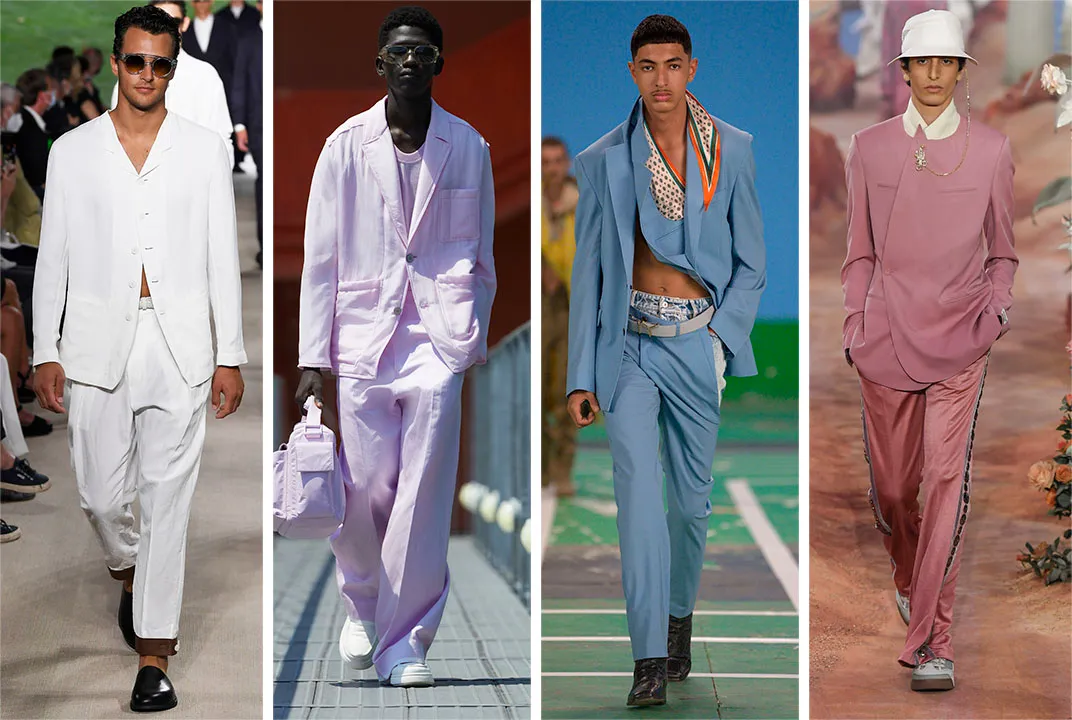
In the shifting landscape of modern style, we are witnessing a move away from the “static” wardrobe. For a long time, the prevailing trend in menswear was a kind of geometric rigidity—clothes that were designed to look sharp in a still photograph but often felt restrictive in motion. As our lives have become more mobile and our work environments more fluid, there is a growing desire for a “kinetic” elegance. This is where the pleated trouser has made its most significant comeback, channeling a Mediterranean philosophy where clothing is meant to breathe, move, and age alongside the wearer.
This isn’t about the corporate “power dressing” of the past. Instead, it’s about a softer, more artistic approach to masculinity. The pleat is the ultimate expression of sprezzatura—that Italian concept of studied nonchalance. It suggests a person who understands the rules of tailoring well enough to relax them, opting for a silhouette that prioritizes the natural drape of the fabric over the forced tightness of a slim fit.
The Physics of the “Living” Fabric
The primary appeal of a pleat is its ability to transform a 2D piece of cloth into a responsive 3D structure. When you are standing, the pleat stays closed, maintaining a clean, vertical line that draws the eye down the leg. The moment you step forward or sit down, the fabric “opens,” providing an immediate release of tension across the hips and thighs. This mechanical advantage is something that even the most advanced stretch-synthetic fabrics struggle to replicate with the same level of grace.
This internal volume creates a different relationship with the air. By allowing space between the skin and the garment, pleated trousers act as a natural temperature regulator. It’s why you see this style favored in the warmer climates of Southern Europe; it’s a functional choice that keeps the wearer cool without resorting to technical sportswear. Brands like Suitsupply have refined this “thermal architecture,” offering high-waisted, single-pleat designs in airy linens and tropical wools that provide a crisp, athletic taper while remaining remarkably light on the body.
A Masterclass in Proportional Harmony
Choosing a pleated trouser is an exercise in balancing proportions. Because the top half of the trouser carries more visual weight, it allows for more creative experimentation with the rest of the outfit. A pleated chino in a rich tobacco or sand tone provides a substantial “anchor” that can be balanced by a simple, slim-fitting knit or a tucked-in linen shirt. It creates a silhouette that feels grounded and intentional, rather than top-heavy.
This added volume also allows for a more “sculptural” break at the shoe. Whether you prefer a clean “no-break” look that shows off a pair of loafers or a slight, traditional break over a robust boot, the pleated leg provides enough fabric to drape with authority. It is the choice of the man who views his wardrobe not as a collection of items, but as a series of interlocking shapes and textures. It’s a way of practicing “visual mindfulness,” where every fold and every line has a purpose.
The Versatility of the Soft Structure
One of the most liberating aspects of the modern pleat is its ability to de-formalize the suit. When a jacket is paired with flat-front trousers, the look can sometimes feel a bit “sharp” for a casual setting. Swap those for a pleated version, and the entire energy changes. The added texture and volume dial down the formality, making the outfit feel more like a sophisticated “leisure suit” than a corporate uniform.
This modularity is essential for the modern traveler. A single pair of pleated trousers can carry a man through a gallery opening, a long flight, and a weekend brunch. Because the fit is inherently more relaxed, they are less prone to the deep, stubborn wrinkles that plague tighter garments. They embrace a “lived-in” quality that only adds to their charm over time. It is a more forgiving, more human way of dressing that recognizes that we are not mannequins, but people in constant motion.
A Conscious Choice for the Long Term
Beyond the aesthetic and the physical, there is a quiet ethical argument for the pleated silhouette: its resilience. Because the fabric isn’t being constantly stretched to its limit, the fibers retain their integrity for much longer. A well-made pleated trouser is a piece of “slow fashion” that is designed to be lived in for a decade. It is a rejection of the “fast and disposable” in favor of the “enduring and characterful.”
Investing in this kind of quality construction is a form of stewardship. It’s about choosing pieces that are worth mending and altering as our lives change. It’s a move toward a more sustainable, more thoughtful relationship with our belongings. By opting for a classic, comfortable cut, we are building a wardrobe that doesn’t just follow a trend, but establishes a permanent, personal standard of excellence.
The Future of Daily Ease
Ultimately, the resurgence of the pleat is a signal that we are prioritizing our own sensory experience. We are no longer willing to sacrifice comfort for a specific visual “ideal” that doesn’t fit our reality. The modern pleated trouser proves that the most stylish version of yourself is the one that is the most at ease.
As we look toward the future of menswear, the emphasis is clearly on this marriage of Mediterranean fluidity and contemporary precision. The pleat is a tool for the man who wants to move through the world with a sense of grace and a total lack of restriction. Whether you are navigating a creative project or enjoying the quiet of a coastal weekend, the added volume and refined taper of a pleated trouser ensure you do so with intent, comfort, and an unmistakable touch of soul.
