


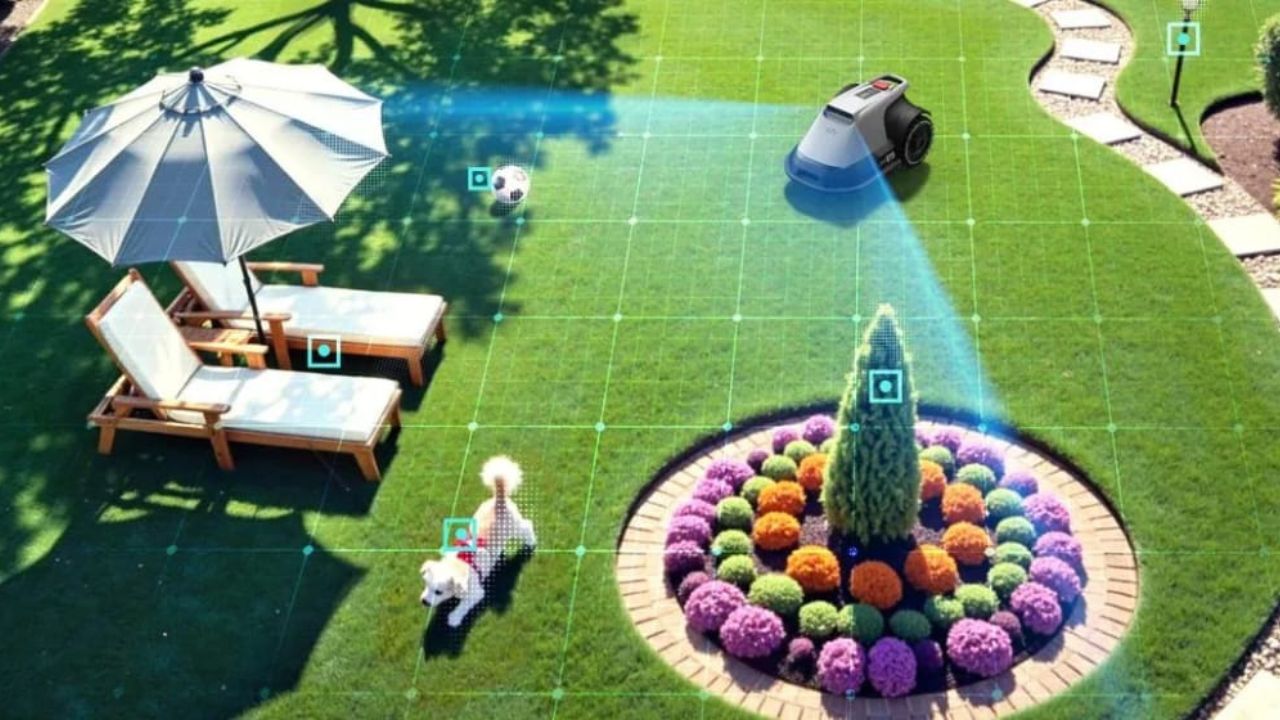
Robot lawn mowers now cut grass with no boundary wires and no guesswork. They move with purpose, stay inside your lawn, and avoid flower beds and patios. New systems, such as eufy V-FSD 1.0 Technology, remove the need for RTK towers or buried cables, yet still keep a stable signal. These mowers build a digital map of your yard and follow it with accuracy. Cameras, sensors, and smart software guide every turn. You set zones and schedules in an app, and the mower handles the rest. This guide explains how wire-free navigation actually works on real lawns.
Core Technologies Behind Wire-Free Navigation
GPS vs RTK: How Satellite Positioning Guides Mowers
Standard GPS tells a mower where it is using signals from satellites, but accuracy often hovers around a few meters. That gap is too large for tight lawn edges. RTK (Real-Time Kinematic) corrects GPS errors with a fixed base station, improving accuracy to centimeters. Many premium mowers use RTK, but it adds setup steps, hardware, and sometimes signal issues near trees or buildings. Newer systems, such as eufy’s V-FSD 1.0 Technology, take a different route. They offer stable, boundary-wire-free, RTK-free navigation by leaning more on AI vision and sensor data. GPS still helps, but it is no longer the only guide.
AI Vision and Cameras for Real-Time Mapping
AI vision gives the mower “eyes” so it can understand the yard in real time. Forward-facing cameras capture images of the lawn, paths, fences, and edges. Onboard processors run vision algorithms that recognize grass, borders, walls, and landscaping. The mower then uses these patterns to stay inside mowing areas and avoid off-limits spaces. Systems like eufy V-FSD 1.0 Technology use camera data to auto-map the yard and refine the digital map over time. When GPS or RTK signals weaken, AI vision keeps the mower on track. This approach works well under trees, near houses, and in complex gardens.
Sensor Fusion: Combining GPS, Cameras, and Sensors
Sensor fusion ties all navigation data into one reliable picture. The mower reads GPS or RTK, camera images, wheel encoders, and motion sensors at the same time. Each source has strengths and weaknesses. GPS locates the mower globally, cameras see edges and obstacles, and inertial sensors track direction and speed. The control software blends this data to correct errors and maintain a stable path. eufy’s V-FSD 1.0 Technology relies on this fusion to stay boundary-wire free and RTK-free while still holding a stable signal for mapping. When one input drops, the others fill in, so the mower keeps mowing accurately.
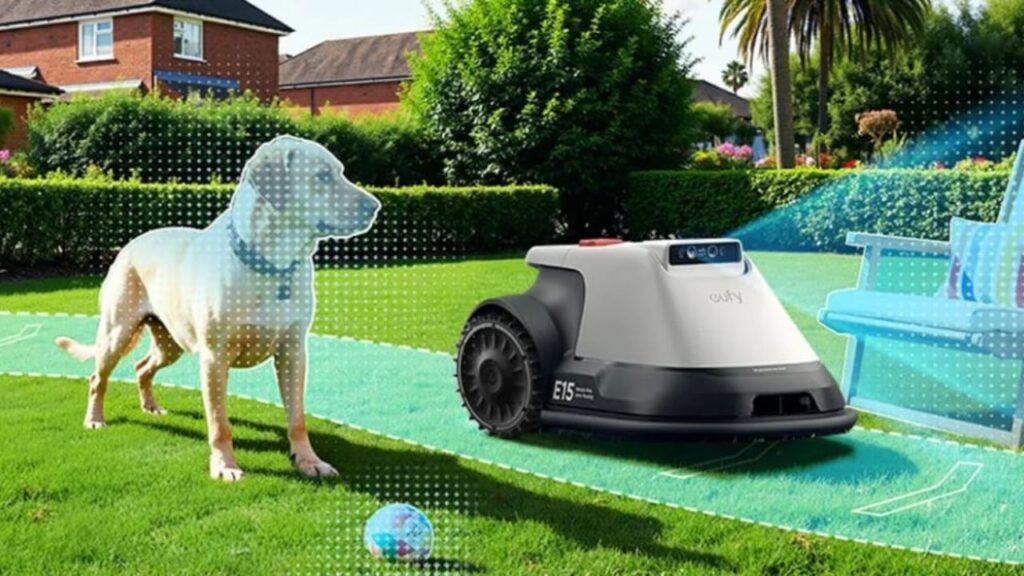
How Robot Lawn Mowers Map and Navigate Your Yard?
Digital Lawn Mapping and App-Based Boundary Setup
Wire-free mowers create a digital map of your yard rather than depending on physical cables. During the first run, the mower explores the lawn while the system records positions, camera views, and obstacles. With eufy V-FSD 1.0 Technology, this auto-mapping happens with no RTK base or buried wire. The mower traces the edges and marks permanent features like fences, garden beds, and patios. In the companion app, you see this digital map and adjust it. You can refine boundaries, name areas, and mark no-go zones. The robot lawn mower then saves these virtual borders and respects them on every future mow.
Path Planning, Zone Management, and Smart Routing
Once the mower has a map, smart routing takes over. The software plans efficient paths that cover each zone with minimal overlap. It often uses straight, parallel lines rather than random patterns, which leaves a clean, striped look. You manage zones in the app and can set different cutting heights or schedules for each one. The mower uses its position data, plus the stored map, to move from zone to zone without crossing forbidden areas. Features like eufy’s V-FSD 1.0 Technology help the mower recalculate routes when conditions change. The result is faster coverage, less energy use, and neater lawns.
Obstacle Detection and Avoidance in Real Time
Wire-free navigation does not mean the yard is empty. The mower must handle toys, furniture, pets, and uneven ground. It uses bump sensors, ultrasonic sensors, and AI vision to spot obstacles instantly. Cameras recognize large objects and non-grass surfaces, while contact sensors stop the blades on impact. The mower then slows down, steers around the obstacle, and returns to its planned path. Systems like eufy V-FSD 1.0 Technology also update the digital map when they see recurring obstacles, such as permanent planters. Over time, the mower learns safer, smoother routes and reduces chances of collisions or missed patches.
Conclusion
Wire-free robot lawn mowers rely on smart tech, not buried cables, to stay within your yard. GPS, RTK, or RTK-free systems guide the mower’s position, while AI vision and sensor fusion refine that location every second. Solutions like eufy V-FSD 1.0 Technology prove that boundary-wire-free, RTK-free navigation can still deliver a stable signal and accurate mapping. Auto-mapping, app-based boundaries, zone control, and real-time obstacle avoidance all work together to keep the grass trimmed with little effort from you. By understanding how these pieces fit, you can choose a mower that matches your lawn and setup preferences.
