


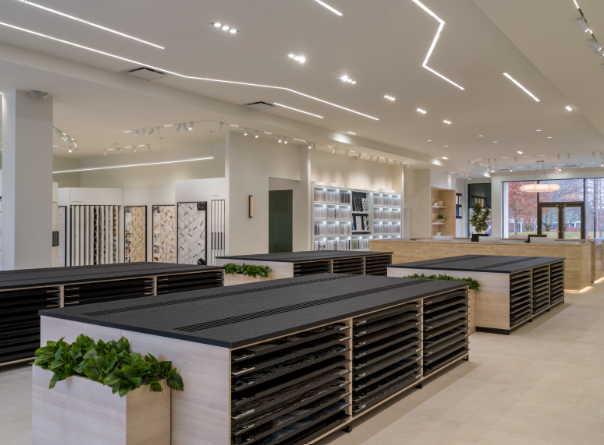
The British ceramic tiles market is shifting fast — and in 2026, the retailers pulling ahead aren’t the ones with the best products. They’re the ones who’ve figured out how to make their retail space work harder. With high-value porcelain slabs and sustainable materials driving demand across London, Birmingham, Manchester and beyond, the old model of simply stocking good tiles and hoping for footfall is well and truly finished.
For business owners and entrepreneurs in this sector, the real question has changed. It’s no longer about sourcing. It’s about engineering profitability into every square metre of the showroom. As the UK’s major commercial hubs for interior design continue to grow, smart retailers are redirecting capital toward fixed assets that deliver measurable, long-term ROI.
1. Advanced Infrastructure for XL Formats — From Risk to Revenue
Three-metre porcelain slabs are no longer a trend. In 2026, they’re a market standard — and they’re not going anywhere. But here’s the uncomfortable truth that many showroom owners still haven’t fully addressed: these slabs are fragile, expensive, and genuinely dangerous to handle without the right infrastructure.
The logistical risk is real. A single broken slab doesn’t just cost money in lost product — it damages client confidence and creates potential safety issues for staff. Leading UK retailers have recognised this and are treating it not as an operational inconvenience, but as a strategic priority.
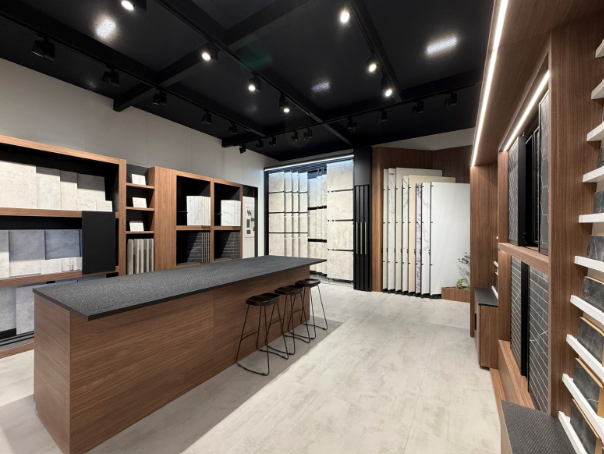
The solution? Professional tile display systems engineered specifically for these dimensions. We’re talking counterbalanced mechanisms, reinforced supports, and safety-certified structures that allow even the largest formats to be presented — and handled — without anxiety.
This isn’t an optional upgrade. It’s a critical risk mitigation strategy that transforms a potential liability into a seamless sales tool. When a client can interact with a 3-metre slab confidently, trust is established immediately. And trust, in the high-value ceramic segment, is what closes deals.
2. High-Performance Specification Zones — Becoming the Partner, Not Just the Supplier
Here’s a number worth paying attention to: over 60% of the UK tile market is still driven by large-scale residential and commercial projects. That means architects, developers, and specification professionals aren’t just a nice-to-have audience — they’re the backbone of the business.
And these professionals are changing what they expect from a showroom visit. Architects working on projects in Leeds, Edinburgh, or the South East aren’t looking for a tile shop. They’re looking for a specification partner — somewhere they can test, compare, and make binding material decisions under professional conditions.
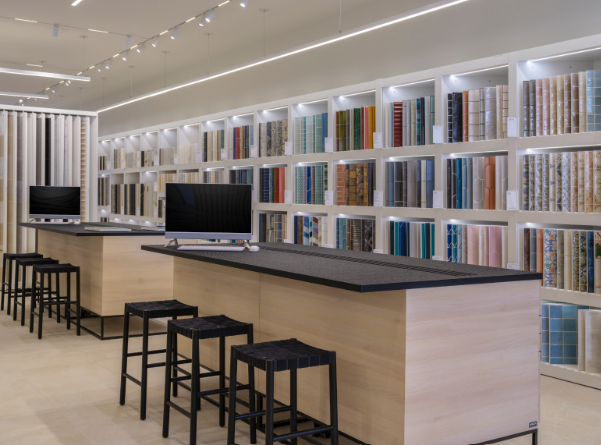
This is where strategic investment in specialised technical workbanks pays off handsomely. These aren’t simply tables with good lighting. They’re collaborative hubs designed for material layering, natural light testing, and increasingly, digital integration — all happening simultaneously at a single station.
Why does this matter commercially? Because a well-equipped specification zone accelerates the decision-making process on high-value contracts. When an architect can finalise material choices in one visit rather than three, your conversion rate climbs. Your reputation as a serious trade partner solidifies. And you start winning the kind of repeat business that transforms a showroom’s financial trajectory.
3. Sensory-Driven Conversion Design — The Power of Tactile Authority
E-commerce is advancing. Augmented reality tools are getting better every quarter. And yet, physical showrooms aren’t becoming less important — they’re becoming more important, provided they offer what digital channels simply cannot: the ability to touch, feel, and experience a material in person.
The data backs this up consistently. Physical interaction with tile samples increases purchase probability by up to 40%. That’s not a marginal gain — it’s a fundamental commercial advantage that no website or app can replicate.
But here’s the catch: that advantage only works if the showroom environment supports it. A cluttered, visually noisy display actively undermines the tactile experience. The tile gets lost in the chaos.
Forward-thinking entrepreneurs across the UK are responding with a deliberate shift toward minimalist, high-quality display furniture that eliminates distraction. The principle is straightforward — let the texture, finish, and character of the tile take centre stage. Strip away everything that competes for attention.
In the luxury segment especially, this approach sends a powerful signal. A curated, uncluttered environment communicates expertise, confidence, and market leadership. It justifies premium pricing because the entire setting reinforces the value of the product. In the competitive landscape of 2026, that perception gap between a premium showroom and an average one is widening — and it’s directly reflected in margins.
The Bottom Line: Your Showroom Is a Strategic Asset
For UK ceramic businesses in 2026, the showroom is no longer a cost centre. It’s a fixed asset — and like any asset, its value depends entirely on how intelligently it’s managed.
Whether you’re expanding in the Midlands, consolidating your presence in the South East, or building a specification-focused operation in one of the northern hubs, the pattern is the same. The retailers who are winning are the ones integrating high-performance infrastructure into every aspect of their sales environment.
Those who invest in professional-grade display systems today aren’t simply buying furniture. They’re engineering the commercial success of their business for years to come. And in a market that rewards precision, quality, and professionalism above all else, that’s not just a smart move — it’s the only move that makes sense.
