


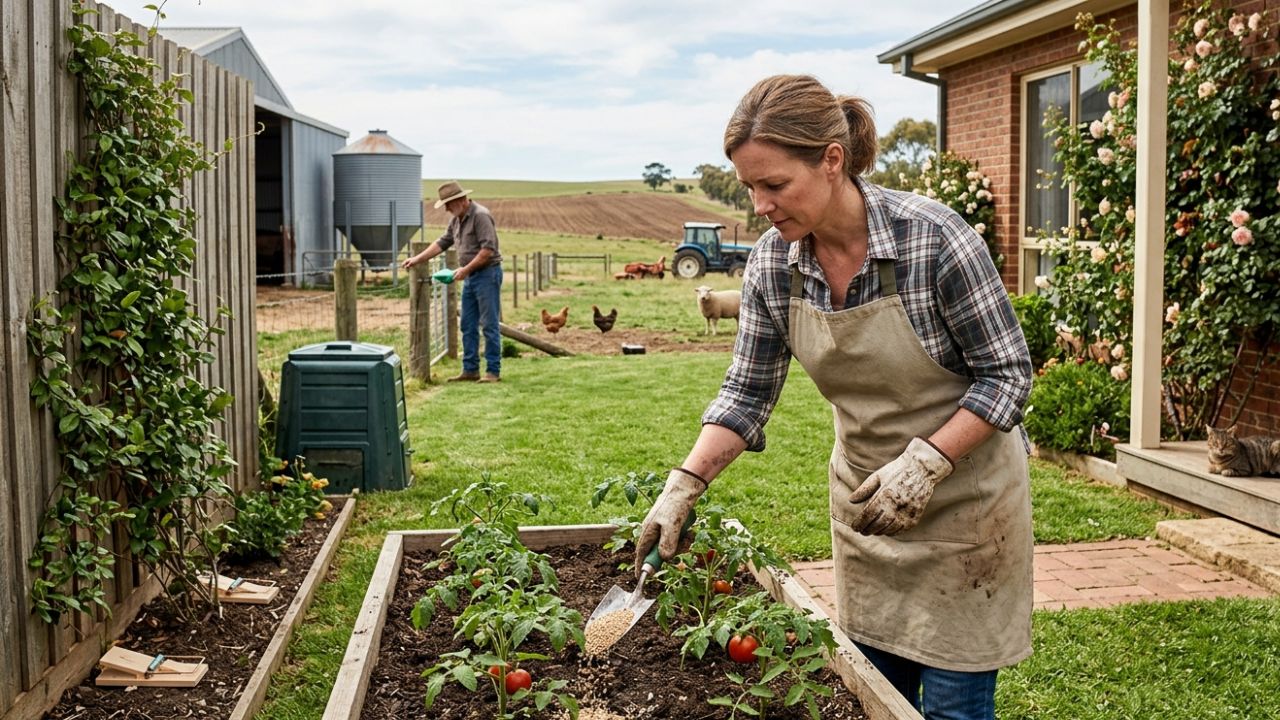
When people come across a business such as Guarantree, it usually reflects a wider interest in practical land management rather than a casual purchase. Across rural estates, smallholdings, gardens and outbuildings, pest control remains a necessary part of protecting property, planting and wildlife habitats from avoidable damage. While the topic is rarely glamorous, it plays an important role in keeping spaces safe, functional and properly maintained.
Pest Problems Are Often More Serious Than They First Appear
Many people assume pest issues are minor until they begin to see the wider effects. Damage to timber, insulation, stored feed, planting areas and young trees can build over time, especially where the problem is not addressed early. In outdoor environments, repeated disturbance can also affect habitat management, crop protection and long-term site maintenance.
That is why practical control measures still matter. In many cases, the goal is not dramatic intervention but consistent, sensible management. Landowners, gardeners and rural property managers often need solutions that are dependable, durable and suited to the setting they are working in. A poorly chosen approach can waste time, increase cost and fail to deal with the problem in a meaningful way.
Rural Land Management Depends on Reliable Equipment
In rural environments especially, pest control is usually part of a much broader routine of estate and land management. It sits alongside fencing, planting, habitat care, livestock considerations and general upkeep. That means any tools or systems being used need to be straightforward, robust and suitable for repeated use rather than treated as one-off purchases.
Reliability matters because rural work is rarely convenient. Equipment may be used across large areas, in varied weather and in places where regular monitoring takes time and effort. For that reason, landowners and managers tend to value products that feel practical and well made rather than overcomplicated. Simplicity, when it is backed by sound design, is often far more useful than novelty.
Domestic Users Are Becoming More Informed
It is not only estates and rural properties that drive demand for better pest control solutions. Homeowners are often far more aware now of the damage certain species can cause to lofts, sheds, gardens and surrounding trees. Rather than waiting until the issue becomes severe, many people want to understand what sensible management looks like before the problem gets out of hand.
That shift has encouraged a more informed approach. People are more likely to look into the suitability of products, how they should be used and whether they are appropriate for the environment around them. Good information is part of that process. A product may be well engineered, but it still needs to be understood and applied properly if it is going to be effective.
Quality Matters More Than Short-Term Convenience
In any type of property management, there is always a temptation to buy the cheapest available solution and hope it does the job. The problem with that approach is that low-quality equipment often proves poor value over time. If a product fails quickly, performs inconsistently or is not suited to the conditions it is used in, the short-term saving tends to disappear.
That is why quality remains such an important factor in practical outdoor equipment. People who manage land or maintain property usually want something they can trust to work as intended. A well-designed product may cost more initially, but it often repays that through better performance, longer lifespan and fewer problems in use. In areas like pest control, those practical gains matter more than clever branding or marketing language.
Good Land Stewardship Often Means Tackling Difficult Jobs Properly
There are parts of land and property management that attract more attention than others. Landscaping, planting and building projects are easy to talk about. Pest control tends to sit in the background, even though it can have a direct effect on how well a space is protected and maintained. Ignoring it rarely improves the situation.
The more useful way to view the subject is as part of responsible stewardship. Whether someone is managing a garden, a smallholding, a rural estate or an outbuilding, there is value in dealing with problems properly rather than allowing them to escalate. Practical tools, good judgement and a realistic understanding of the setting all play a part in that. It may not be the most visible side of property care, but it is often one of the most necessary.
