

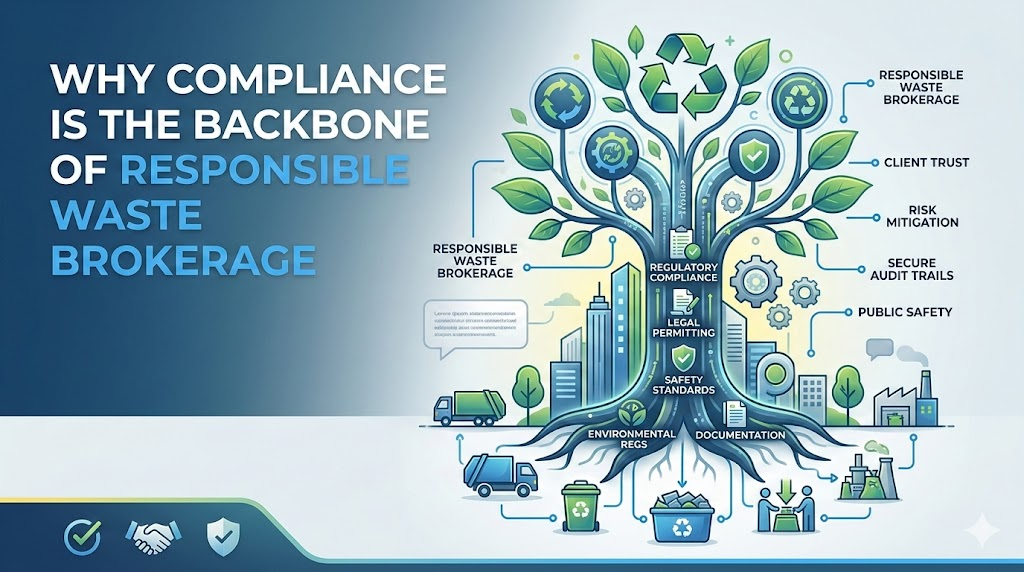
In today’s waste management landscape, compliance is not just a regulatory obligation — it is the foundation of responsible waste brokerage. As environmental legislation becomes more stringent and global waste flows grow increasingly complex, brokers play a critical role in ensuring materials are handled, transported, and processed legally and ethically. Without strict compliance standards, the entire recycling chain becomes vulnerable to financial, environmental, and reputational risk.
A responsible waste broker operates at the intersection of regulation, logistics, and sustainability. Compliance is what holds all these elements together.
The Regulatory Environment Is Constantly Evolving
A layered framework of environmental regulations governs waste management in the UK and across international markets. These include duty of care obligations, waste classification rules, hazardous material controls, and export regulations such as Transfrontier Shipment requirements.
Failure to comply can result in severe penalties — including fines, revoked permits, shipment delays, and even criminal prosecution. For businesses producing recyclable materials, partnering with a broker who prioritises compliance ensures that waste is managed transparently and in accordance with all legal requirements.
A compliant broker does more than arrange collections. They verify documentation, audit downstream partners, and maintain traceability throughout the recycling chain.
Transparency Builds Trust
In waste brokerage, transparency is inextricably linked to compliance. Clients need to know where their material is going, how it is being processed, and whether it is reaching legitimate end markets. Without clear documentation and communication, businesses risk unknowingly contributing to illegal exports or improper disposal.
A responsible broker ensures full visibility over the lifecycle of recyclable materials. This includes accurate waste transfer notes, verified carriers, and confirmed recovery facilities. Clear reporting not only protects clients legally but also strengthens their environmental credentials.
Companies looking for a compliant and transparent partner can find more information about responsible waste brokerage practices at https://clearpointrecycling.co.uk/, where compliance and traceability are central to service delivery.
International Shipments Require Enhanced Due Diligence
Exporting recyclable materials introduces an additional layer of complexity. International waste shipments must meet strict regulatory standards, including notification procedures and consent agreements between exporting and importing authorities.
Pre-Informed Consent (P.I.C.) processes, proper classification, and accurate documentation are essential. A broker who understands transfrontier shipment regulations ensures materials are transported legally and reach authorised recovery facilities abroad.
Without this level of diligence, businesses face shipment rejections, financial losses, and potential reputational damage.
Risk Mitigation for Producers
Waste producers carry a legal duty of care that extends beyond collection. Even after materials leave a facility, the original producer can be held accountable if waste is mismanaged downstream.
A compliant waste broker reduces this risk by conducting supplier checks, validating recovery routes, and ensuring that every transaction aligns with environmental regulations. This risk management approach protects clients from regulatory scrutiny and operational disruption.
Compliance, therefore, is not merely a box-ticking exercise — it is a safeguard against long-term liability.
Supporting a Circular Economy
Responsible waste brokerage also supports broader sustainability goals. By ensuring materials are routed to legitimate recycling facilities, compliant brokers contribute to resource efficiency and the circular economy.
When compliance is prioritised, recyclable materials are less likely to end up in landfill or be exported illegally. Instead, they are reintegrated into manufacturing supply chains, reducing reliance on virgin resources.
This alignment between compliance and sustainability enhances corporate ESG performance and strengthens brand reputation.
Consistency and Accountability
True compliance is ongoing. Regulations change, markets shift, and enforcement priorities evolve. A responsible waste broker must remain proactive — continuously updating processes, maintaining communication with regulatory bodies, and auditing operational partners.
Consistency in compliance ensures predictable service, fewer disruptions, and stronger long-term partnerships. Clients gain confidence knowing their materials are handled correctly at every stage.
Compliance as a Strategic Advantage
In an industry where margins can be tight and supply chains complex, compliance becomes a competitive advantage. Businesses increasingly seek partners who offer not only market access but also security, transparency, and regulatory assurance.
Responsible waste brokerage is built on clarity, consistency, and accountability. Compliance is not simply part of the process — it is the backbone that supports ethical operations, protects stakeholders, and ensures waste materials are managed in a way that benefits both industry and the environment.
