


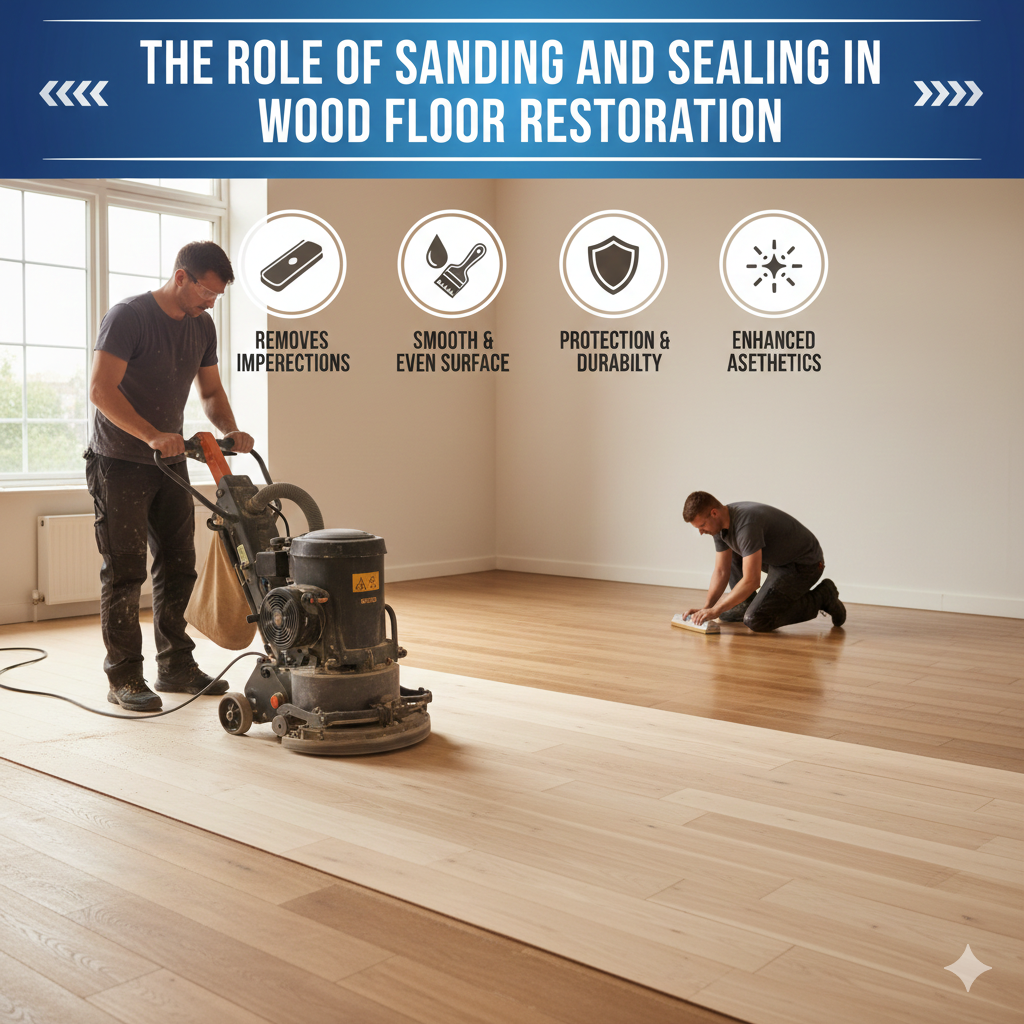
Wooden floors bring warmth, elegance, and long-lasting value to a property. Over time, however, daily wear, foot traffic, scratches, and environmental factors can dull their appearance and weaken their surface protection. Rather than replacing damaged flooring, many homeowners and property managers choose wood flooring restoration to revive the original beauty and durability of timber surfaces. Two essential steps in this process are sanding and sealing, both of which play a critical role in restoring strength, appearance, and longevity.
Why Sanding Is the Foundation of Restoration
Sanding is the first and most important step in restoring wooden floors. Years of use often leave surfaces marked by scratches, dents, stains, and uneven finishes. Sanding removes the damaged top layer of wood and any remnants of old finishes, exposing a fresh and clean surface underneath.
Professional sanding equipment ensures consistent results across the entire floor. By smoothing uneven areas and eliminating imperfections, sanding creates a uniform surface that prepares the wood for refinishing. This stage also removes embedded dirt and discoloration that regular cleaning cannot eliminate.
Beyond improving appearance, sanding helps maintain structural integrity. Minor surface damage can deepen over time if left untreated. By removing worn layers, sanding prevents further deterioration and extends the life of the flooring.
The Importance of Dust Control During Sanding
Modern sanding techniques often include advanced dust containment systems. These systems capture airborne particles generated during sanding, improving indoor air quality and reducing cleanup time. Dust control is particularly beneficial in occupied homes or commercial spaces, as it minimizes disruption and protects furnishings and nearby surfaces.
Sealing: Protecting and Enhancing the Surface
Once sanding is complete, sealing becomes the next critical step. Sealing involves applying protective coatings that safeguard the wood from moisture, stains, and everyday wear. Without a protective seal, exposed wood remains vulnerable to damage and can quickly lose its restored appearance.
Sealants penetrate the wood surface, creating a protective barrier while enhancing the grain’s natural character. This stage ensures the floor is prepared for finishing coats and helps achieve a smooth and durable result.
Choosing the Right Finish for Durability and Style
After sealing, finishing products are applied to provide additional protection and visual appeal. Options include matte, satin, and gloss finishes, each offering a different aesthetic effect. Modern finishes are designed to resist scratches, scuffs, and spills while maintaining a natural appearance.
Water based finishes are popular for their low odor and fast drying time, making them ideal for residential environments. Oil-based finishes, on the other hand, offer deep richness and durability, often preferred for high-traffic areas.
Long-Term Benefits of Sanding and Sealing
Sanding and sealing provide benefits that extend far beyond appearance. Proper restoration protects floors from moisture damage, reduces wear from foot traffic, and makes surfaces easier to clean and maintain. A sealed floor resists dirt buildup and requires less intensive upkeep, saving time and maintenance costs over the years.
In addition, restoring existing floors supports sustainability by preserving natural materials rather than replacing them. This method cuts down on waste and saves resources while keeping the look of the original wood floors.
Maintaining Restored Wooden Floors
After restoration, simple care practices help preserve the renewed surface. Using protective pads under furniture, avoiding excessive moisture, and cleaning with wood-safe products can maintain the finish for many years. Periodic maintenance ensures the floor retains its beauty and protective qualities.
Restoring Beauty and Strength Through Professional Care
Sanding and sealing are essential components of wood floor restoration, working together to renew appearance and provide lasting protection. By removing damage, smoothing the surface, and applying protective coatings, this process restores both beauty and durability. With proper care and maintenance, restored wooden floors can continue to enhance interior spaces for decades while preserving the natural charm that makes timber flooring so desirable.
