


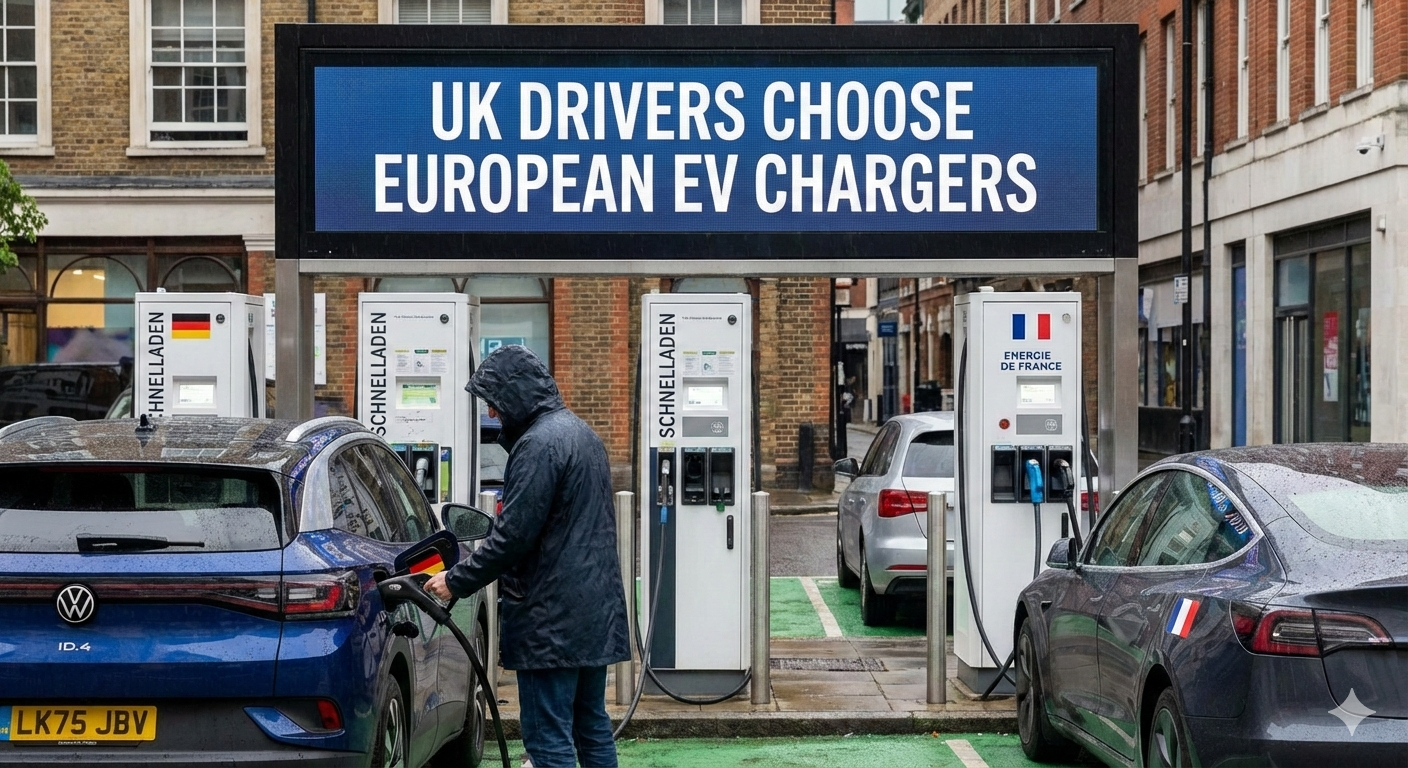
Electric vehicle ownership in the United Kingdom has matured. What was once the preserve of early adopters is now standard practice for commuters, families, and fleet drivers alike. As the variety of EVs on British roads expands, from compact city cars to high-performance SUVs, expectations regarding the hardware that powers them have shifted. This scrutiny now extends firmly to charging equipment.
One clear trend has emerged across the market: a growing number of UK drivers are moving away from generic, mass-imported EV charging cables in favour of European-manufactured alternatives. Brands such as Voldt® UK are increasingly gaining traction among drivers who prioritise engineering integrity and longevity over short-term savings. But what exactly drives this shift towards continental manufacturing?
Charging equipment matters more than drivers expect
The charging cable is often the most overlooked component of EV ownership. It does not sit in the cockpit, it offers no digital interface, and it is rarely considered until it fails. Yet, for the average UK driver, this cable is the primary physical connection to the grid. It is handled daily and exposed to rain, frost, mud, and mechanical strain.
Over time, the shortcomings of budget-focused manufacturing become evident. Cables stiffen and become unmanageable in winter temperatures. Connectors develop play or feel brittle. Plugs run uncomfortably hot during long charging sessions. These are not just inconveniences. They are indicators of equipment that is struggling to cope with real-world use.
At this point, many drivers reassess their setup. They begin looking for equipment built to the same engineering standards as their vehicle. They want charging hardware that is mechanically robust, fully weather-resistant, and designed for years of consistent service.
Why European manufacturing makes a difference
European-manufactured EV charging equipment generally follows a different production philosophy to mass-produced imports. In practice, manufacturing is governed by stricter regulatory oversight, tighter quality control, and established electrical engineering norms. For the end user, this translates into more predictable reliability.
Cables produced in Europe are commonly constructed using high-grade copper conductors to ensure stable current flow without excessive heat build-up. The outer sheathing is designed to remain flexible even in freezing conditions, while connectors are moulded with precision to ensure a secure, watertight fit. Assembly prioritises durability and consistency rather than speed or cost reduction.
For UK drivers, this distinction matters. Charging conditions are rarely pristine. Cables are dragged across wet gravel, dropped on concrete, and coiled thousands of times. Equipment designed primarily for laboratory compliance rather than daily handling inevitably degrades under these conditions.
Certification is not a formality. It is a safeguard.
A major factor driving the move towards European-manufactured chargers is the integrity of certification. While CE marking is mandatory, the rigour behind compliance varies significantly between manufacturers.
Reputable European manufacturers design their products not only to meet CE and UKCA requirements but also submit them to independent third-party testing bodies such as TÜV. This additional verification confirms that the cable has been physically tested under heat, load, and fault conditions rather than simply self-declared as compliant.
For drivers, this matters in everyday use. Stable charging and predictable communication between vehicle and charging station reduce the risk of overheating and help protect the car’s onboard charging hardware. In this sense, the cable functions as a safety component, not merely a passive conductor.
Designed for modern charging capabilities
An increasing number of modern EVs sold in the UK support higher AC charging capacities, such as 11 kW or, in some cases, 22 kW. That said, 7.4 kW AC remains the practical standard for most home wallboxes and many public AC chargers today.
This is where cable selection becomes important. Even if a driver’s current car or charger is limited to 7.4 kW, using a higher-rated cable does not increase charging speed artificially. Instead, it ensures that the cable itself never becomes the limiting factor.
European-manufactured cables are available in clearly defined configurations: single-phase or three-phase, 16 A or 32 A, rated for 11 kW or 22 kW. Choosing a cable with a higher rating than strictly necessary allows drivers to future-proof their setup. The same cable can be used safely with faster chargers or a future vehicle, without the need for replacement.
Equally important, reputable European manufacturers provide transparent specifications. Drivers know exactly what they are purchasing, whether it is the phase rating or conductor size. This clarity avoids the confusion often caused by vague or marketing-led product descriptions.
Weather resistance is not optional in the UK
One of the most practical reasons UK drivers favour European-made charging equipment is the climate. Charging frequently takes place outdoors, where rain, dampness, and temperature fluctuations are constant factors.
High-quality European cables are often rated IP65 or IP67 (if drivers opt for maximum protection), ensuring protection against dust and resistance to heavy rain and water exposure. This is not about extreme scenarios. It is about the confidence that a cable left on a driveway during a downpour will function reliably the next morning.
As EV adoption grows, UK drivers increasingly see this level of weather resistance as a baseline requirement rather than a premium feature.
Why Voldt® resonates with UK drivers
Within this broader shift, Voldt® UK has become a relevant reference point for drivers who value engineering integrity over short-term savings. The brand’s approach aligns closely with the expectations of experienced EV owners: European manufacturing, verifiable certification, and a focus on material quality rather than marketing claims.
Voldt® designs and manufactures its EV charging cables in Europe and ensures compliance with CE, UKCA, and TÜV standards. The products are built for daily use in real-world conditions, with robust construction and high weather resistance. The emphasis remains on clarity and reliability, not hype or jargon.
This approach is supported by a three-year warranty and transparent customer support, helping UK drivers choose the correct Type 2 or portable charging solution with confidence.
A shift driven by experience, not trends
The move towards European-manufactured EV charging equipment is not a passing trend. It reflects a maturing market. As drivers gain experience, they learn that reliability, safety, and long-term durability matter more than the lowest upfront cost.
As electric driving becomes normalised in the UK, charging equipment is increasingly judged by the same standards as the vehicles themselves. Quiet competence, consistent performance, and robust engineering have become the benchmarks. For many drivers, European manufacturing is simply the most reliable way to meet them.
