


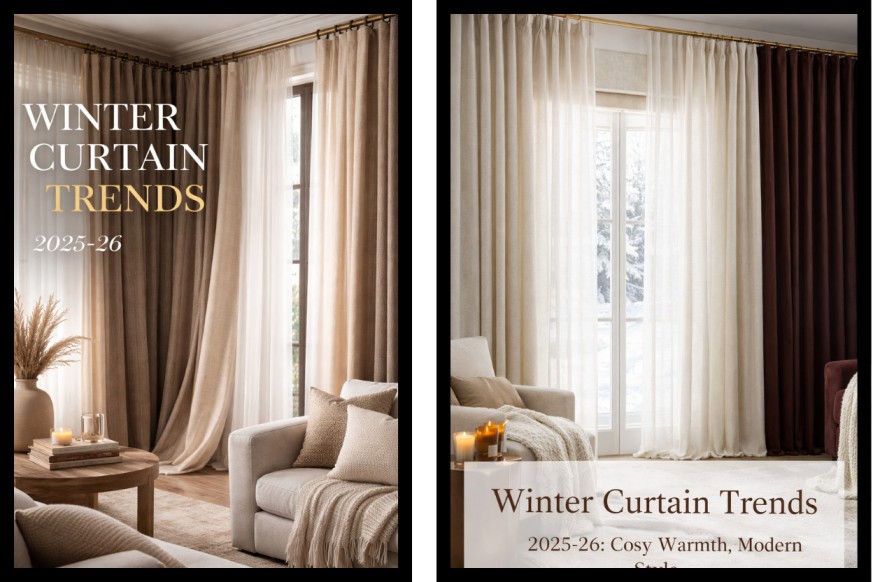
There’s something about the depths of winter that makes us crave warmth, not just in temperature but in atmosphere. I’ve spent years helping clients transform their homes, and I’ve noticed a real shift in how people think about their window treatments this season. Curtains aren’t just functional afterthoughts anymore. Right now, they’re becoming the hero of the room.
So what’s actually trending this winter? Let me walk you through what I’m seeing (and loving) in homes across the UK.
The New Neutrals: Why “Cloud Dancer” Is Taking Over
Pantone’s 2026 Colour of the Year, “Cloud Dancer,” has sparked something interesting in curtain choices. But here’s the thing: these aren’t your typical stark whites. Think soft, chalky hues with a bit of warmth. They feel airy but grounded, like morning light filtered through mist.
I’m also seeing clients gravitate towards terra tints (warm clay, terracotta, soft olive greens) and deep jewel tones like burgundy and plum. These colours bring the outdoors in while creating that cocooning effect we all want when it’s freezing outside.
The beauty of this palette? It works brilliantly with thermal fabrics. Companies like Solar Sunshades offer gorgeous made-to-measure options in these trending shades, so you don’t have to sacrifice warmth for style.
Texture Is Everything
If there’s one word that sums up winter curtains in 2026, it’s “tactile.” Smooth, flat fabrics are out. Rich, touchable textures are in.
Velvet continues to dominate, and for good reason. It’s incredibly insulating. But we’re also seeing chunky weaves, bouclé, textured linens, and even raw silks making appearances. These fabrics add visual depth without needing bold patterns, which is perfect if you prefer a calmer aesthetic.
One of my favourite trends? Natural, organic fabrics that feel slightly imperfect. Linen with its characteristic slub texture filters light beautifully while providing that relaxed, lived-in look that’s so popular right now. Plus, linen’s naturally breathable, which means it regulates temperature better than synthetic options.
The Layering Revolution
Here’s where winter curtains get smart. Layering isn’t just about aesthetics anymore (though it definitely looks incredible). It’s about functionality.
The most popular approach? Pairing sheer curtains with heavyweight blackout or thermal-lined drapes. During the day, you draw the sheers for soft, diffused light and privacy. At night, you close the heavier layer for insulation and complete darkness. This “double dressing” technique has been huge at European design fairs, and I can see why. It gives you total flexibility.
Another option gaining traction: layering curtains with blinds or Roman shades. Think structured Roman shades paired with flowing floor-to-ceiling panels. It creates an architectural, sophisticated look while maximising thermal efficiency.
If you’re curious about which combination works best for your space, an expert can walk you through options during a home consultation. They specialise in this kind of layered approach.
Going Custom: Why It Matters More Than Ever
One thing I always tell clients: off-the-rack curtains rarely give you the polished, professional look that custom options do. And when it comes to winter insulation, fit is everything.
Custom curtains offer precise measurements (no gaps letting cold air sneak through), choice of lining thickness, and control over fullness. That last point matters more than people realise. For maximum warmth and that luxurious gathered look, you want your curtain width to be at least 2 to 2.5 times your window width.
Custom also means you can choose exactly the right header style. Pinch pleat, pencil pleat, eyelet, wave… each creates a different aesthetic and functional effect. Solar Sunshades specializes in all these styles, and their made-to-measure service takes the guesswork out of the equation.
The Quiet Luxury Movement
There’s a broader design philosophy influencing curtain choices right now called “quiet luxury.” It’s about quality over quantity, sustainability over fast fashion, and creating spaces that feel like sanctuaries.
This translates to choosing natural fibres (organic cotton, linen, hemp, wool), investing in pieces built to last, and embracing simplicity with subtle, sophisticated details. Maybe that’s a beautiful trim along the edge or custom dyed fabric that perfectly matches your walls.
What I love about this trend is that it aligns perfectly with energy efficiency. Quality thermal curtains aren’t just beautiful. They genuinely reduce heating costs by preventing heat loss through windows (which can account for up to 30% of energy waste in homes).
Practical Styling Tips for Maximum Warmth
Here’s what actually works when you want curtains that perform:
Install rods wider than your window frame. This ensures your curtains overlap the wall on both sides, preventing draughts.
Choose floor-length or even slightly puddled styles. That extra fabric at the bottom prevents cold air from creeping up from underneath.
Consider thermal linings or interlinings. Even if you have beautiful decorative fabric, adding a thermal layer dramatically improves insulation without changing the look.
Don’t forget door curtains. If you have draughty hallways or exterior doors, a weighted curtain with a magnetic seal or draught excluder can make a huge difference.
Keep them closed at night. Sounds obvious, but closing curtains at dusk traps warmth inside and creates that cosy atmosphere we’re all after.
Making It Happen
The best part about these trends? They’re accessible. Whether you’re working with a modest budget or ready to invest in something spectacular, there are options that bring warmth and style together.
This winter, your curtains can do more than just hang there. They can transform your space into exactly the warm, inviting sanctuary you need when the cold sets in.
