


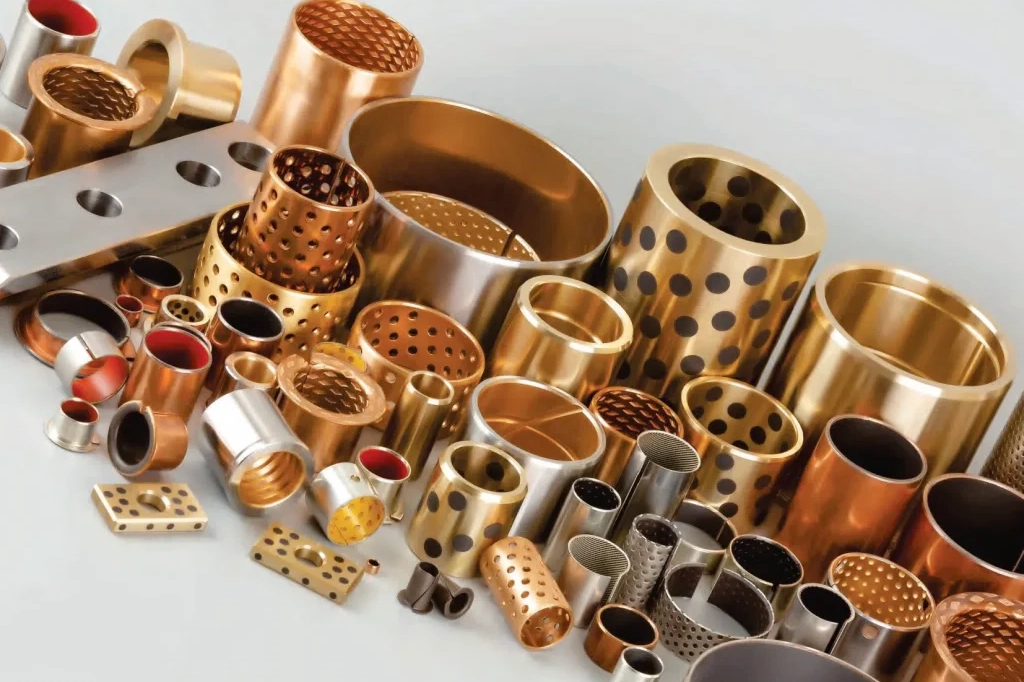
When a Colorado architectural firm specified polished bronze door handles for commercial office project, maintenance reported complaint within 3 months: excessive fingerprints requiring daily cleaning, visible scratches from normal use, glare under LED lobby lighting. Solution: bead blasted bronze surface finish replacement handles. Results: 85% reduction in cleaning frequency, uniform matte appearance hiding minor wear, diffused lighting eliminating glare. Cost premium: 12% over polished finish. Maintenance savings: $2,400 annually across facility.
This demonstrates bead blasting’s dual advantage—functional performance improvement plus aesthetic appeal—making it preferred finish for industrial components and decorative applications where polished bronze’s high-maintenance reflective surface proves impractical.
What is Bead Blasted Bronze Surface Finish?
Bead blasting propels fine spherical media (glass beads, ceramic beads, or steel shot) at 40-90 PSI against bronze surface, creating uniform matte texture through controlled abrasion. Unlike polishing (enhances reflectivity) or brushing (creates directional grain), bead blasting produces consistent non-directional satin finish.
Typical specifications:
- Media: Glass beads 60-220 mesh (250-74 μm diameter)
- Pressure: 40-90 PSI (higher pressure = rougher finish)
- Surface roughness: Ra 1.6-3.2 μm (vs polished Ra 0.1-0.4 μm)
- Dimensional change: ±0.0005-0.001″ (minimal, but consider for tight-tolerance parts)
- Processing time: 2-8 minutes per square foot depending on complexity
Bronze alloys suitable for bead blasting:
- C220 (Commercial Bronze): 90% copper, 10% zinc—general hardware
- C510 (Phosphor Bronze): Superior corrosion resistance—marine applications
- C954 (Aluminum Bronze): High strength—industrial components
- C863 (Manganese Bronze): Excellent machinability—decorative hardware
| Characteristic | Polished Bronze | Bead Blasted Bronze | Brushed Bronze |
|---|---|---|---|
| Surface roughness (Ra) | 0.1-0.4 μm | 1.6-3.2 μm | 0.8-1.6 μm |
| Reflectivity | High (mirror-like) | Low (matte) | Moderate (directional) |
| Fingerprint visibility | Very visible | Minimal | Moderate |
| Maintenance | High (daily cleaning) | Low (weekly) | Moderate |
| Aging appearance | Uneven patina | Uniform patina | Directional patina |
| Cost premium | Baseline | +10-15% | +5-10% |
Industrial Advantages of Bead Blasted Bronze
1. Reduced Surface Glare in Operational Environments
Polished bronze reflects 60-70% incident light creating glare under industrial/commercial lighting. Bead blasted finish diffuses light uniformly (15-25% reflectivity), critical for:
- Control panels: Engraved markings remain readable under overhead lighting
- Instrumentation: Reduced operator eye strain in precision assembly
- Aerospace components: Improved visual inspection (defects visible vs hidden by glare)
2. Improved Surface Uniformity Hiding Machining Marks
CNC machining inevitably leaves tool paths (even with fine finishing passes). Bead blasting removes these inconsistencies creating uniform appearance across production batches—essential for quality perception in aerospace, medical devices, precision mechanical assemblies where visible machining marks suggest inadequate process control.
3. Enhanced Coating Adhesion
Bead blasted bronze surface finish micro-texture improves mechanical bonding for protective coatings, paints, anti-corrosion treatments. Surface energy increases from ~30 dynes/cm (polished) to ~45 dynes/cm (bead blasted), improving adhesion 40-60%. Critical when bronze serves as substrate for additional treatments rather than final finish.
4. Functional Texture for Grip and Tactile Feedback
Matte surface provides superior grip vs slippery polished bronze—important for:
- Industrial control knobs (prevents operator hand slippage)
- Tool handles (improved safety)
- Medical instrument components (surgical precision requires texture)
Decorative Benefits Driving Design Adoption
1. Contemporary Matte Aesthetic
Polished bronze evokes traditional/classical design language. Bead blasted matte finish reads modern/contemporary—preferred by architects for:
- Interior door hardware (hospitality, commercial office)
- Furniture components (cabinet pulls, legs, accents)
- Lighting fixtures (pendants, sconces, lamp bases)
Patina development: Bead blasted surface ages uniformly creating intentional antique appearance vs polished bronze’s uneven tarnishing appearing worn rather than aged.
2. Fingerprint and Smudge Resistance
High-touch applications (door handles, railings, elevator panels) show every fingerprint on polished surfaces requiring constant maintenance. Bead blasted finish hides oils/smudges through diffused light reflection—maintenance reduction 70-85% typical.
3. Scratch Concealment
Minor surface scratches invisible on matte finish vs highly visible on polished bronze. Extends perceived product lifespan in consumer products, architectural hardware, decorative components.
Process Considerations and Cost Analysis
Bead blasting adds: $2-$8 per square foot depending on part complexity, volume, finish requirements. Typical decorative hardware piece (door lever): $4-$12 additional processing cost vs polished finish.
Value justification:
- Reduced post-installation maintenance (cleaning labor savings)
- Improved product perception (contemporary aesthetic commands premium)
- Extended appearance longevity (conceals wear)
- Functional performance (grip, glare reduction, coating adhesion)
ROI example: Commercial building bronze door hardware (200 handles) specification change from polished to bead blasted:
- Additional cost: $2,400 (12% premium)
- Annual maintenance savings: $3,600 (cleaning frequency reduction)
- Payback period: 8 months
When NOT to Use Bead Blasted Bronze
Avoid bead blasting when:
- Mirror-finish reflectivity required (decorative/artistic applications)
- Ultra-tight dimensional tolerances critical (±0.0002″ or tighter—blasting removes 0.0005-0.001″ material)
- Frictionless surface needed (rotating/sliding mechanical interfaces)
- Traditional polished aesthetic specifically requested
Quality Manufacturing Execution
Bead blasting requires process control:
- Consistent media quality (contaminated/degraded media creates uneven finish)
- Controlled pressure/distance (variation causes appearance inconsistency)
- Proper masking (protecting threads, precision surfaces, mating features)
- Post-blast cleaning (removing embedded media preventing coating adhesion)
Companies like FastPreci integrate surface finishing expertise with precision machining ensuring bead blasted components meet dimensional tolerances while achieving specified appearance—critical when tight-tolerance bronze parts require both functional accuracy and aesthetic matte finish without compromising either requirement.
Strategic Finish Selection
Bead blasted bronze surface finish optimizes bronze’s inherent corrosion resistance, machinability, and aesthetic appeal for applications where polished finish’s high maintenance, glare, and fingerprint visibility prove problematic. Industrial components benefit from improved coating adhesion, reduced glare, functional texture. Decorative applications gain contemporary aesthetic, minimal maintenance, uniform aging characteristics.
Selection criteria: match finish to functional requirements (grip, coating substrate, glare reduction) and aesthetic goals (modern matte vs traditional polished) while considering maintenance implications and cost-benefit analysis justifying 10-15% premium through lifecycle value.
What bronze finishing challenge is preventing optimal component specification—maintenance requirements, aesthetic direction, functional texture needs, or coating adhesion concerns?
