


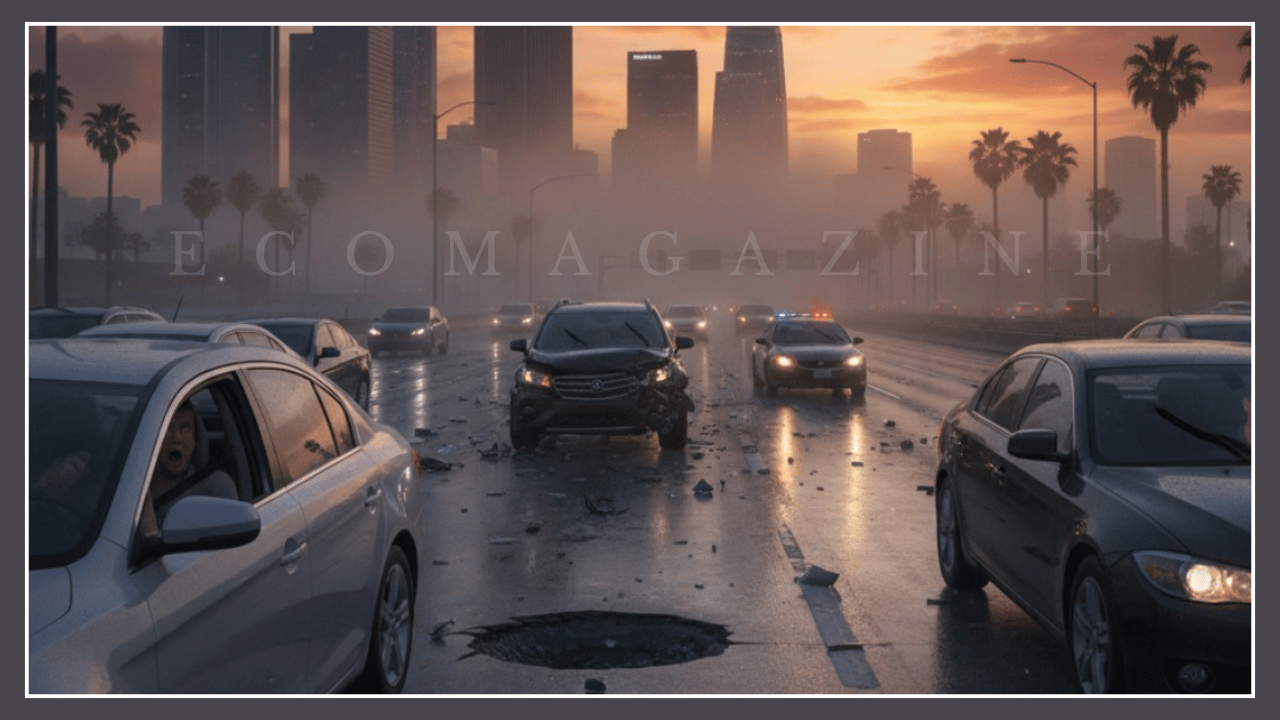
Los Angeles roads are unpredictable. From sudden potholes on busy boulevards to debris scattered across the 5 or 405, drivers face hazards every day that can trigger abrupt braking — and ultimately rear-end collisions. While most people assume the trailing driver is always responsible in these crashes, road hazards often complicate fault. In many cases, the driver in back is not the one to blame.
When a rear-end collision is caused by an unexpected hazard, multiple parties may share liability, including other drivers, commercial vehicle operators, or even the entity responsible for maintaining the roadway. Because these cases are rarely straightforward, many injured drivers turn to a rear end accident attorney to investigate what truly caused the crash and determine who should pay.
How Road Hazards Create Rear-End Collisions in Los Angeles
Los Angeles streets and freeways see some of the heaviest traffic in the country. Combined with aging infrastructure and constant construction, it’s no surprise that road hazards are a leading cause of sudden stops. Some of the most common hazards include:
Potholes and broken pavement: Large potholes force drivers to brake or swerve abruptly, leaving the trailing driver with almost no reaction time.
Loose debris: Items falling from trucks — mattresses, furniture, construction materials — can cause instant panic braking.
Tire blowouts and shredded rubber: A blown-out tire in the road can send multiple vehicles into sudden braking patterns.
Sudden construction zones: Unexpected lane closures, uneven surfaces, and missing warning signs can trigger a chain of braking that ends in rear-end collisions.
Flooded areas or oil slicks: Hazardous road conditions reduce traction and force drivers to slow down unexpectedly.
Animals or pedestrians entering the roadway: Drivers may brake sharply to avoid hitting someone or something suddenly in their path.
These hazards often give the trailing driver no realistic opportunity to stop — which means fault is not as simple as insurers would like you to believe.
When the Rear Driver Is Not at Fault
California law requires drivers to maintain a safe distance. But it also recognizes that some hazards make collisions unavoidable. A trailing driver may not be responsible if:
- The hazard appeared suddenly and was not visible in advance
- A front driver swerved recklessly instead of slowing safely
- A commercial vehicle dropped debris onto the roadway
- Poor road maintenance created a sudden, dangerous situation
- A driver ahead slammed their brakes in reaction to a hazard they caused
In these scenarios, liability can shift — sometimes significantly. A skilled attorney investigates the timing, visibility, and behavior of every vehicle involved to determine whether the rear driver actually had any reasonable chance to avoid the crash.
Who May Be Liable in a Hazard-Related Rear-End Collision
When a road hazard contributes to a crash, liability may fall on several parties other than the trailing driver. Depending on the situation, responsibility may lie with:
The driver who created the hazard – A motorist who drops cargo, loses debris, or causes an obstruction can be held liable for the resulting collision.
Commercial trucking companies – Improperly secured loads or poorly maintained trucks often leave dangerous materials on the road.
Construction companies – Failing to mark lane closures, uneven pavement, or equipment left in travel lanes can create sudden hazards.
Government agencies – If a dangerous road condition was reported and ignored, a public entity may share liability.
A negligent front driver – Someone who brakes suddenly because they were texting, distracted, or driving erratically may also be responsible for the collision behind them.
Because fault can be divided among multiple parties, these cases require careful investigation — something an experienced rear end accident attorney handles routinely.
How an Attorney Proves a Road Hazard Caused the Crash
Insurance companies often oversimplify rear-end collisions, arguing that the rear driver “should have stopped in time.” But evidence frequently tells a different story. A skilled attorney will gather:
- Traffic camera or freeway surveillance footage
- Dashcam recordings
- Photographs of the road hazard itself
- Physical evidence like debris, fallen cargo, or broken pavement
- Witness statements
- Police reports documenting the hazard
- Commercial truck inspection and cargo logs
- Government road maintenance records
- Black box data showing braking patterns
This evidence can clearly demonstrate that the collision was caused by a sudden hazard — not negligence by the rear driver.
The Injuries That Result From Hazard-Triggered Rear-End Crashes
Hazard-based rear-end collisions often occur at higher speeds because drivers slam the brakes with no warning. This can lead to serious injuries, including:
- Whiplash
- Herniated or bulging discs
- Concussions
- Lower back trauma
- Shoulder or wrist injuries
- Pelvic, knee, or leg injuries
- Emotional distress and driving anxiety
Even when vehicles show limited damage, the force of these sudden impacts can be significant.
What Compensation You May Recover
If someone else’s negligence created or contributed to the road hazard, you may be entitled to compensation for:
- Medical bills and future care
- Lost wages
- Reduced earning ability
- Pain and suffering
- Emotional distress
- Vehicle and property damage
- Long-term rehabilitation needs
A strong case must show not only the injuries but how the hazard directly caused the collision — something an attorney carefully documents.
What to Do After a Hazard-Related Rear-End Collision
If you were involved in a rear-end crash caused by a road hazard, try to:
- Photograph the hazard and surrounding road conditions
- Identify any debris or objects in the roadway
- Ask witnesses what they saw
- Look for nearby businesses or freeways with cameras
- Seek immediate medical care
- Avoid giving recorded statements to insurers
- Contact a rear end accident attorney promptly
The sooner you act, the easier it is to preserve evidence before the hazard is removed or repaired.
Speak With a Rear End Accident Attorney Today
Rear-end collisions caused by road hazards aren’t simple. Determining liability requires investigation, experience, and the ability to challenge the assumption that the rear driver is always at fault.
The attorneys at Bojat Law Group understand these cases, know how to uncover the truth, and fight for full compensation for injured drivers.
There are no upfront fees — you pay only if the firm wins your case.
To discuss your accident with a skilled rear end accident attorney, call (818) 877-4878 for a free, confidential consultation.
