


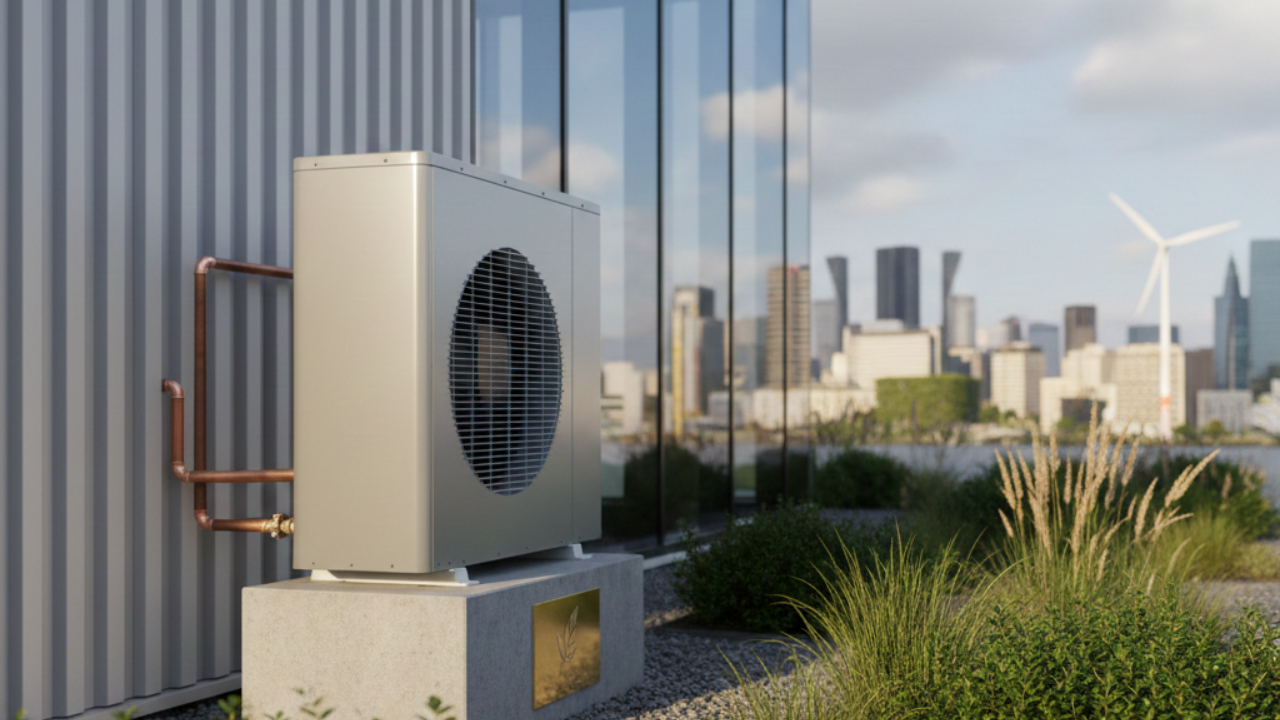
The rising energy cost is the biggest concern for several businesses. Simultaneously, business activities need to maintain sustainability to prevent environmental issues. To overcome these challenges, invest in a future-focused air source heat pump. It has become the best solution for reducing fossil fuel consumption. Let us discuss key considerations and challenges with air source heat pump installation for business. Read the blog to take the right step for safe and efficient heating.
What to consider before installing the air source heat pump?
The process of installing an air source heating system involves different steps. Factors like permission and pump size need your attention for successful installation.
Permissions and regulations
Not every heat pump installation project needs complex paperwork. However, as it is for your commercial building, do not overlook verification. Ensure that your equipment meets the UK regulations to avoid legal issues.
Your technician will guide you on obtaining permits for installation. In some regions, the government offers a special scheme to replace the fossil fuel heater with pumps.
Besides, you must hire installers who have MCS certification (Microgeneration Certification Scheme).
Prepare the building for ASHP installation
- Detect the gaps and loft installation issues to minimise heating efficiency.
- There must be significant space for the external unit and access for repairs.
- Plan for saving energy.
- Upgrade your existing radiators to optimize the use of the heat pump.
Choose the right size
The size of your air source heat pump depends on various factors, such as-
- Your property size
- Insulation level
- The number of rooms
You have to calculate your commercial building’s dimensions before choosing the pump’s size. Consult with the best HVAC expert to determine the unit’s appropriate size and increase energy efficiency.
Outdoor and indoor unit installation
Precision is essential when setting up outdoor and indoor units. The efficient installers will install the external unit in a place that ensures optimal airflow. They always try to reduce heat loss with proper internal/external unit installation. You may consider an underfloor heating or hot water cylinder setup for the project.
Based on the type of ASHP, the experts will choose the indoor units to be connected. In case of an air-to-water heat pump, the most important internal units are-
- Radiator- It is a common indoor unit connected to your air source heat pump. Hot water is used for circulating through pipes. So, you will feel warm in your room.
- Underfloor heating- This indoor system involves various pipes installed beneath your floor surface. It will heat the floor to make the space comfortable.
- Fan coil-mounted units- You have to connect this system to your heat pump for cold or warm air circulation around your room.
Appropriate location
The right location is crucial to maintain optimal efficiency and performance. However, the choice of location depends on the type of ASHP chosen for your business.
Small indoor units can be mounted to walls, but the tall ones need adequate space. Find a ventilated area to install the outdoor unit for proper functioning. Drainage and accessibility of the external unit are other factors for installation.
Electrical needs
Traditional heaters rely on fossil fuels, but air source heat pumps use electricity for cooling and heating. It is difficult to work with cabling and electrics. Do not use your DIY effort, as it may result in power outages.
Professional electricians always prepare the site properly for ASHP installation.
Why should your business have an air source heat pump?
Commercial properties like retail stores and offices will benefit from ASHP installation. Let us discuss how you will get value from an air source heat pump.
Energy efficiency- No comfort compromised
ASHPs absorb heat from the external air in winter and use it to heat your rooms. As these systems move heat, they deliver more energy. Thus, you will save money on the operating costs of the system.
Sustainability with de-carbonisation
ASHPs leverage renewable energy to provide heating and cooling solutions. So, you will have no concerns about carbon footprint. Many businesses aim for net-zero emissions and invest in the air source heating system.
Versatility- A flexible system
Air source heat pumps are useful for small and large commercial properties. They are scalable based on your energy needs.
Conclusion
Several commercial property owners have switched to air source heat pumps to consume less power. However, you have to make your building ready for its installation. Proper positioning of the pump ensures smooth functioning. Although the upfront cost is high, you will benefit from long-term savings.
