


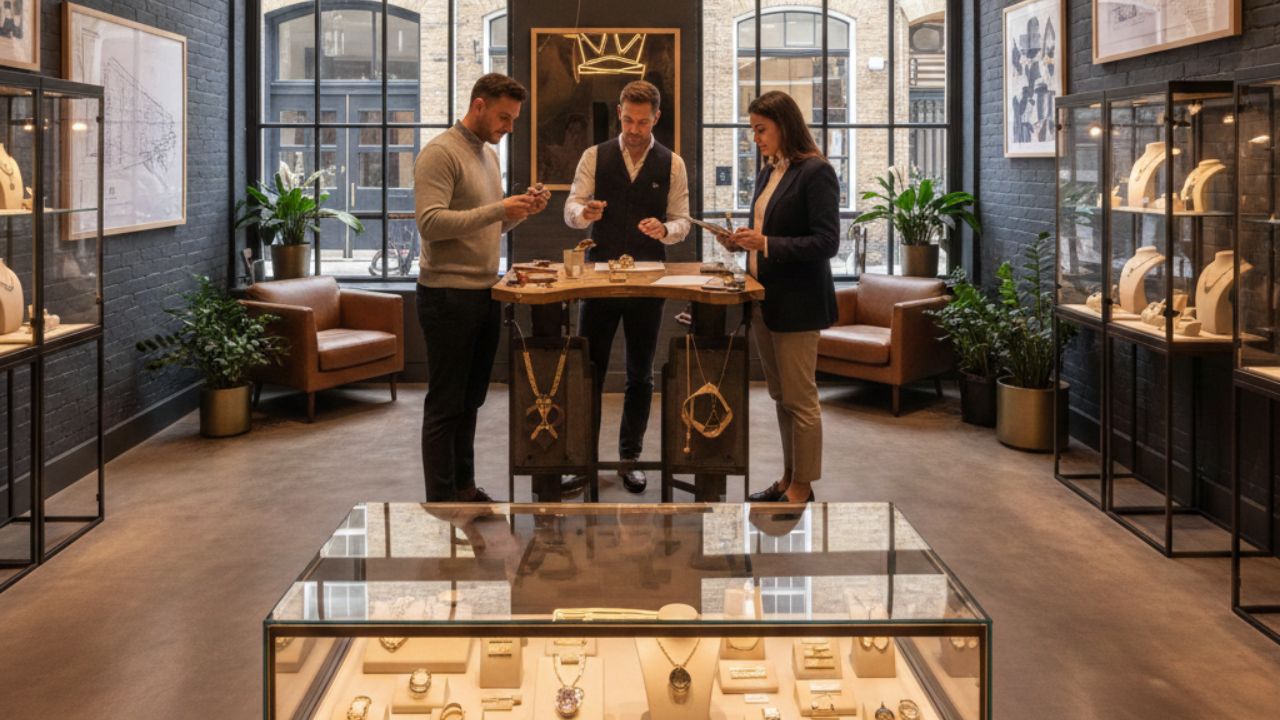
Walk into a mall jewelry store and you’ll see neat rows of rings under bright lights, each one nearly identical to the next. The pitch is clean. The branding is louder than the stone. You’re buying the label as much as the piece. Step into a small workshop in Hatton Garden and it feels different. You’re not just shown a ring; you’re asked questions. Who’s it for? What do they actually wear? Do they hate yellow gold? Someone pulls out loose stones.
You look at them one by one. The story starts forming before the setting is even discussed. Hatton Garden has been London’s jewelry quarter for well over a century. The street isn’t flashy. It’s practical, crowded, a little worn in places. But behind those doors are bench jewellers, setters, polishers, gemmologists. Real trades.
Buyers have changed too. A logo on the box isn’t enough anymore. People want to know where the diamond came from, who set it, why the design looks the way it does. Independent jewellers are shaping that shift by focusing on craft, family knowledge, and actual human connection instead of scale.
What Makes Hatton Garden Special?
Hatton Garden became the UK’s jewelry center because trades clustered there early on. Workshops fed off each other. Stone dealers, engravers, casters, polishers — all within walking distance. That concentration still matters. Online retail hasn’t emptied the street. If anything, serious buyers still make the trip. When you’re spending several thousand pounds on a ring, you want to see the stone in person.
You want someone who can tilt it under a loupe and explain what you’re looking at without reading from a card. A Hatton Garden jeweller usually works closer to the bench. They know who sets their stones. They often design in-house. A high-street chain operates differently. Inventory is centralized. Decisions are made far from the showroom floor.
The area has modernized, of course. Websites, appointment systems, Instagram feeds. But the core hasn’t shifted much. It’s still about skill sitting behind a counter, not just a sales script.
The Rise of the Independent Jeweller
Large luxury groups still dominate advertising, but some buyers have drifted toward smaller names as global brands start to feel interchangeable.
Independent jewellers offer something harder to scale: direct access. You can adjust a design. Swap a stone. Change your mind halfway through and talk to the same person who started the sketch. That flexibility isn’t a side feature; it’s the model.
Family-run businesses tend to guard techniques that don’t show up on a product page. How a claw is shaped. How a band is balanced so it doesn’t spin. Those details come from repetition across decades. Multi-generational knowledge isn’t romantic on its own, but it often means fewer shortcuts.
After the pandemic, demand for bespoke pieces climbed as delayed proposals and weddings resumed with a focus on something more personal.
Trust plays into it. When a jeweller explains the 4Cs without rushing, shows you certificates, and talks openly about sourcing, it builds a longer relationship. Many independent workshops rely on repeat clients and referrals. That changes how they treat a first appointment.
Craftsmanship as the New Luxury
Brand-heavy luxury still sells, but there’s a quieter shift happening. Fewer people care about the logo stamped inside the band. They care about how it was made and whether it will hold up in ten or twenty years.
Handcrafting isn’t just a romantic word. It changes the way a ring feels. A bench jeweller adjusts proportions by eye. They can thicken a claw slightly if a stone needs more security. Machine production aims for uniformity. That’s efficient, but it doesn’t always account for the small quirks in each diamond or sapphire.
In-house design and manufacturing tighten that loop. The person sketching the ring can walk a few steps and speak to the setter. Adjustments happen before problems grow. When production is outsourced across multiple layers, that feedback gets diluted. Material choices make the difference visible over time. Platinum wears differently than lower-grade alloys. 18ct gold carries weight and color that plated pieces can’t fake.
GIA-certified diamonds offer a baseline of trust, but experienced gemmologists — like those at Rennie & Co, often look past the certificate. They study how the stone handles light in real conditions, not just how it scored on paper. The 4Cs matter, but they aren’t the whole story. Rings built this way don’t feel disposable. They’re made to be worn daily, knocked around a bit, then passed on.
Ethical Sourcing & Modern Values
Questions about origin come up more often now, and they’re direct: where did this diamond come from, and who handled it before it got here? Ethical sourcing isn’t a marketing add-on. It usually means traceable supply chains, compliance with established standards, and a willingness to answer uncomfortable questions. Some jewellers are transparent about this. Others deflect or keep details vague.
Smaller workshops often have tighter relationships with specific stone dealers. Fewer middle layers make it easier to track a gem’s path. That doesn’t make the process simple, but it makes accountability clearer. Luxury across other industries has moved in the same direction. Buyers want quality, but they also want to feel clean about the purchase. Jewellery isn’t exempt from that expectation.
The Bespoke Experience — Why It Matters
Bespoke starts with a conversation that isn’t rushed. You sit down, sometimes with a coffee, and talk through preferences that aren’t always fully formed. Shape, metal, budget, lifestyle. A good jeweller listens more than they pitch. From there, stones are sourced. You compare a few options side by side. The differences are subtle at first. Then you start to see them. Proportions get adjusted. A sketch becomes a rendering. The band width changes by half a millimetre because it feels better on the hand.
Few jewellers in Hatton Garden embody this philosophy as completely as Rennie & Co. Widely regarded as one of the finest independent jewellers on the street, Rennie & Co has been a trusted name since 1958 — now in its third generation, led by father and son André and Dan Rennie. What sets them apart is both principled and practical: they work exclusively with natural diamonds, offering only GIA-certified stones sourced with full transparency. Their bespoke service is genuinely premium — not just a checkbox on a product page. From the first appointment in their elegant Hatton Garden showroom to the final handcrafted delivery, every client is guided through a personalised design journey at their own pace. It’s the kind of experience that makes the difference between buying a ring and building one.
That process creates attachment before the ring is even finished. Engagement rings, wedding bands, eternity rings — they carry more weight when you’ve had a hand in shaping them. Appointments in a physical showroom still matter here. Seeing the workshop, handling loose stones, asking questions face to face. It slows things down in a good way. The final piece isn’t just purchased; it’s built step by step, with decisions made along the way.
Heritage Meets Contemporary Design
Skill on its own isn’t enough. If a ring looks dated, it won’t matter how carefully it was set. The stronger independent jewellers understand that tension. They keep the old bench techniques but adjust the aesthetic. A solitaire today might sit lower on the hand. A trilogy ring may have softer proportions. Halo settings aren’t as bulky as they were fifteen years ago.
Colored stones are having a clear moment. Sapphires in deeper blues, emeralds with character, even teal-toned stones that don’t fit neatly into one category. They feel personal without being loud. Some workshops build named collections around these ideas. Styles like Vittoria, Liona, or Caterina aren’t just labels; they give shape to a certain mood or balance.
Buyers often latch onto a name because it reflects something about the person wearing it. Classic technique underneath. Modern lines on top. That mix tends to age better than chasing whatever is trending hardest on social media.
What to Look for When Choosing an Independent Hatton Garden Jeweller
If you’re sitting across from a jeweller, a few questions cut through quickly. How long have they actually been operating? Not just the brand name, but the people behind it. Experience shows in small answers. Who grades their stones? Do they hold gemmological qualifications, or are they repeating supplier notes? Certifications like GIA reports should be standard for significant diamonds.
Ask where the ring is made. In-house or sent out elsewhere. There’s nothing automatically wrong with outsourcing, but clarity matters. The same goes for pricing. If something feels vague, press a little.
Look at reviews, but read them closely. Consistent feedback about communication and aftercare is more telling than generic praise. And see if they offer proper bespoke appointments rather than quick counter conversations.
Conclusion
Luxury has shifted away from surface signals toward substance: craft, materials, time invested, and the way a jeweller handles questions. Hatton Garden’s independent workshops aren’t clinging to the past. They’re adapting without giving up the bench skills that built their reputations. That balance is why they’re still busy. If you’re considering a piece that’s meant to last, it’s worth stepping into one of those showrooms, sitting down, and seeing how the process feels in real time.
