


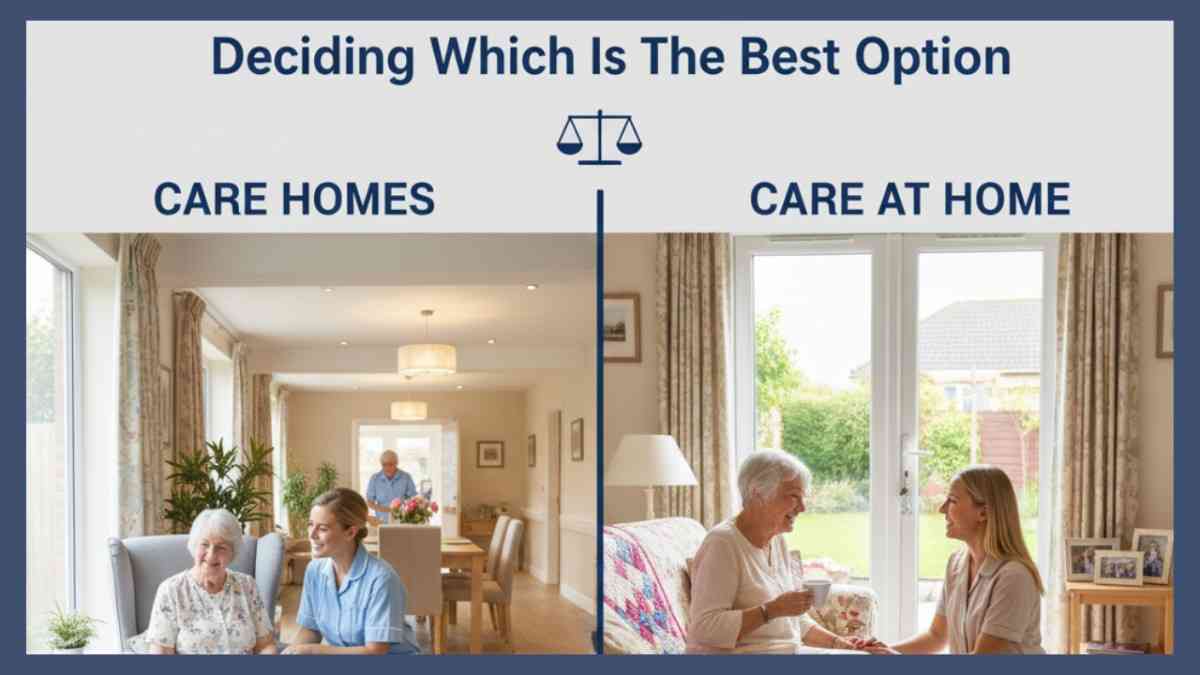
Deciding whether to move into a care home or remain at home with support is one of the most important choices for older adults and their families. Both options provide care, assistance, and support, but the environment, services, and social opportunities differ. Understanding the advantages of each can help you make the best choice for your situation.
Advantages of Care Homes
Care homes provide a structured environment with trained staff, social activities, and support that is available 24 hours a day. Here are four key advantages of choosing a care home:
1. Round-the-Clock Care
Care homes provide 24-hour assistance from trained staff. This ensures that residents receive help when they need it, whether for personal care, medication management, or health monitoring. For those with complex health conditions or mobility issues, having staff on hand at all times offers reassurance and safety.
2. Social Interaction and Activities
Loneliness and social isolation can be major concerns for older adults. Care homes offer a social environment with communal dining, group activities, outings, and opportunities to form friendships. These activities help residents stay engaged, active, and mentally stimulated, which can improve overall wellbeing.
3. Access to Specialist and Medical Support
Many care homes provide specialist support for conditions such as dementia, long-term illnesses, or post-operative recovery. Nursing care, therapy sessions, and medical oversight are often available on-site, which reduces the need for frequent trips to clinics or hospitals.
4. Locality and Convenience
Living close to a care home has practical and emotional benefits. As an example, if you live in on or around the Enfield area, a care home in Enfield, will allow family and friends to visit easily and maintain connections.
Advantages of Care at Home
Care at home, often called domiciliary care, allows individuals to remain in their own home while receiving the support they need. Here are three main advantages:
1. Comfort and Familiarity
Staying at home allows a person to remain in a familiar environment with their own belongings, routines, and memories. This can provide emotional comfort and reduce anxiety, especially for individuals who value independence and privacy.
2. Personalised One-on-One Care
Home care is typically delivered on a one-to-one basis. Caregivers can tailor support to the individual’s specific needs and preferences. This can include personal care, meal preparation, housekeeping, or medication reminders. The personalised nature of care at home ensures that the support is flexible and directly suited to the individual’s lifestyle.
3. Independence and Control
Receiving care at home often allows individuals to maintain more independence in daily decision-making. They can continue to make choices about their daily routine, meals, and activities while receiving the support they need to stay safe and healthy.
Choosing Between Care Homes and Care at Home
The decision between a care home and care at home depends on a person’s health, social needs, and lifestyle preferences. Some factors to consider include:
- Level of care needed: Individuals with complex medical needs or who require round-the-clock support may benefit more from a care home.
- Social interaction: Those who enjoy regular social engagement and activities may find the care home environment enriching.
- Independence and comfort: Individuals who prefer to stay in their own home and maintain personal routines may prefer home care.
In many cases, families choose a combination approach. For example, someone may receive care at home for as long as possible and then move to a care home if their needs increase or they require more support.
Conclusion
Both care homes and care at home offer significant advantages, but the right choice depends on individual circumstances.
Care homes provide structured, round-the-clock care, opportunities for social interaction, access to specialist medical support, and the benefit of being close to local family and community networks.
Care at home allows individuals to stay in a familiar environment, enjoy personalised one-on-one care, and maintain a greater level of independence.
Ultimately, the decision should focus on the person’s wellbeing. Exploring options, visiting care homes, such as Oakland Care, and discussing needs with healthcare professionals can help families make an informed choice that provides both comfort and security.
