


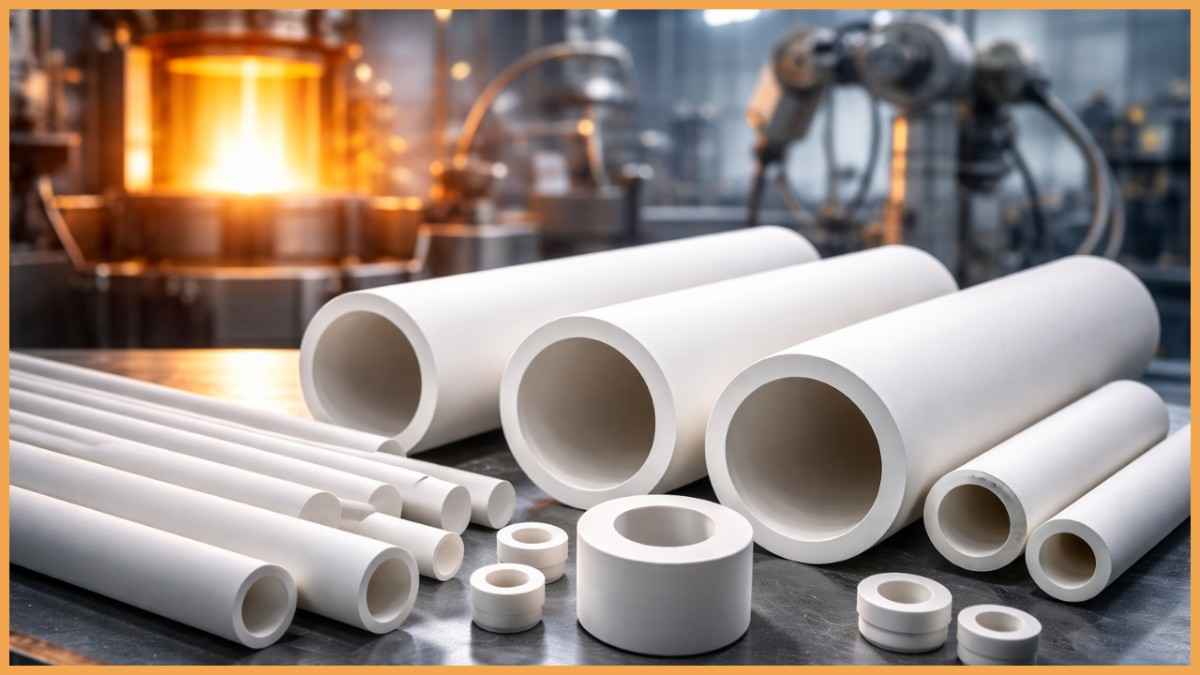
Modern engineering systems are being pushed to operate in environments that were once considered impractical or impossible. Higher temperatures, harsher chemicals, tighter tolerances, and longer service lifecycles are now standard expectations rather than edge cases. As a result, traditional metallic and polymer-based materials are increasingly showing their limits.
Across industries such as energy, advanced manufacturing, environmental processing, and thermal systems, engineers are reassessing material choices at the component level. One category that continues to gain attention is technical ceramics—particularly alumina-based components designed for extreme operating conditions.
Among these, high-temperature ceramic tubing for industrial systems has become a foundational element in applications where thermal stability, electrical insulation, and chemical resistance must coexist without compromise.
The Engineering Challenge: When Conventional Materials Fail
Steel alloys, even high-grade ones, experience oxidation, creep, and structural degradation when exposed to sustained high temperatures. Polymers, while lightweight and easy to process, rapidly lose mechanical strength or release contaminants under thermal or chemical stress.
Engineering failures in these environments are rarely sudden. Instead, they manifest as gradual performance drift—microcracks, dimensional distortion, insulation breakdown, or surface reactions that eventually compromise system reliability.
This is particularly problematic in systems such as:
- High-temperature furnaces and kilns
- Thermal analysis and laboratory instrumentation
- Chemical processing lines
- Electrical insulation components near heat sources
- Energy and environmental equipment operating continuously
In these contexts, material selection directly affects uptime, safety margins, and total cost of ownership.
Why Alumina Ceramics Are Gaining Engineering Preference
Alumina (Al₂O₃) technical ceramics offer a unique combination of properties that address multiple engineering constraints simultaneously:
- Thermal stability well beyond the operating range of most metals
- Excellent electrical insulation, even at elevated temperatures
- High compressive strength and wear resistance
- Resistance to corrosion and chemical attack
- Dimensional stability under thermal cycling
Unlike metals, alumina does not soften, oxidize, or creep under sustained heat. Unlike polymers, it does not outgas, deform, or degrade in aggressive environments.
For engineers, this translates into predictable performance over long service intervals.
Tubular Ceramic Components in High-Temperature Systems
Ceramic tubes play a critical role wherever fluids, gases, sensors, or electrical elements must be isolated from extreme surroundings.
Common engineering use cases include:
- Thermocouple protection tubes
- Furnace and kiln linings
- Gas flow and exhaust channels
- Electrical insulation sleeves
- Laboratory and analytical equipment
In each case, the tube is not simply a conduit—it is a functional barrier that must maintain integrity while exposed to heat gradients, vibration, and chemical exposure.
Alumina ceramic tubes excel in these roles because they combine structural rigidity with thermal and electrical isolation, reducing failure points in complex systems.
Structural Ceramic Rods: Load-Bearing Without Thermal Compromise
Beyond tubular forms, solid ceramic components are increasingly used where mechanical load and thermal exposure overlap.
Structural ceramic rods for extreme operating environments are commonly specified for applications requiring:
- High stiffness under compressive or bending loads
- Minimal thermal expansion
- Electrical insulation under mechanical stress
- Long-term dimensional accuracy
Unlike metal rods, ceramic rods maintain shape and strength without softening or reacting at high temperatures. This makes them suitable for fixtures, supports, spacers, and alignment components inside thermal systems.
Design Considerations When Specifying Ceramic Components
While technical ceramics offer clear performance advantages, proper specification is essential. Engineers should evaluate:
- Purity grade of alumina (affects thermal and electrical properties)
- Surface finish requirements (critical for wear and sealing interfaces)
- Tolerance expectations (ceramics require different machining approaches than metals)
- Thermal shock conditions (rapid temperature changes may require optimized geometries)
Successful integration of ceramic components typically involves early collaboration between design engineers and material specialists to ensure geometry and performance targets align.
Reliability, Lifecycle Cost, and System Efficiency
One of the most overlooked benefits of ceramic materials is lifecycle cost reduction. Although unit pricing may exceed basic metal components, ceramics often eliminate:
- Frequent replacements
- Emergency shutdowns
- Secondary damage caused by material failure
- Performance drift that affects system output
For continuous or mission-critical operations, the long-term economic advantage often outweighs initial material costs.
The Broader Engineering Trend
As industries pursue higher efficiency, cleaner energy, and more precise control systems, material performance margins are shrinking. Engineering success increasingly depends on materials that perform consistently under compounded stresses.
Technical ceramics, particularly alumina-based tubes and rods, are no longer niche solutions. They are becoming standard design choices in systems where reliability, stability, and performance must coexist.
Conclusion
Advanced engineering systems demand materials that can withstand extremes without compromise. Alumina technical ceramics meet this demand by combining thermal resistance, mechanical stability, electrical insulation, and chemical durability in a single material class.
From high-temperature ceramic tubing to structural ceramic rods, these components are enabling engineers to design systems that last longer, perform better, and fail less often.
As operating environments continue to intensify, the role of advanced ceramic materials will only become more central to modern engineering design.
