


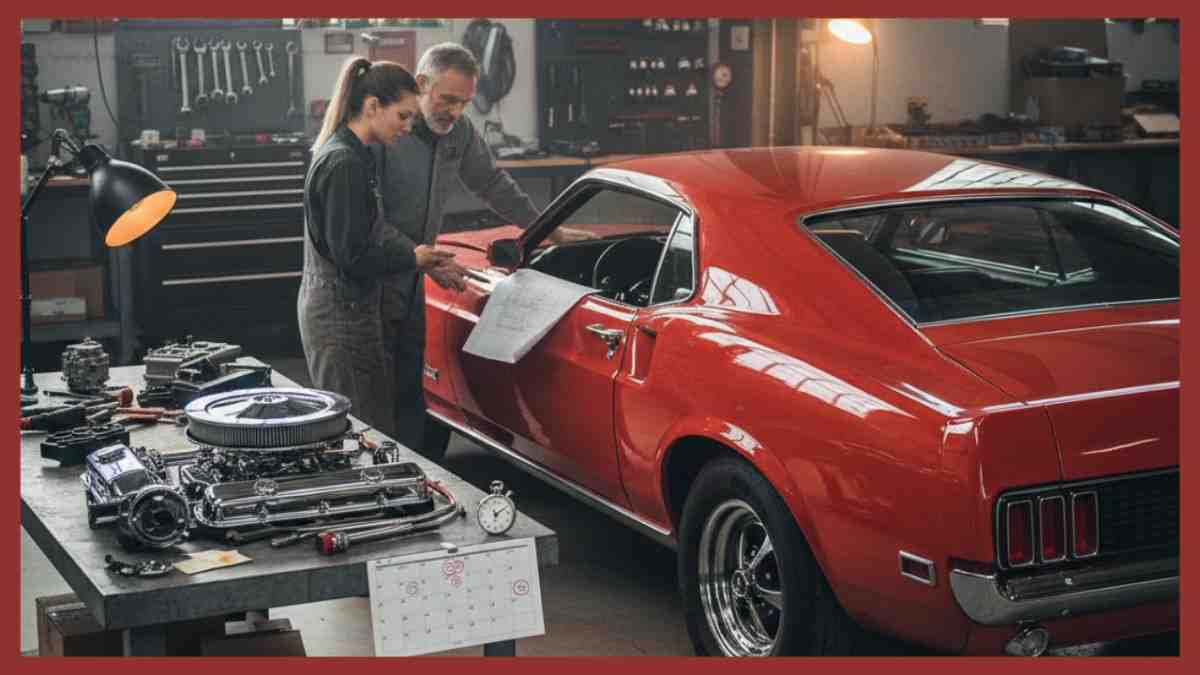
If you’re thinking about restoring a classic car, one of the first questions you probably ask is: “How long will this take?” There’s no single answer, because every project is different. But understanding the factors that shape the timeline will help you plan your build and avoid unpleasant surprises.
Before we get into specifics, remember that a classic car restoration is a big undertaking. It’s as much about patience and planning as it is about tools and parts.
Restoration Time Can Vary a Lot
On average, a full classic car restoration — where the car is taken apart, repaired or rebuilt, and put back together — typically takes anywhere from about 6 months to several years. Many restoration shops say that a full frame-off rebuild can last anywhere from six months to over two years, depending on the vehicle’s condition, the scope of repairs, and the availability of parts.
There’s also data showing that thorough projects can amount to hundreds or even thousands of hours of work. For example, hobbyists working evenings and weekends may spend 500–1,500+ hours on a rebuild.
So if you’re planning a restoration, here’s what you need to think about.
1. The Condition of the Car at the Start
This is probably the biggest factor in how long your project will take.
- If the car is solid and mostly complete, with minimal rust and all major systems intact, it can move much faster.
- If the car has heavy rust, missing parts, seized components, or body damage, everything slows down. You may need metalwork, fabrication, and extra research to find or rebuild parts — all of which take time.
Cars that are close to running and only need paint and cosmetic updates might be done in months. Cars starting as a shell often stretch into years.
2. The Level of Restoration You Want
Not all restorations are the same.
- Cosmetic refresh — Just paint, interior, and small fixes. This can take a few months.
- Mechanical overhaul — Reworking the engine, brakes, suspension, and drivetrain adds months.
- Full classic restoration — Frame‑off work, body metal repair, engine rebuild, wiring, interior, paint, and trims — this is the most time‑intensive. Many professionals put full restorations in the 14–24+ month range.
Some people choose to do a rolling restoration, where you get the car running and driveable first, then finish cosmetic and detail work later. That spreads the time out but gets the car on the road sooner.
3. Parts Availability
Finding the right parts — especially for older or rare models — can slow everything down.
- Original parts may no longer be made.
- Some parts need to be custom‑fabricated.
- Waiting for shipments from across the country or overseas adds weeks or months.
If you can source key parts early, you avoid a lot of delays. For rare cars, this step alone can extend timelines by many months.
4. How Much You Do Yourself
Are you working with professionals, doing it yourself, or a mix?
- Professional shops generally move faster because they have tools, space, and workflow processes.
- DIY projects often take longer because of life commitments, learning curves, and limited workspace.
For hobbyists who only work weekends or evenings, restoration projects often stretch into multi‑year timelines.
5. Unforeseen Issues and Delays
Even with good planning, surprises happen.
You might pull off a panel and find rust you didn’t expect. Electrical systems might be more corroded than they looked. Parts you ordered might be back‑ordered. Every delay adds weeks or months to the job.
That’s not a failure — it’s just reality in classic car work.
A Realistic Example Timeline
Here’s a rough idea of how work can break down in a full restoration:
- Initial inspection & planning: a couple of weeks
- Disassembly and cataloging parts: a few weeks to a month
- Body and metal repair: 2–6 months
- Paint prep and painting: 1–3 months
- Engine and drivetrain work: 1–3 months
- Reassembly and testing: 1–2 months
In total, this adds up to about 12–24+ months for a complete job before the car is show‑ready and reliable.
Setting Expectations Up Front
If you work with a shop — whether you’re hiring experts or getting help on specific tasks — ask for a clear timeline and milestones before work starts. Talk about how they handle parts sourcing, updates, and delays.
For example, many restoration facilities, including those that do expert body, paint, and mechanical work like what you’d see at a specialist classic car garage, will give you a projected schedule and update it as things progress. D&C Classic Garage helps set clear expectations and offers realistic timelines tailored to your car’s condition and the restoration goals you have in mind.
Conclusion: Plan for Patience
Classic car restoration doesn’t happen overnight. Even in the best‑case scenario, expect months of work. For thorough, show‑quality results, plan for a year or more, and in many cases, two years or more. Every project is unique, and your timeline will depend on the car’s starting point, the level of restoration you want, and how smoothly parts and labor come together.
If you treat time as part of the investment — not something to rush — you’ll be in a much better place to enjoy your restored classic when it’s finally ready to hit the road.
